Covent Garden: London's Piazza, Theatres and Street Performers
Explore Covent Garden's historic piazza and market halls, from street performers and the Royal Opera House to Neal's Yard, Seven Dials and the West End theatres.
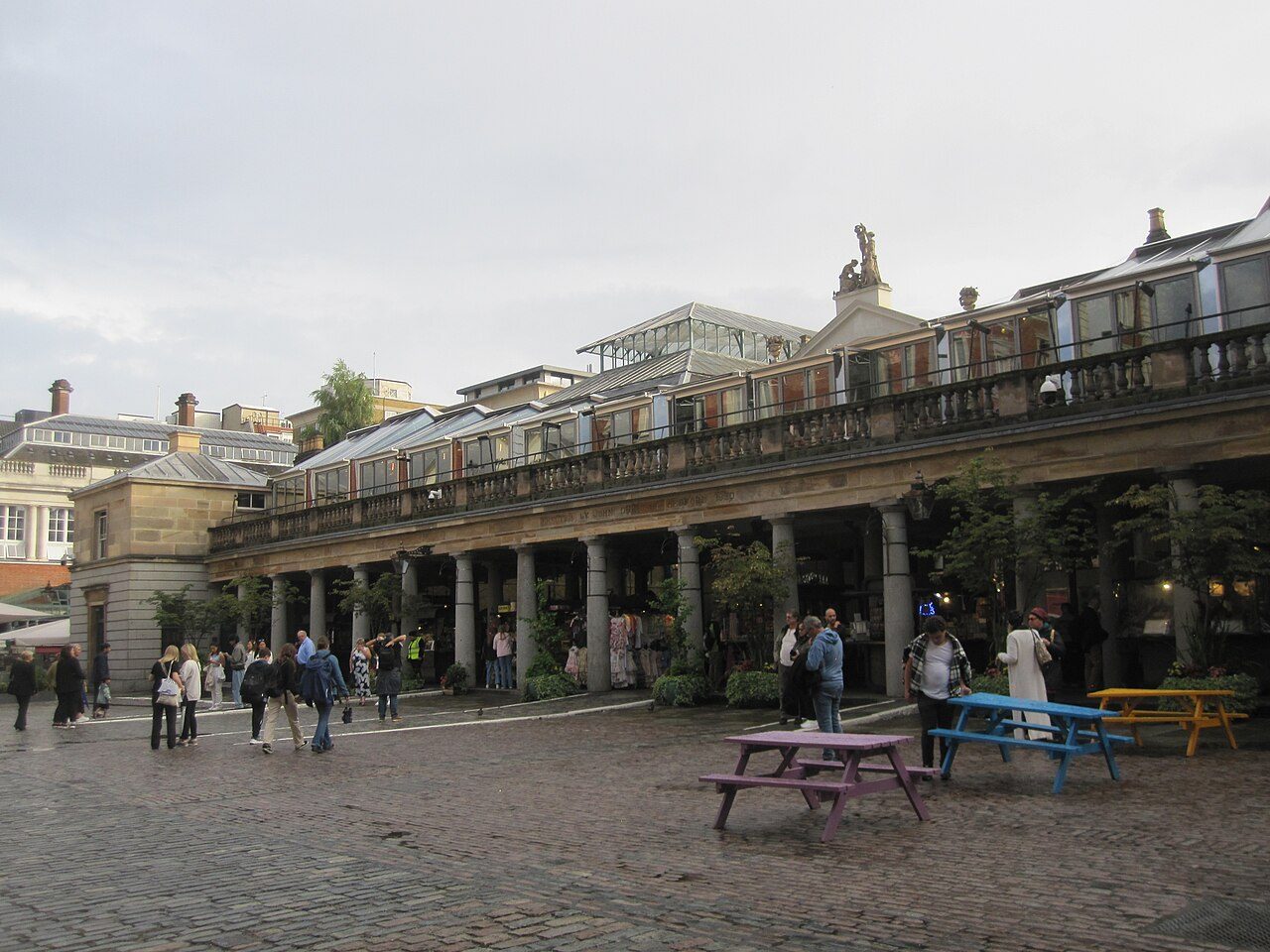
Covent Garden is the most theatrical square mile in London. It sits in the heart of the West End, a short walk from Trafalgar Square and Leicester Square, and its centrepiece is the piazza, a handsome open space with a covered market, street performers, cafes and some of the city's best shopping. It is touristy and often crowded, but it earns its popularity: the architecture is beautiful, the streets around it hold some of London's most interesting small shops and restaurants, and the neighborhood has been a place of entertainment for four centuries.
The piazza was laid out in the 1630s by the architect Inigo Jones for the Earl of Bedford, in the style of the squares he had seen in Italy, and it was London's first planned open square. For three hundred years it was the city's main fruit, vegetable and flower market, immortalized in Pygmalion and My Fair Lady, until the market moved to Nine Elms in 1974. The market buildings were saved from demolition and reborn as shops and restaurants, and today the Apple Market and Jubilee Market sell crafts, antiques and gifts beneath the iron and glass roof.
Street performance is the area's best-known tradition. Beneath the portico of St Paul's Church, known as the actors' church, buskers, magicians, opera singers and human statues perform for crowds, and performers have to audition for the coveted pitches. Some are brilliant, and a half-hour of watching is free entertainment. The church itself is a calm retreat, with a quiet garden behind it that most visitors miss, and its steps are the setting for the opening scenes of Pygmalion.
The theatres and performance spaces make Covent Garden one of the best places in the world for the stage. The Royal Opera House on Bow Street is home to the Royal Opera and the Royal Ballet, with tours and cheaper standing tickets available, and Theatre Royal Drury Lane, one of the oldest working theatres in the world, is close by. The nearby West End theatres on Shaftesbury Avenue and around Leicester Square host the long-running musicals and plays that fill the city's theatre scene, and same-day discount tickets are sold at the booths in Leicester Square.
| Place | What to Expect |
|---|---|
| The Piazza and Market | Covered shops, craft stalls, cafes and street performers under St Paul's portico |
| Royal Opera House | Opera and ballet, daytime tours and affordable standing tickets |
| Neal's Yard | A colorful courtyard of healthy cafes, bakeries and independent shops |
| Seven Dials | A junction of seven streets with independent boutiques, bars and restaurants |
The nearest Tube station is Covent Garden on the Piccadilly line, but its lifts and stairs are notoriously slow, so many visitors prefer to get off at Leicester Square, Holborn or Charing Cross and walk. The Elizabeth line at Tottenham Court Road is also close. The area is almost entirely pedestrian-friendly, and walking from Trafalgar Square takes ten minutes.
A few streets away from the piazza, the area becomes quieter and more interesting. Neal's Yard is a tiny courtyard of brightly painted buildings, with health-food cafes, a bakery and small independent shops, and it is a favorite spot for photographs. Seven Dials, a junction where seven streets meet around a sundial column, is lined with independent boutiques, bars and restaurants and has a distinctly local atmosphere. Floral Street and Long Acre are home to fashion shops, and Monmouth Street is known for its coffee and cheese.
Eating in Covent Garden ranges from tourist traps to genuine treasures. The area around the piazza has many chain restaurants with high prices, so look for the independent places on the side streets. Rules, on Maiden Lane, claims to be London's oldest restaurant, serving traditional British game and pies since 1798. For something lighter, the market halls have food stalls, and our guide to <a href="/guide/afternoon-tea-london-guide/">afternoon tea</a> explains how to enjoy the city's classic ritual in a nearby hotel.
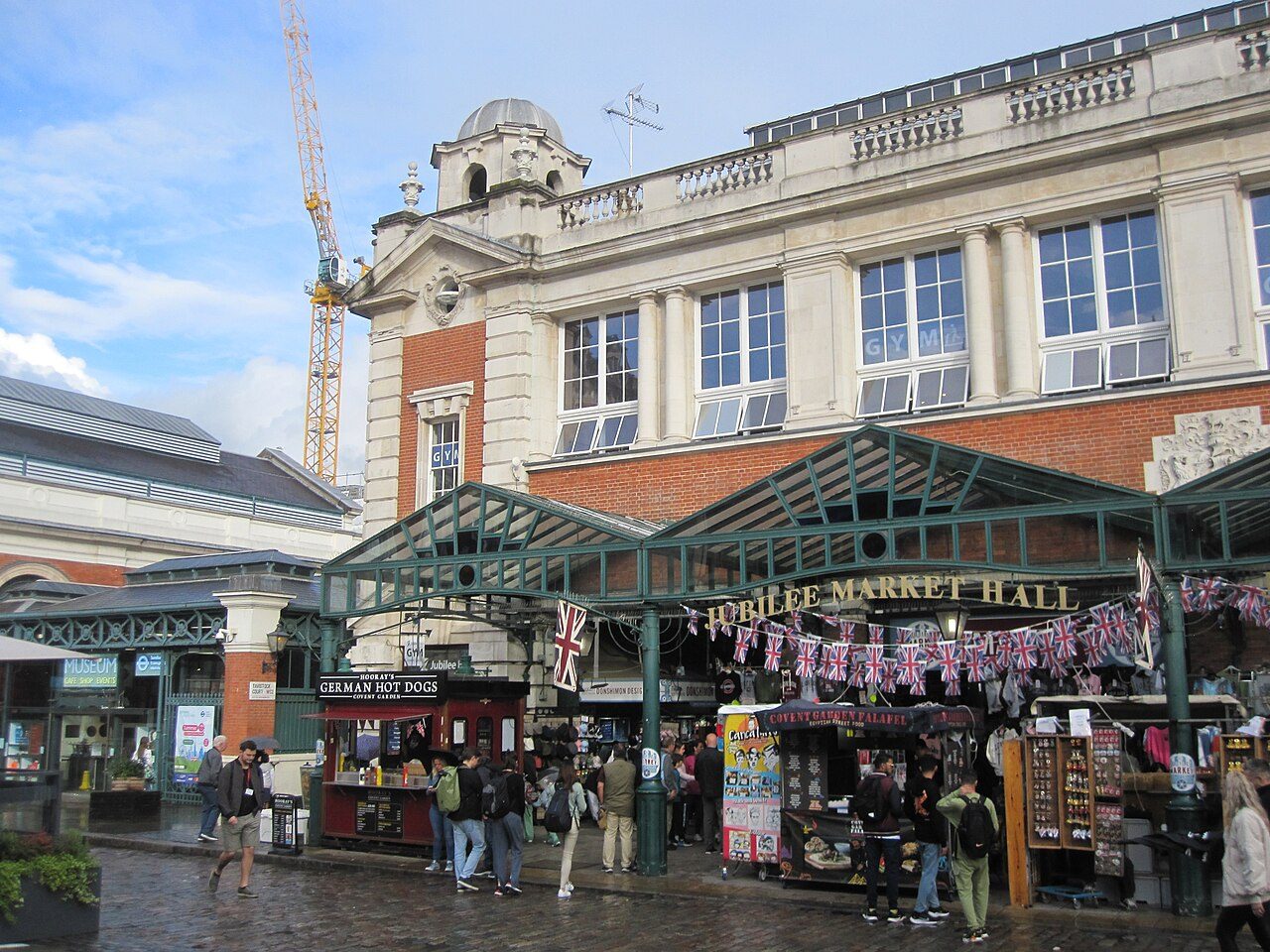
The London Transport Museum, in a Victorian flower market building on the piazza's eastern side, is a hidden gem and good for families. It tells the story of the city's trams, buses and Underground, with vintage vehicles and hands-on displays, and it is particularly good for children. The museum shop sells classic Tube posters and maps, which make excellent souvenirs and are often cheaper than in tourist shops.
A few practical tips help. Visit early in the morning, before 10 a.m., for the quietest atmosphere, or in the evening when the theatres fill and the streets glow. The piazza is busiest at weekends and in the school holidays, and street performers are most active in the afternoons. Pickpockets operate in crowds, so keep bags closed. Public toilets can be hard to find, so use cafes or the museum, and do not buy overpriced items from street sellers when better shops are a few steps away.
Covent Garden suits first-time visitors, theatre lovers, families and anyone who enjoys people-watching with a coffee in hand. It is less suited to travelers on a tight budget or those who dislike crowds, since prices are higher than elsewhere and the piazza is almost always busy. It also makes an excellent base for the West End, with hundreds of restaurants, theatres and bars within a ten-minute walk, and the Thames and the South Bank only a short stroll away.
For more of the city, see our guides to the Tower of London, the British Museum and Buckingham Palace, and our food guides to fish and chips, the Sunday roast and afternoon tea. For budgeting, see London on $90 a day, and for lodging, see our top 10 hotels in London and budget hotels in London.