Gothic Quarter: Barcelona's Medieval Heart
Explore the Gothic Quarter's narrow lanes, the cathedral and Roman walls, Plaça Reial and hidden squares, in the oldest part of Barcelona.
The Gothic Quarter, or Barri Gòtic, is the oldest part of Barcelona and the best place to feel the city's long history. A maze of narrow, shaded lanes opens onto tiny squares, medieval churches, Roman remains and hidden courtyards, all within a few minutes' walk of each other. It is touristy, particularly around the cathedral and Las Ramblas, but the lanes away from the main streets are full of atmosphere, small bars and shops, and a stroll through them at dusk, with the stone glowing in the lamplight, is one of the best things to do in the city.
The quarter's roots go back to the Roman town of Barcino, founded around 15 BC, and fragments of that settlement survive: stretches of the Roman walls, the columns of the Temple of Augustus hidden in a courtyard on Carrer del Paradís and underground ruins beneath the Plaça del Rei. In the Middle Ages, Barcelona grew into a Mediterranean trading power, and most of the Gothic buildings you see date from that period. Much of the quarter was restored in the early 20th century, and some of the Gothic look is a careful revival.
The Barcelona Cathedral, a Gothic building begun in the 13th century and finished in the 19th, is the centrepiece. Its interior is dark and atmospheric, with a carved choir, side chapels and the crypt of Saint Eulàlia, and a lift takes you to the roof for views over the old town. In the cloister, a flock of 13 white geese lives beside a fountain, in honor of the 13-year-old martyr, a charming local tradition. In front of the cathedral on Sundays, locals gather to dance the sardana, the traditional Catalan circle dance.
Plaça Sant Jaume, a few minutes' walk away, is the political centre of Catalonia, with the city hall on one side and the Palau de la Generalitat, the seat of the regional government, on the other. Nearby, the Plaça del Rei is a medieval square surrounded by the former royal palace, and it is the entrance to the Museu d'Història de Barcelona, which allows you to walk through Roman streets beneath the square. The neo-Gothic bridge on Carrer del Bisbe, built in 1928, is one of the area's most photographed spots.
| Place | What to Expect |
|---|---|
| Barcelona Cathedral | A Gothic cathedral with a cloister of geese, a rooftop terrace and Sunday sardana dancing |
| Plaça Sant Jaume | The political heart of Catalonia, with the city hall and Generalitat palace |
| Plaça Reial | A lively arcaded square with palm trees, restaurants and Gaudí lampposts |
| El Call | The old Jewish quarter, with narrow lanes and the remains of a medieval synagogue |
Take Metro line L4 to Jaume I, line L3 to Liceu or Catalunya, or walk from Plaça de Catalunya along Las Ramblas. The quarter is pedestrianized and compact, so everything is within a short walk, though the lanes can be confusing, so a map or phone helps.
El Call, the medieval Jewish quarter, is one of the quietest and most evocative parts of the Gothic Quarter. Its tiny, winding lanes, such as Carrer de Sant Domènec del Call, hold the remains of a medieval synagogue, which can be visited, and a small museum that tells the story of the Jewish community that lived here until 1391. It is a good place to escape the crowds, and many of the nearby shops sell crafts, cheese and wine. The area around Carrer d'Avinyó has good bars and small restaurants.
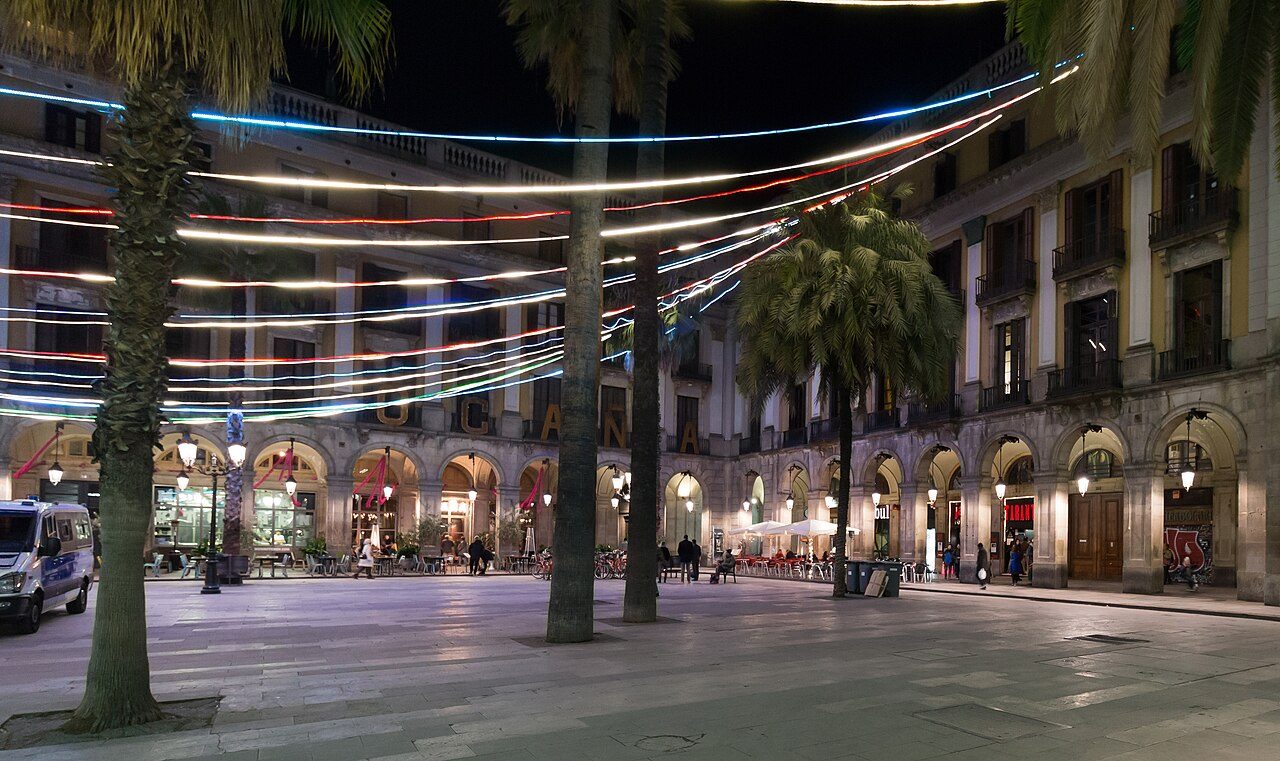
Plaça Reial is the area's liveliest square, a neoclassical plaza lined with arcades, palm trees and restaurants, and at its centre is a fountain flanked by lampposts designed by the young Gaudí. It is busy day and night, and the restaurants around the edge are touristy and pricey, but it is worth seeing, particularly in the evening. A few steps away, there are tiny bars and live music venues, including some of the city's best jazz clubs, which tend to be less crowded and better value.
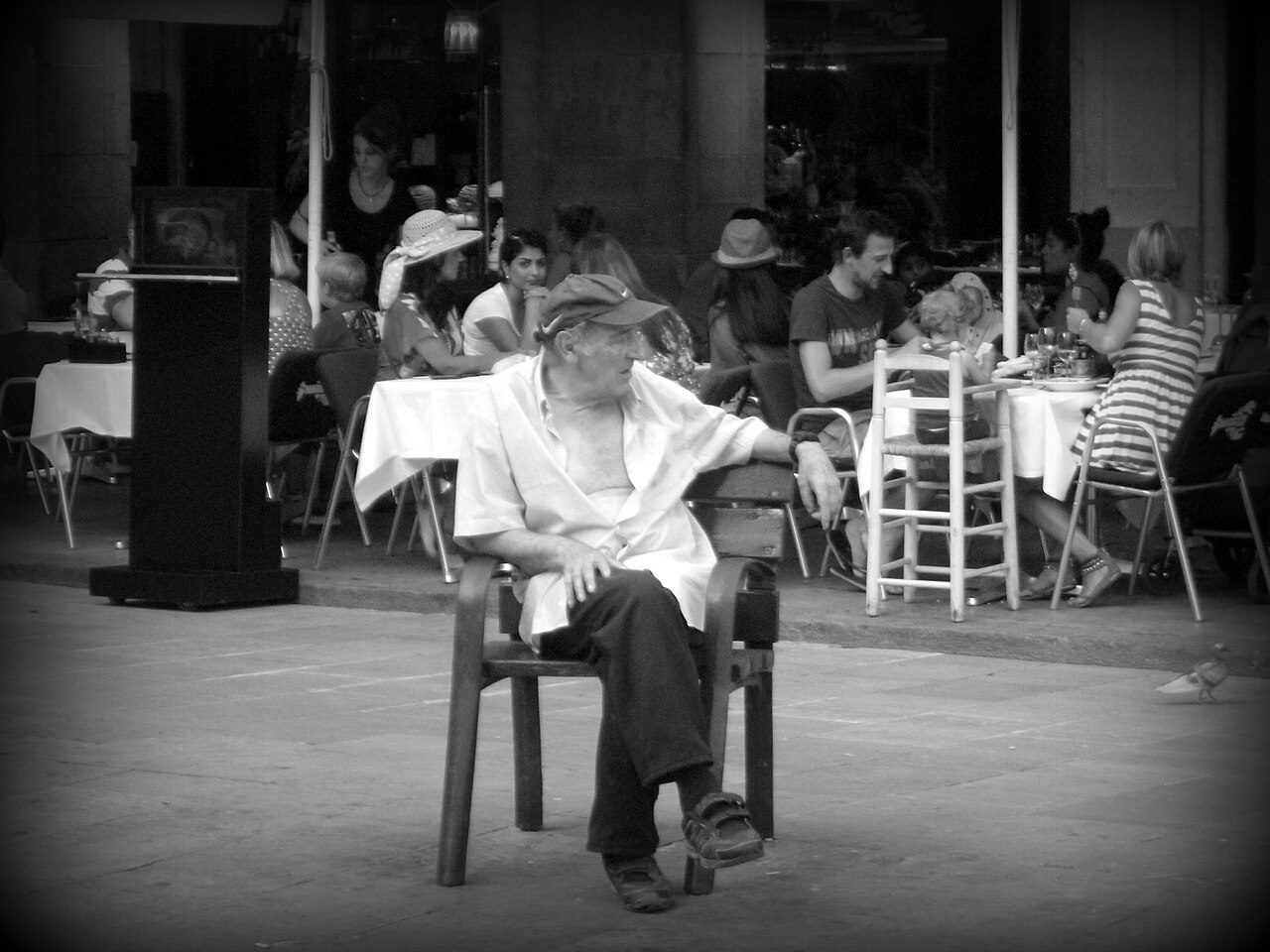
Eating in the Gothic Quarter is easy but needs care. The main streets are lined with tourist restaurants with picture menus and touts, and these are best avoided. Look instead for small family-run places in the side streets, and for the many tapas bars and vermouth bars, where locals stand at the counter. Our guide to <a href="/guide/tapas-barcelona-guide/">tapas</a> explains how to order, and a lunchtime menú del día in a back-street restaurant is usually good value. For a sweet stop, the area has several historic chocolate and pastry shops.
Safety deserves a mention. The Gothic Quarter is crowded, and pickpockets work the main squares, Las Ramblas and the Metro, so keep valuables in zipped pockets and carry only what you need. The area is generally safe at night, but the narrow lanes can feel dark and quiet, so stay on the busier streets after midnight, and be alert to groups who distract you. Wearing a cross-body bag in front of you is a sensible habit.
The Gothic Quarter suits first-time visitors, history lovers, photographers and anyone who enjoys atmospheric wandering. It is less suited to travelers who need quiet nights, since the lanes can be loud until late, and to those on a tight budget who want to avoid tourist prices. Many visitors spend an afternoon here, combined with El Born, and return in the evening for tapas. For lodging, see our guide to the <a href="/guide/top-10-hotels-in-barcelona/">top 10 hotels in Barcelona</a>.
For more of the city, see our guides to the Sagrada Família, Park Güell and Montjuïc, and our food guides to tapas, paella and crema catalana. For budgeting, see Barcelona on $80 a day, and for lodging, see our top 10 hotels in Barcelona and budget hotels in Barcelona.