Gràcia: Barcelona's Village of Plazas, Bars and Independent Shops
Explore Gràcia's village-like plazas, independent shops, vermouth bars and the August Festa Major, a short walk from Gaudí's Casa Vicens and Park Güell.
Gràcia is Barcelona's village within the city. A neighborhood of narrow streets, small squares and independent shops just north of the Eixample, it was an independent town until 1897 and has kept a distinct, bohemian identity ever since. Today it is the city's favorite neighborhood for locals, with a calm, social atmosphere, plazas filled with outdoor tables and a lively but relaxed nightlife. Most visitors come on a day trip from the centre, but Gràcia also makes an excellent base for those who want a quieter, more local stay.
The neighborhood's character comes from its history. In the 19th century, Gràcia was a working-class industrial town with a strong republican and artistic tradition, and it was famous for resisting authority. After it was absorbed into Barcelona, it kept its own festivals, shops and culture, and in the 20th century it became a haven for artists, writers and students. The streets still have a strong sense of community, and many of the shops, bakeries and bars have been run by the same families for decades. It is far less touristy than the old town.
The neighborhood's plazas are its heart. Plaça del Sol, lined with bars and terraces, is the liveliest, a gathering place for young people on warm evenings. Plaça de la Vila de Gràcia, with its clock tower, is more formal, while Plaça de la Virreina, in front of the church of Sant Joan, is one of the most beautiful, with trees and tall buildings. These squares are good places to sit with a drink, and they host children playing, neighbors chatting and occasional festivals. The atmosphere is relaxed and friendly, and nobody hurries you.
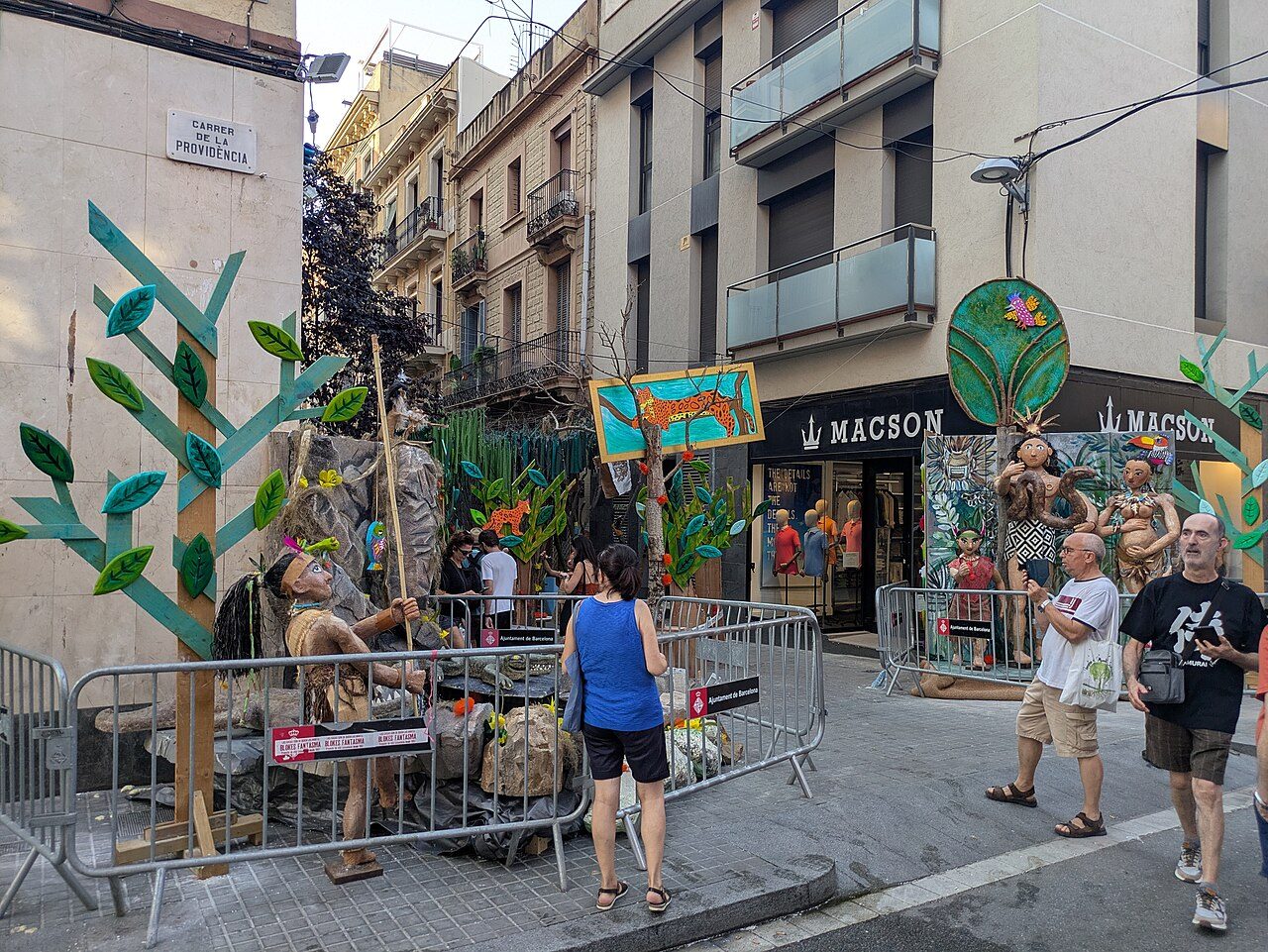
The best-known event is the Festa Major de Gràcia, held every year in mid-August, when the neighborhood's streets compete to create the most spectacular decorations. Residents spend months building elaborate installations from recycled materials, such as paper, plastic bottles and cardboard, transforming entire streets into tunnels, underwater scenes or fairy-tale worlds. For about a week, the streets are filled with music, concerts, food stalls and visitors, and it is one of the most joyful local festivals in the city. Streets such as Carrer Verdi are among the most photographed.
| Place | What to Expect |
|---|---|
| Plaça del Sol | A lively square of terraces, popular with locals and students in the evening |
| Casa Vicens | Gaudí's first major house, a colorful Moorish-style building now open as a museum |
| Carrer de Verdi | A street of independent shops, cinemas and restaurants |
| Mercat de la Llibertat | A neighborhood market with fresh produce and good tapas counters |
Take Metro line L3 to Fontana or Lesseps, or the L4 to Joanic, or walk up Passeig de Gràcia from the Eixample in about 15 minutes. The neighborhood is walkable but slightly hilly. Park Güell is about a 20-minute walk to the north.
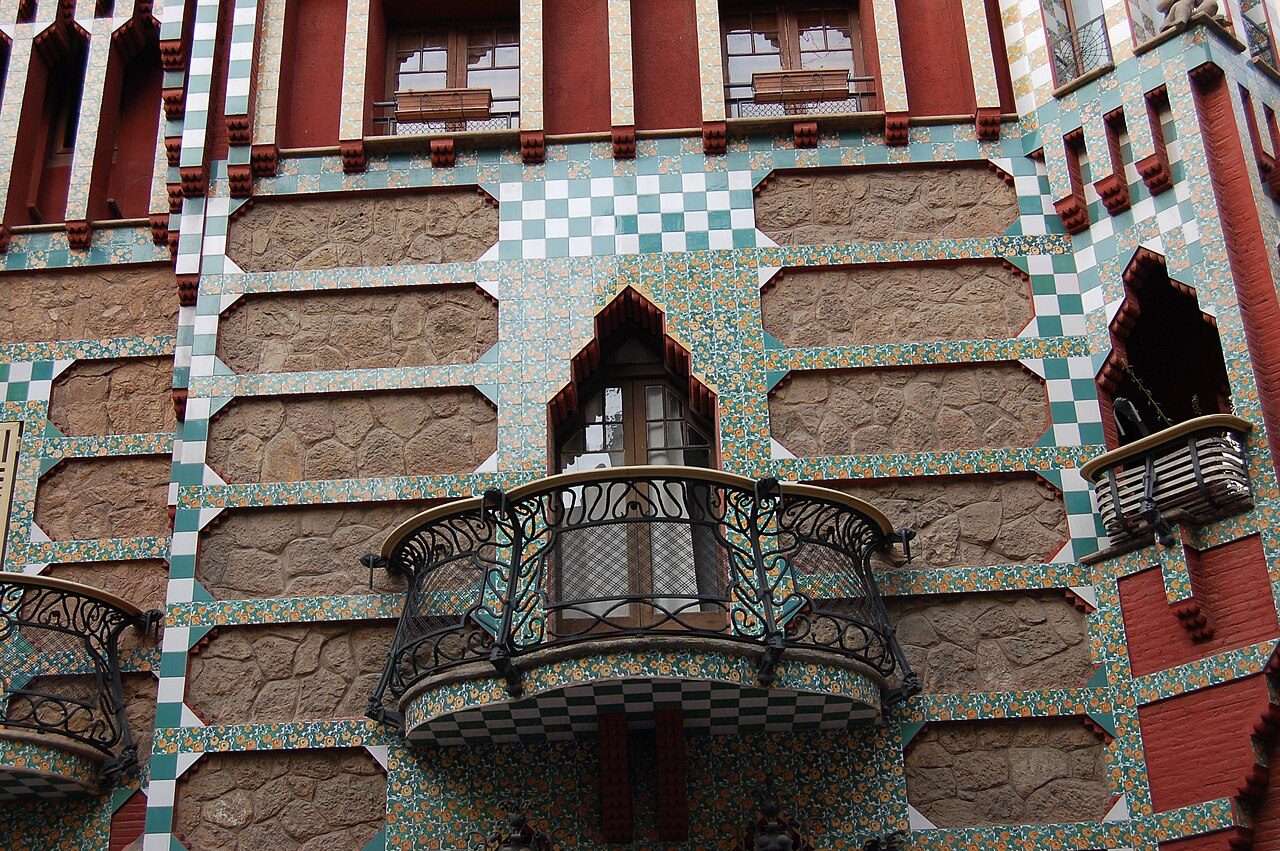
Casa Vicens, on Carrer de les Carolines, is one of the neighborhood's treasures. It was Gaudí's first major commission, built between 1883 and 1888 as a summer house for a ceramics manufacturer, and it shows his early Moorish-inspired style, with bright tiles, geometric brickwork and an elaborate wrought iron gate. It is less crowded than the Sagrada Família and Casa Batlló, and it opened as a museum in 2017. It is a good stop for anyone interested in Gaudí who wants a quieter visit.
Gràcia is one of the best places in Barcelona for casual eating and drinking. The neighborhood is full of small restaurants, vegetarian cafes, vermouth bars and tapas places, often with a local, creative twist. Traditional bodegas serve vermouth on tap with a slice of orange, olives and anchovies, and many of the bars are more affordable than those in the old town. Look for places with a crowd of locals, and try the menú del día for lunch. Our guide to <a href="/guide/tapas-barcelona-guide/">tapas</a> explains what to order.
Shopping in Gràcia is a pleasure, because it is almost entirely independent. The streets around Carrer de Verdi, Carrer de Torrijos and Carrer de Astúries are full of small boutiques, vintage stores, record shops and craft studios, and the best are run by local designers. The Verdi cinemas show films in their original language with subtitles, which is a treat for film lovers. For fresh food, the Mercat de la Llibertat and the Mercat de l'Abaceria are authentic neighborhood markets, much less touristy than the Boqueria.
A few practical tips help. The neighborhood is quietest in the morning and busiest on weekend evenings, particularly in the squares. If you visit during the Festa Major, expect large crowds, loud music and plenty of fun, and book accommodation early. Most shops close for a long lunch, and many are shut on Sundays. The area is safe, and pickpocketing is less of a problem than in the centre, but keep an eye on bags in crowded squares. The streets are narrow and slightly uneven, so wear comfortable shoes.
Gràcia suits travelers who want to see the local side of Barcelona, including couples, independent travelers and long-stay visitors. It is less suited to those who want the main sights within walking distance, since the Gothic Quarter and the beaches are a Metro ride away, and to travelers seeking big nightlife venues. A good plan is to spend an afternoon here after Park Güell, with a vermouth in a plaza and dinner in a local restaurant. For lodging, see our <a href="/guide/budget-hotels-in-barcelona/">budget hotels in Barcelona</a>.
For more of the city, see our guides to the Sagrada Família, Park Güell and Montjuïc, and our food guides to tapas, paella and crema catalana. For budgeting, see Barcelona on $80 a day, and for lodging, see our top 10 hotels in Barcelona and budget hotels in Barcelona.