Haji Lane: Singapore's Indie Shopping and Street Art Alley
Everything about Haji Lane — the narrow Kampong Glam alley that went from Hajj pilgrim lodgings to Singapore's most photographed street art and indie boutique scene.
Why Haji Lane Is Worth Your Time
Haji Lane is Singapore's answer to a street that shouldn't work on paper — a single narrow alley of restored shophouses in Kampong Glam, barely wide enough for two people to comfortably pass, that's become one of the most photographed and Instagrammed streets in the country. There's no single headline attraction here; instead it's an accumulation of independent boutiques, vintage stores, cafes, bars, and building-sized murals packed into just a few hundred meters, all owned and run by small operators rather than chains. If Orchard Road is Singapore's answer to a grand international shopping avenue, Haji Lane is the opposite instinct entirely — small, personal, and a little scrappy in the best way.
It rewards slow wandering more than any checklist of sights. Half the appeal is simply walking the length of the lane, noticing a new mural or shopfront each time, and ducking into whichever boutique or cafe happens to catch your eye rather than following a fixed itinerary.
A Brief History: From Hajj Pilgrim Lodgings to Indie Capital
Haji Lane takes its name from the Arab pilgrim-brokers who once used the street as a base to arrange Hajj pilgrimages to Mecca for Muslims across Singapore and nearby islands like Java. From the 1800s through the 1960s, its shophouses served as lodges for pilgrims mid-journey, who often worked nearby as hawkers to fund the rest of their trip. Through the 1960s and 70s, the same shophouses became modest homes for poorer Malay families, and by the 1970s many buildings sat empty or were used purely as storage. The turnaround came in the 2000s, not through large-scale redevelopment but through small independent efforts — artists, designers, and shop owners gradually moved in, painted the shutters and walls, and rebuilt the lane's identity around self-made, small-scale culture rather than commerce imposed from outside.
The Street as a Canvas: Murals and Street Art
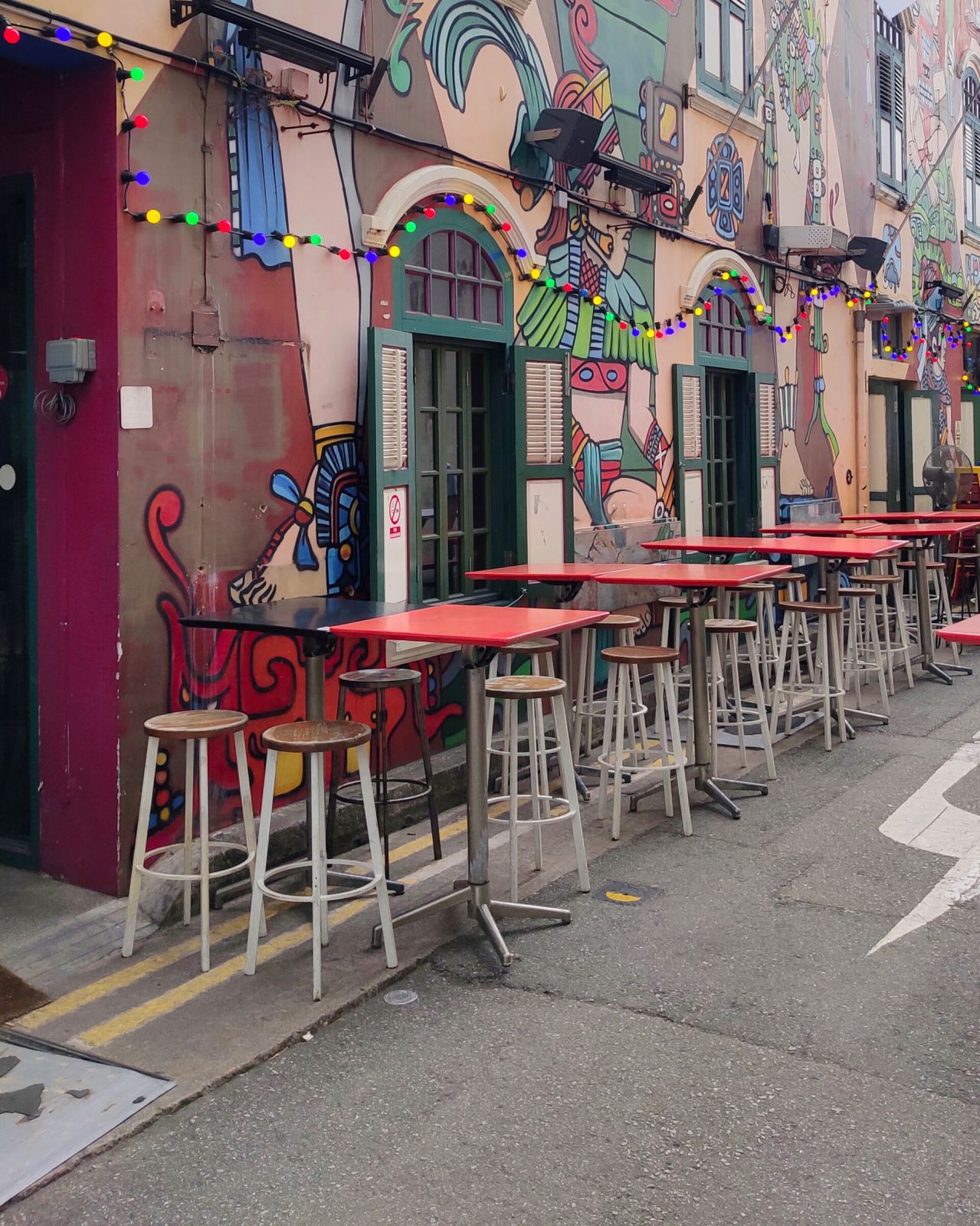
Graffiti and murals aren't tolerated on Haji Lane so much as foundational to its identity. Walls and shutters are covered floor to floor in work ranging from abstract color bursts to large figurative pieces with cultural themes, including contributions from internationally known street artists like Ernest Zacharevic. The most photographed single piece is the sprawling Aztec-style mural across the rear wall of Piedra Negra, a Mexican restaurant whose outdoor seating sits directly beneath it — but nearly every building along the lane has something worth stopping for, and the mix changes as older pieces get repainted or replaced by newer ones.
Independent Shops, Cafes, and Bars
Shopping here means vintage jackets, handmade jewelry, analog cameras, and vinyl records rather than mall brands — look for spots like Vintagewknd for upcycled and throwback fashion, Hands on Film for analog photography gear, and Musicology Records for vinyl and music ephemera. Food and drink are just as varied: Coffee Donkee's minimalist Japanese-style cafe, Cafe Margaret's Korean-style cube bread, Piedra Negra's tacos and margaritas, and Moosh SoftServe's creative soft-serve all sit within a short walk of each other, alongside French, Italian, and Middle Eastern options that reflect the neighborhood's mixed cultural identity. After dark, the boutiques give way to bars — Good Luck Beerhouse for craft beer and dim sum, Bar Stories (one of Singapore's earliest bespoke cocktail bars), and Blu Jaz Cafe for live jazz all keep the lane busy well past the shops' closing time.
Best Time to Visit
Haji Lane genuinely has two different personalities depending on the hour — daytime for the murals and boutiques, night for the bars and atmosphere.
| Time | Atmosphere | Best For |
|---|---|---|
| Morning (10:00–13:00) | Quiet, some boutiques still opening | Photographing murals without crowds in every shot |
| Afternoon (14:00–18:00) | Moderate, boutiques and cafes in full swing | Shopping and a relaxed lunch or coffee stop |
| Evening (18:00–22:00) | Busy, bars filling outdoor seating | Dinner and drinks under the lane's string lights |
| Late night (22:00 onward) | Lively, bar crowd dominates | A more nightlife-focused visit, especially on weekends |

Weekends in particular see the lane at its most crowded, with foot traffic sometimes slowing to a shuffle between the busiest bars. If you're mainly there for photography, arriving on a weekday keeps both the murals and the narrow street itself far more manageable.
Haji Lane is genuinely narrow and pedestrian traffic can back up quickly on weekend evenings, so allow extra time if you're trying to get somewhere specific rather than just wandering. Many boutiques are cash-friendly small operations, so carrying some cash makes for smoother, faster purchases than relying entirely on cards.
Part of what keeps Haji Lane interesting on repeat visits is how quickly its lineup turns over. Because most of the shophouses are leased to small, independent operators rather than long-term corporate tenants, boutiques and cafes come and go more often than they would on a mall-anchored street — a favorite shop from a previous trip might be gone, replaced by something new but just as distinctly personal. It makes the lane feel less like a fixed tourist attraction and more like an ongoing, evolving project run by whoever's leasing the shopfronts that year.
What's Nearby: Sultan Mosque and Arab Street
Haji Lane sits inside the larger Kampong Glam district, and its immediate surroundings are worth exploring beyond the lane itself. The golden dome of Sultan Mosque, one of Singapore's most significant Islamic landmarks, is just a few minutes' walk away. Arab Street, running parallel, specializes in perfume oils, traditional textiles, and Persian carpets — a much older, more traditional retail scene than Haji Lane's indie boutiques, and a useful contrast if you want to see both sides of the neighborhood's identity in one visit.
We've written a full guide to the wider area in Chinatown, Little India & Kampong Glam. If you're comparing Singapore's other famous streets, see our guide to Orchard Road, and if you're still planning the rest of your trip, our guide on whether Singapore is worth a layover is a good place to start.
Getting There
The closest MRT stations are Bugis, on the East-West and Downtown lines, and Nicoll Highway on the Circle Line — both around a 10-minute walk from Haji Lane. Bugis is generally the more convenient option, since it also puts you within walking distance of the rest of Kampong Glam and the Bugis Street shopping area.