Hanoi Train Street: A Café Alley With a Railway Down the Middle
Coffee tables inches from the tracks, and a passenger train that rumbles through at close range several times a day.

Hanoi's Train Street is exactly what the name suggests — a narrow residential lane with a working railway line running directly down the middle, close enough to the houses on either side that laundry lines, café tables, and motorbikes sit within arm's reach of the tracks. Several times a day, that quiet, café-lined alley transforms in a matter of seconds as a full passenger train rumbles through at close range, and the spectacle of watching residents and visitors calmly clear the tracks and resume their coffee moments later has made this one of the most talked-about, most photographed spots in the entire city.
The street's origins trace back to the early 20th century, when French colonial administrators built out Vietnam's railway network to connect Hanoi with the country's northern provinces. As the city grew up around the tracks over the following decades, homes and shops were built directly alongside the rail corridor, creating the tight, intimate alleyway that exists today — a layout that would never be permitted under modern safety planning, but which survived here as an accident of a century of unplanned urban growth around infrastructure that predates most of the surrounding buildings.
There are actually two distinct sections of Train Street in central Hanoi, both crossed by the same rail line but located in different parts of the city. The most famous and most crowded stretch runs between Trần Phú and Phùng Hưng streets, close to the central railway station, packed with small cafés that have leaned fully into the novelty, seating customers within a meter or two of the tracks. A second, somewhat quieter section runs further south along Lê Duẩn Street, generally drawing fewer crowds and less of a police presence, and offering a more relaxed version of the same basic experience.
| Time | Atmosphere | Best For |
|---|---|---|
| Between trains | Relaxed café atmosphere along the tracks | Coffee, egg coffee, and people-watching |
| 5-10 minutes before a train | Cafés clear tables, anticipation builds | Finding a good vantage point |
| As the train passes | Loud, fast, genuinely thrilling | Photos and video, staying well clear of the tracks |
| Just after | Tables and chairs quickly reset | Settling back in for another coffee |
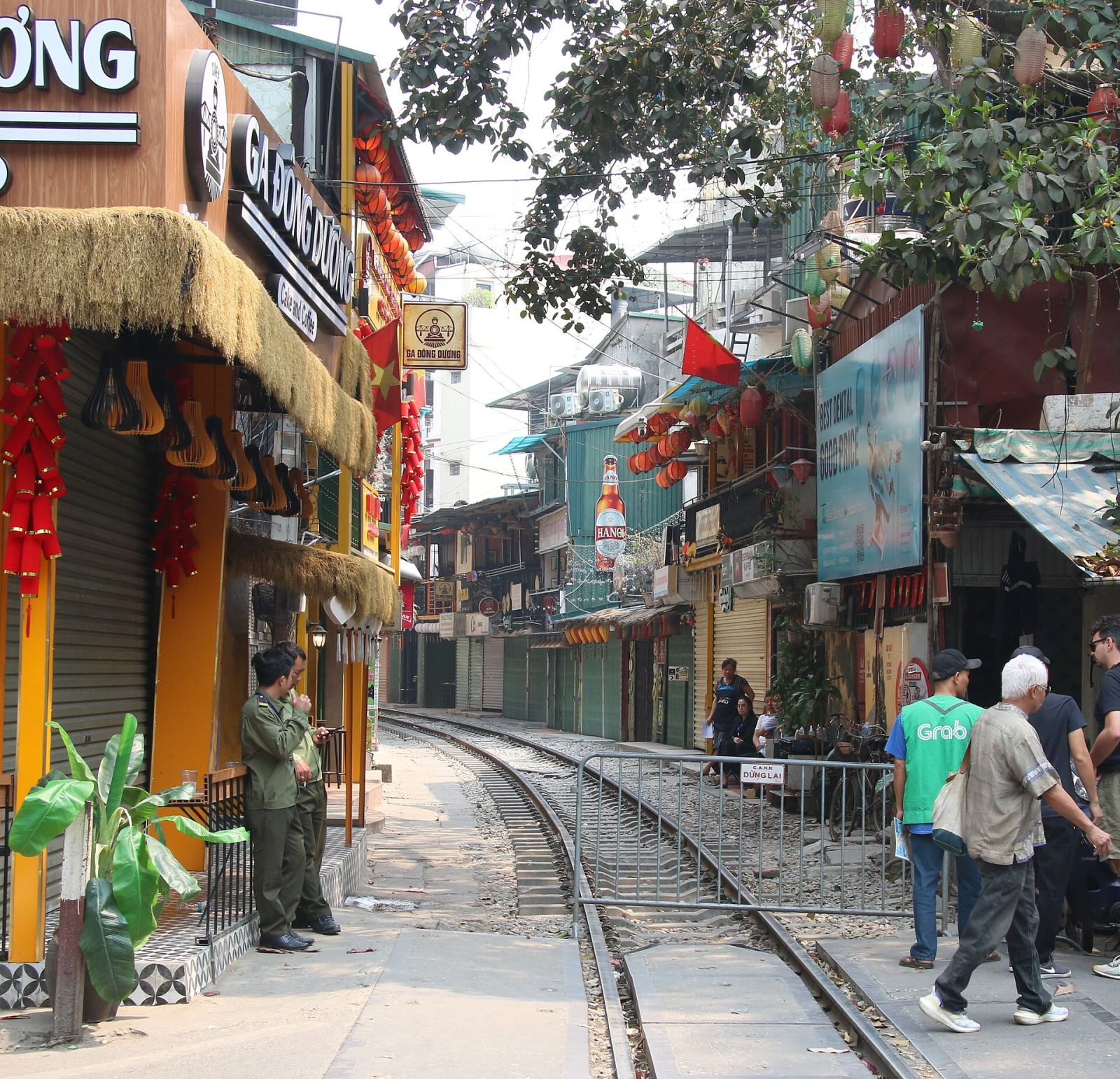
Because of real safety concerns and periodic crackdowns by Hanoi authorities, access to the most famous stretch of Train Street has been intermittently restricted or closed to café seating over the past several years, with barriers and police sometimes preventing visitors from sitting directly along the tracks during peak hours. The rules and enforcement have shifted repeatedly, so checking current access conditions immediately before a visit is genuinely worth doing rather than assuming the experience will match what's shown in older photos and videos online.
When a train approaches, staff and locals will clear the tracks and signal visitors to step back — follow their instructions immediately and completely. Trains move faster and with less warning than the calm café atmosphere might suggest, and standing on or too close to the tracks at the wrong moment is a genuine safety risk, not just a rule for show.
Train schedules shift periodically, and cafés along the street generally post the day's expected passing times on chalkboards or signs, though delays are common enough that patience is part of the experience. Most visitors find that ordering a coffee and simply waiting, rather than trying to time a visit precisely around a schedule, is the most enjoyable way to approach Train Street — the anticipation and the eventual passing both being part of the appeal, not just the train itself.
Train Street sits within easy walking distance of Hanoi's Old Quarter, making it simple to combine with a broader walk through the city's historic 36 streets rather than treating it as a separate, dedicated outing. Given the narrow, uneven ground along the tracks and the genuine need to stay alert, comfortable flat shoes and full attention to your surroundings are worth prioritizing over anything else.
Train Street is centrally located and easily reached on foot from most Old Quarter accommodation, or by a short taxi or rideshare ride from elsewhere in the city. Given the narrow lane and periodic restrictions on café seating along the most famous stretch, arriving without rigid expectations and treating access rules as they're posted on the day is the most realistic way to plan a visit.
Beyond the thrill of the passing train itself, Train Street offers a genuine, close-up look at ordinary Hanoi domestic life that's harder to find in more curated tourist areas — residents hanging laundry, cooking, and going about daily routines just steps from the rails, a reminder that despite its viral internet fame, this remains someone's actual neighborhood rather than a purpose-built attraction.
Egg coffee, Hanoi's distinctive whipped-egg-and-condensed-milk drink, is a natural pairing with the Train Street experience, and several of the cafés along the tracks serve it specifically, giving visitors a reason to linger at a table well beyond the few seconds it takes for a train to pass through.
Photographers in particular have made Train Street something of a pilgrimage stop, since the combination of tight architectural framing, converging rail lines, and the dramatic motion blur of a passing train creates compositions that are genuinely difficult to replicate anywhere else in the city, and the site has appeared repeatedly in international travel photography and social media over the past several years as a result.
Local residents along the street have adapted to the tourist attention with a mix of good humor and practical business sense, many running the very cafés that now cater almost entirely to visitors, a genuine example of a neighborhood reshaping its own economy around an unplanned but very real source of foot traffic.