Khao San Road: Bangkok's Famous Backpacker Street and Banglamphu
Explore Khao San Road and Banglamphu, from street food, bars and budget guesthouses to nearby temples, Soi Rambuttri's quieter cafes and the Chao Phraya riverside.
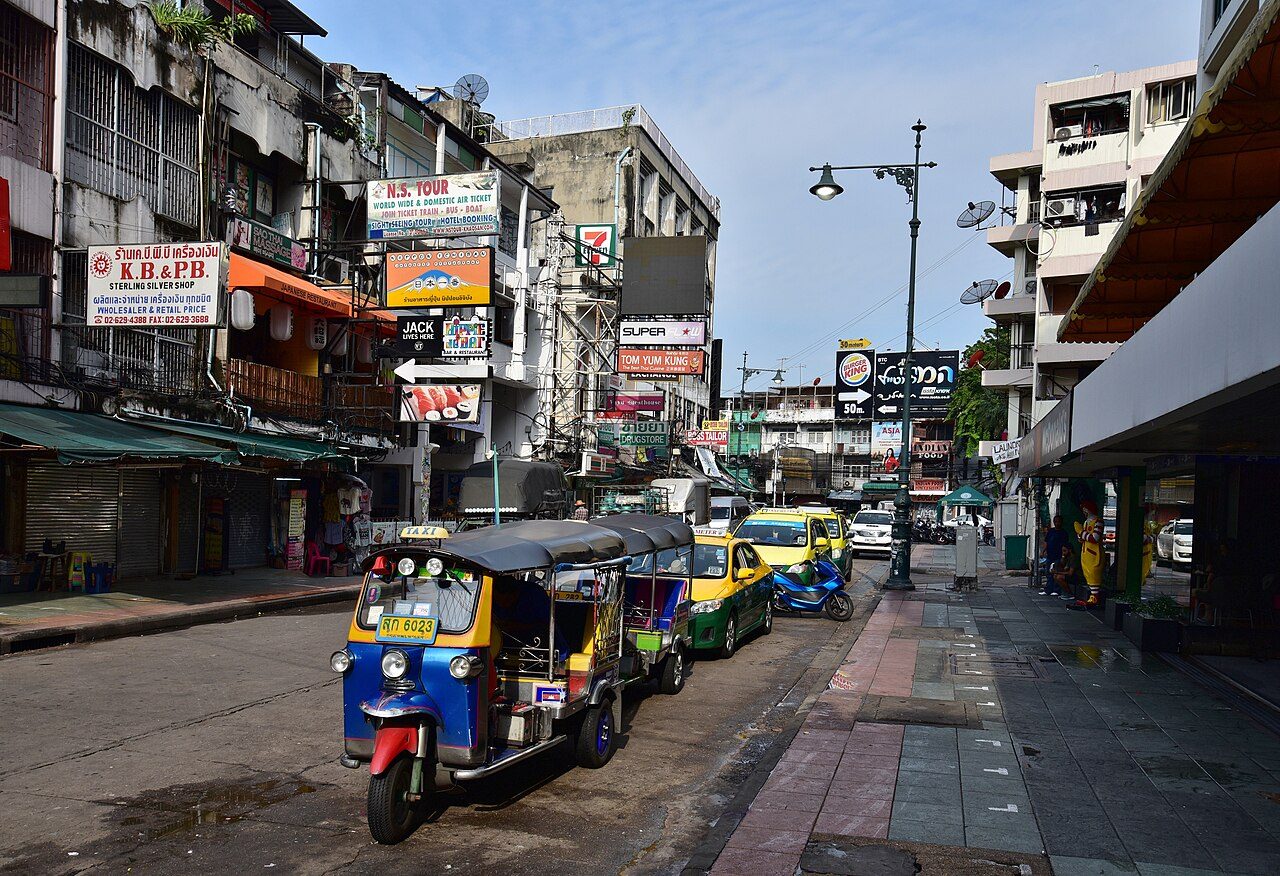
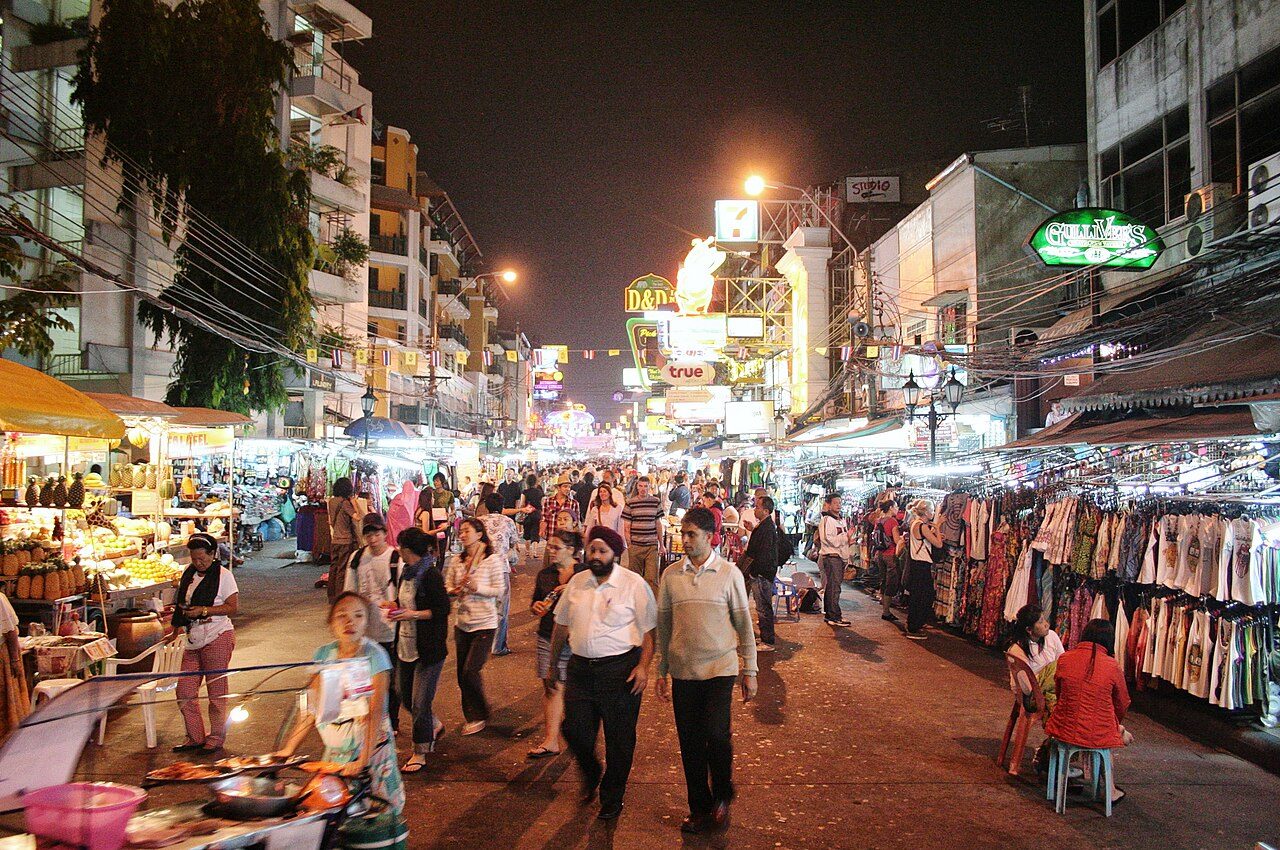
Khao San Road is the most famous backpacker street in the world, and whatever you think of it, it is worth seeing once. The name means milled rice, a reminder that the street was once a rice market, and it sits in the old Banglamphu district, a few minutes' walk from the Grand Palace. Since the 1980s it has been the place where travelers arrive, plan their route and meet other travelers, and today it is a loud, colorful, 24-hour carnival of bars, street food, tattoo parlors, souvenir stalls and budget guesthouses. It is not the real Bangkok, but it is a vivid part of the story of how the city welcomed the world.
The strip itself is short, a few hundred meters of pedestrian-friendly road with side lanes that spill into the surrounding streets. Soi Rambuttri, one block north, is quieter and more relaxed, with leafy restaurants, small bars and cafes, and many visitors prefer it for eating and drinking. Phra Athit Road, along the river, has a more local feel, with stylish cafes and bars beside the old Phra Sumen Fort and a small riverside park. Together, the three streets give you a choice of atmospheres within a five-minute walk.
Eating on Khao San Road is a mixed experience. The street stalls sell pad Thai, fried noodles, fruit shakes, grilled skewers, roti and the famous fried insects, which are more a novelty than a meal. The quality varies, and the prices are higher than in local neighborhoods, but a plate of noodles at a busy cart is a classic Khao San experience. For better food, walk a few minutes to Phra Athit Road, Soi Rambuttri or the surrounding lanes, where small restaurants and noodle shops serve local dishes at fair prices. Our <a href="/guide/pad-thai-bangkok-guide/">pad Thai guide</a> explains what a good plate looks like.
The bars and nightlife are the other main attraction. Music pours out of open-fronted bars, buckets of drinks are sold from carts, and the street is busiest from late afternoon until the early hours. It is loud, social and mostly young, and the atmosphere can be fun or overwhelming depending on your mood. If you want to see it without committing to a full night, arrive around sunset, walk the length of the street, have a drink at a quieter bar on Soi Rambuttri and decide whether to stay. Many travelers do a single evening and then head to a more local area.
| Street | Atmosphere |
|---|---|
| Khao San Road | Loud, crowded and colorful, with bars, stalls and shops until late |
| Soi Rambuttri | Quieter, with garden restaurants, cafes and small bars |
| Phra Athit Road | Local feel, riverside cafes and the old Phra Sumen Fort |
| Surrounding lanes | Cheap noodles, massage shops and budget guesthouses |
There is no BTS or MRT station nearby. The best approach is by Chao Phraya Express boat to Phra Athit pier, a five-minute walk away, or by taxi or Grab. Traffic around the area can be heavy, so allow extra time, and agree a fare or use the meter.
The location is the big advantage. The Grand Palace and Wat Phra Kaew are about a 15-minute walk, with Wat Pho and the river a little further, and the area is a convenient base for the main historic sights. Wat Chana Songkhram, right behind Khao San Road, is a calm working temple that most visitors miss, and the National Museum is close by. Our <a href="/guide/grand-palace-wat-arun-half-day-route/">Grand Palace and Wat Arun half-day route</a> shows how to combine these sights efficiently, and starting early avoids the heat and the crowds.
Scams are worth knowing about. The most common involve friendly strangers or tuk-tuk drivers who say that the Grand Palace or a temple is closed today, and offer to take you elsewhere, often to a gem or tailor shop. Official opening hours are posted, and the palace is open on most days, so ignore anyone who tells you otherwise. Be careful with fake student cards and with unmetered taxis. Agree a price before getting into a tuk-tuk, or use Grab, which shows the fare in advance.
Accommodation is cheap and plentiful. The area is full of guesthouses and hostels with simple rooms, and a few boutique hotels in the surrounding streets offer more comfort. Rooms facing Khao San Road can be noisy until the early hours, so ask for a quiet room at the back or choose accommodation on a side street or near Phra Athit. Check reviews for cleanliness, and look for air conditioning and a secure locker. For more comfort, see our guides to <a href="/guide/budget-hotels-in-bangkok/">budget hotels in Bangkok</a> and the <a href="/guide/where-to-stay-in-bangkok-sukhumvit-vs-silom-vs-old-city/">best area to stay</a>.
Khao San suits first-time budget travelers, groups of friends and anyone who wants a social, easy base close to the old sights. It suits families, light sleepers and travelers seeking authentic local culture less well. A balanced plan is to eat and explore in the surrounding streets, spend an evening on the strip itself for the atmosphere, and then spend your days at the temples, on the river and in more local neighborhoods. It also pairs well with our <a href="/guide/bangkok-on-25-dollars-a-day/">Bangkok on $25 a day</a> guide.
Banglamphu is much more than Khao San, and it is worth walking a little beyond the strip. Democracy Monument and the broad avenue of Ratchadamnoen are a short stroll away, and the old canal-side lanes around Phra Sumen Fort feel like a different century. Small shops sell Buddhist amulets, monks' robes and traditional sweets, and the neighborhood has several old wooden houses that have been turned into cafes and galleries. A morning walk through these streets, before the bars wake up, is a good way to understand why the area has attracted visitors for decades, and it costs nothing.
For other markets and neighborhoods, see our guides to the Chatuchak Weekend Market and the best ticketed attractions in Bangkok, and our Bangkok vs Kuala Lumpur comparison.