Aker Brygge and Tjuvholmen: Oslo's Modern Waterfront
Walk Oslo's reinvented waterfront at Aker Brygge and Tjuvholmen, once a working shipyard, now a modern district of restaurants, galleries, and harbor views.
Aker Brygge and Tjuvholmen: Oslo's Modern Waterfront
Aker Brygge and its neighboring peninsula Tjuvholmen together form one of Oslo's most dramatic examples of urban transformation, converting a stretch of harbor that was once purely industrial into the city's most polished waterfront promenade. Aker Brygge takes its name and history directly from Akers Mekaniske Verksted, a shipyard that operated on this exact site from 1841 until 1982, building vessels that were central to Norway's maritime industry for well over a century. When the shipyard finally closed, the site sat at a genuine crossroads: demolish and start fresh, or find a way to honor what had stood there for generations while giving the harbor a new purpose.
Redevelopment of Aker Brygge began almost immediately after the shipyard's closure, with the first phase opening to the public in 1986 and subsequent stages continuing through the 1990s. Rather than erasing the site's industrial past entirely, planners preserved several original brick shipyard buildings, weaving them into a broader mix of new construction in glass and steel. That blend of old and new remains Aker Brygge's defining visual signature today: solid, weathered industrial brick standing directly alongside sleek contemporary architecture, a physical record of the transition from working harbor to leisure destination.
Today, Aker Brygge functions as one of Oslo's premier destinations for waterfront dining, with dozens of restaurants and bistros offering outdoor seating that fills quickly on sunny days, alongside shops and a busy pedestrian promenade running directly along the harbor's edge. The area draws both locals looking for an after-work drink with a view and visitors drawn by the striking backdrop of Oslo's City Hall and the fjord beyond. Even a simple walk along the water here, with sailboats and ferries crossing the harbor in the background, captures much of what makes Oslo's relationship with its fjord so central to the city's identity.
| Area | Character | Best For |
|---|---|---|
| Aker Brygge | Restaurants, shops, historic shipyard buildings | Waterfront dining, evening strolls |
| Tjuvholmen | Modern architecture, art museum, small beach | Contemporary art, upscale dining |
| Harbor promenade | Connects both areas along the water | Walking, photography, boat-watching |

Tjuvholmen, meaning "Thief's Islet," sits on a peninsula just beyond Aker Brygge and was itself once a working dock, shipyard, and warehouse district before its own transformation into a district of striking contemporary architecture and stylish apartments.
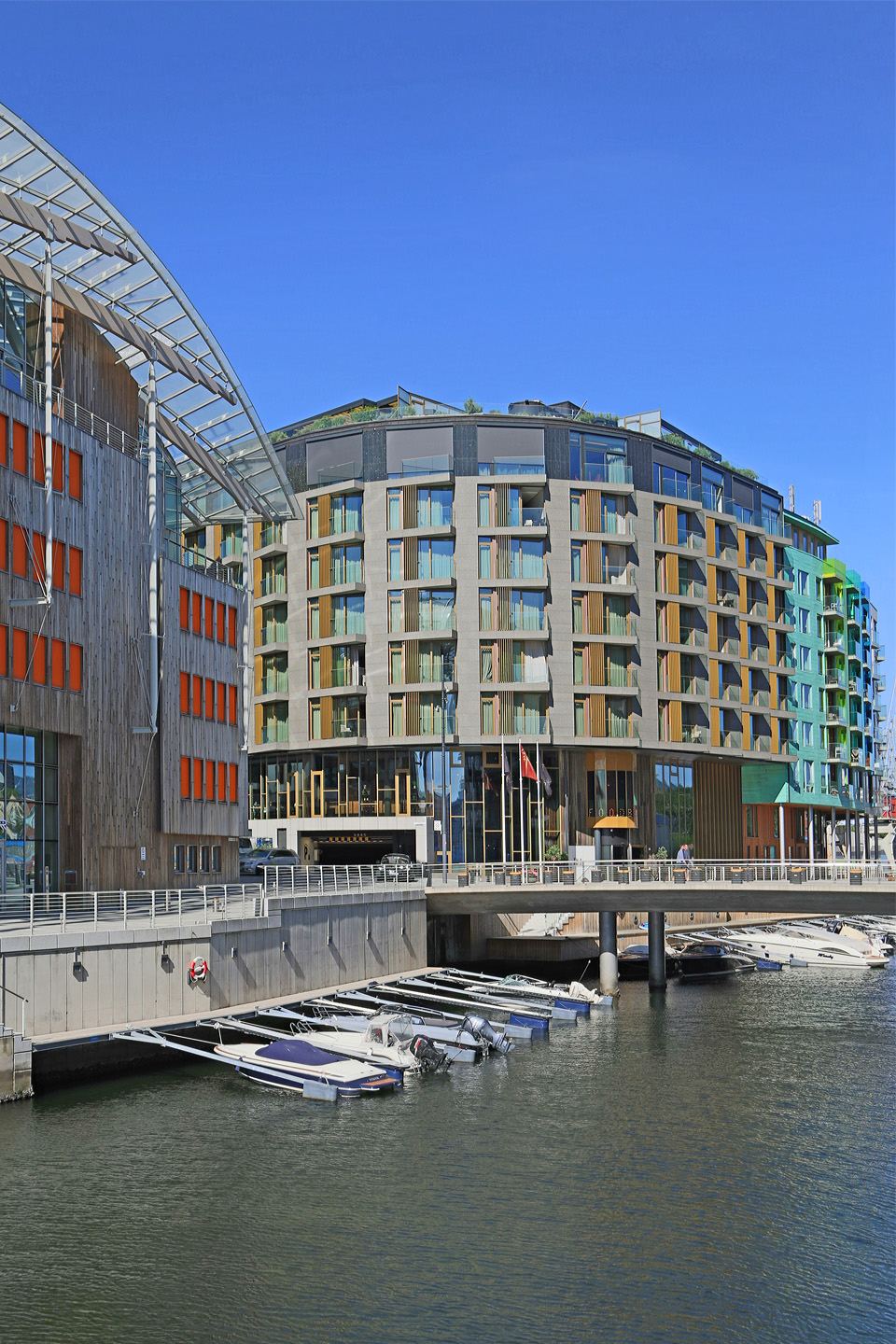
Tjuvholmen's centerpiece is the Astrup Fearnley Museum, one of the Nordic region's leading institutions for international contemporary art, its distinctive sail-like glass roof designed by architect Renzo Piano visible from across the harbor. The museum sits at the very tip of the peninsula, surrounded by an outdoor sculpture park that blends seamlessly into the waterfront promenade, while a small artificial beach just outside its doors gives Tjuvholmen a genuinely unusual amenity for a European capital: a spot where city dwellers can actually swim within walking distance of the urban core during the brief but cherished Norwegian summer.
Architecturally, Tjuvholmen leans decisively modern, its residential buildings and public spaces designed by some of Norway's most prominent contemporary architects, creating a striking contrast with the preserved industrial brick found just across the water at Aker Brygge. Walking the full loop from Aker Brygge out to the tip of Tjuvholmen and back offers a genuinely satisfying architectural tour in miniature, tracing Oslo's evolution from industrial port city to a capital confidently investing in contemporary design and public waterfront access.
Both districts stay lively across the seasons, though their character shifts noticeably with the weather. Summer brings the largest crowds, with outdoor terraces at Aker Brygge filling from midday onward and the small beach at Tjuvholmen drawing swimmers on the warmest afternoons. Winter thins the outdoor crowds considerably, but many restaurants along the harbor add heated seating and blankets, and the quieter off-season atmosphere gives the area's architecture, particularly the illuminated Astrup Fearnley Museum at night, a different kind of appeal entirely, one that many photographers actually prefer to the busier summer crowds.
Aker Brygge sits directly behind Oslo's City Hall, an easy ten-minute walk from Central Station through the city center, making it one of the most accessible districts for visitors without a car. Tjuvholmen extends from Aker Brygge via a pedestrian bridge, so both areas can be explored together in a single unhurried walk. Ferries to the islands of the Oslofjord also depart from piers near Aker Brygge, making this waterfront district a natural starting point for a broader day combining city walking with a short boat trip, particularly for visitors curious to see Oslo from the water rather than only its streets.