Grünerløkka: Oslo's Trendiest Neighborhood
Explore Grünerløkka, Oslo's former working-class district turned bohemian hipster haven, packed with vintage shops, cafes, and Akerselva riverside parks.

Grünerløkka: Oslo's Trendiest Neighborhood
Grünerløkka takes its name from Friedrich Grüner, a landowner who farmed this stretch of land east of central Oslo back in the seventeenth century, long before the area had any resemblance to the dense, characterful neighborhood visitors explore today. That transformation began in earnest during the nineteenth century, when the Industrial Revolution brought textile mills and mechanical workshops to the banks of the Akerselva river running through the district, and tenement housing sprang up rapidly to shelter the growing workforce. For decades, Grünerløkka was firmly a working-class quarter, its brick buildings built for function rather than charm, housing families who labored in the factories lining the riverbanks.
The neighborhood's character shifted again in the early twentieth century, when artists, writers, and musicians began settling in Grünerløkka, drawn by cheap rents and the gritty authenticity of a genuine working district. Cafes, galleries, and small theaters took root alongside the factories, laying the groundwork for a bohemian reputation that would eventually define the area. Following the Second World War, however, industrial decline set in as factories closed or relocated, leaving Grünerløkka in a period of economic stagnation and visible urban decay that lasted through much of the later twentieth century, a rough patch that long-time residents still remember clearly.
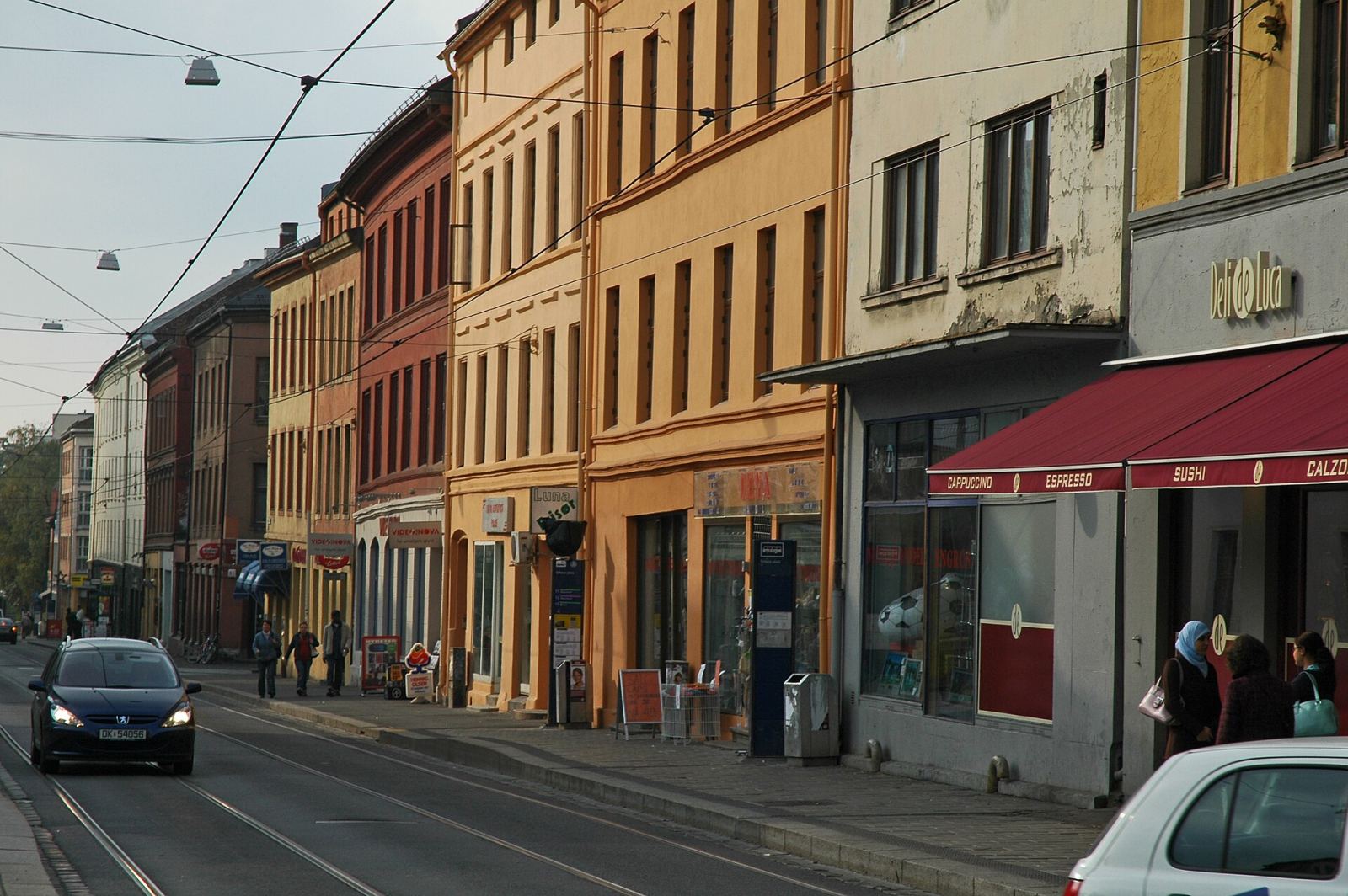
Urban renewal efforts beginning in the late twentieth century reversed Grünerløkka's decline decisively, as historic buildings were carefully restored rather than demolished, and small independent businesses moved into spaces once occupied by industry. By the 2000s, the neighborhood had undergone what many locals simply call a hipster revolution, drawing young professionals, artists, and students in numbers large enough to make Grünerløkka one of Oslo's most sought-after, and increasingly expensive, places to live. Today it stands as arguably the most diverse and countercultural district in the city, packed with vintage clothing shops, international restaurants representing cuisines from across the globe, and a nightlife scene anchored by venues that have hosted independent musicians for decades.
| Area | What to Find | Best For |
|---|---|---|
| Olaf Ryes plass | Central square, cafes, Sunday flea market | People-watching, weekend browsing |
| Along Akerselva | Former mills, walking paths, Mathallen food hall | Walking, food, industrial history |
| Thorvald Meyers gate | Main commercial street | Shopping, restaurants, nightlife |
Olaf Ryes plass hosts a popular flea market most Sundays, drawing both locals and visitors hunting for vintage clothing, records, and secondhand goods in one of the neighborhood's liveliest weekly rituals.
Mathallen, a converted industrial building along the Akerselva, has become one of Grünerløkka's signature draws, housing a food hall packed with stalls selling everything from artisan cheese and charcuterie to fresh seafood and international street food, all under one restored brick-and-iron roof. The building itself, once part of the area's industrial machinery works, exemplifies the broader pattern seen across Grünerløkka: rather than tearing down its working-class industrial past, the neighborhood has consistently found ways to repurpose it, giving new life to old structures without erasing the history embedded in their walls.
The Akerselva river itself, once purely a source of industrial power, now anchors one of Oslo's most pleasant urban walking routes, a green corridor threading past waterfalls, old mill buildings, and small parks as it winds from the northern edge of the city down toward the fjord. Following the river on foot offers a compact, layered lesson in Oslo's industrial history, with information panels at several points explaining the factories and workshops that once lined its banks, before the water's power was harnessed instead for the recreational, café-lined atmosphere visitors experience today.
Rising rents have become an increasingly common topic of conversation among longtime Grünerløkka residents, as the neighborhood's popularity has driven up housing costs considerably faster than in many other parts of Oslo. Some independent shops and cafes that helped build the area's bohemian reputation in the 1990s and 2000s have since closed or relocated as commercial rents climbed alongside residential ones, a pattern familiar to anyone who has watched a formerly gritty neighborhood become genuinely fashionable elsewhere in Europe, from Berlin's Kreuzberg to parts of East London. Even so, Grünerløkka has managed to retain more of its independent character than many comparably gentrified districts, in part because Norwegian planning regulations have limited the scale of large chain retail moving into the area, preserving space for the small, independent businesses that continue to define the neighborhood's identity for now.
Grünerløkka sits just northeast of central Oslo and is easily reached by tram lines 11, 12, or 13, or by a fifteen to twenty minute walk from the Central Station area. The neighborhood is compact and highly walkable, with its main attractions, Olaf Ryes plass, Thorvald Meyers gate, and the Akerselva riverside path, all within easy reach of one another on foot. Because Grünerløkka draws heavy foot traffic on weekends, especially around the Sunday flea market, arriving by tram rather than driving is generally the more practical option.