Bahia Palace: Marrakech's Painted Cedar and Zellige Masterpiece
How to visit the Bahia Palace, from the grand courtyard and painted ceilings to the harem rooms and gardens, with tips on tickets, timing and avoiding the crowds.
Bahia Palace: A Palace Built for Beauty
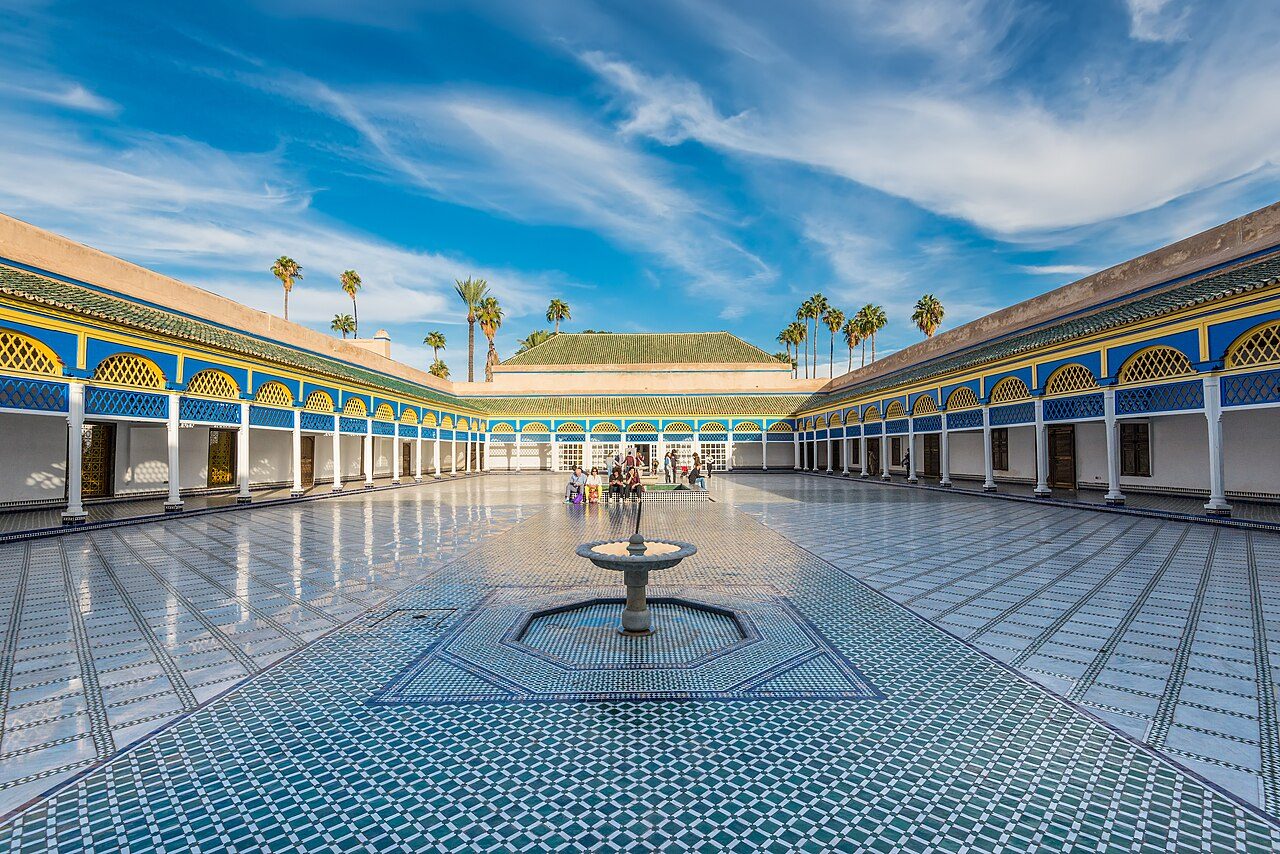
The Bahia Palace, whose name means brilliance, is one of the finest examples of Moroccan architecture and decoration in Marrakech. It was built in the late 19th century by the grand vizier Si Moussa and then expanded by his son Ba Ahmed, who wanted to create the greatest palace of his time. Craftsmen from Fez and across Morocco worked for years on its carved plaster, painted cedar wood ceilings, geometric zellige mosaics and marble floors. The palace has about 150 rooms, but only a part is open to visitors, and it is arranged around courtyards, gardens and fountains.
What makes the palace special is the detail. The ceilings are painted in intricate patterns of red, green, gold and blue, the doors are carved from cedar, and the walls of the private rooms are covered in tile and stucco. The Grand Court, a large marble-paved courtyard of about 50 meters, is surrounded by galleries, and the smaller courtyards hold orange trees and fountains. Ba Ahmed housed his four wives and numerous concubines in the harem section, and each wife had her own quarters. After his death, the palace was looted, and later used by the French as a residence, but its beauty survives.
Visiting the Bahia Palace
| Detail | Info |
|---|---|
| Best Time to Visit | At opening time or the final hour before closing, when it is quieter and the light is soft |
| Cost | Tickets cost roughly 70 dirhams, and are paid at the entrance |
| Location | In the Mellah, about a 15-minute walk south of Jemaa el-Fnaa |
| How Long | Allow 45 to 90 minutes, depending on your interest in decoration |
Making the Most of the Visit
The palace is a maze of courtyards and passages, and rooms are mostly empty, so a guide helps you understand the history and the symbolism of the decoration. Official guides are available at the entrance, and you can also find audio guides or read about it in advance. Look up as much as down, since the painted ceilings are the highlight, and pay attention to the zellige mosaics, the cedar doors and the stucco work. The shaded courtyards provide a welcome break from the sun, and the palace is quieter than the souks.
Nearby, the El Badi Palace, a ruined 16th-century palace with a large sunken garden, storks nesting on the walls and a museum with the carved Koutoubia minbar, offers a contrast. The Saadian Tombs are within walking distance, and the Mellah, the old Jewish quarter, has a cemetery and a spice market. The Place des Ferblantiers, a square of lanternmakers, is a good place for a coffee. Together they make a good half-day in the southern medina. Our guide to the <a href="/guide/jemaa-el-fnaa-marrakech-guide/">Jemaa el-Fnaa</a> suggests how to end the day.
Go early and visit El Badi Palace, the Saadian Tombs and the Mellah on the same walk. Wear comfortable shoes, since the floors are uneven, and bring small change for the entrance.