Beitou Hot Springs: Taipei's Volcanic Bathing District
Discover Beitou, the hot spring district at the northern end of Taipei's MRT line, home to Japanese-era bathhouses, the Hot Spring Museum, and Thermal Valley.

Beitou Hot Springs: Taipei's Volcanic Bathing District
Beitou (北投) sits at the northern terminus of Taipei's MRT system, tucked against the forested slopes of Yangmingshan, and it is unlike anywhere else in the city: a genuine hot spring resort town that just happens to be reachable by a thirty-minute subway ride from downtown Taipei. The district owes its existence to Datun Volcano Group geothermal activity, which superheats groundwater as it rises through sulfur-rich rock, producing the milky green, white, and clear spring waters that have drawn bathers here for well over a century. Locals treat a Beitou soak the way other cities treat a spa day, a normal, regular part of life rather than a special occasion.
Beitou's bathing culture was formalized during the Japanese colonial period, when Japanese administrators, recognizing the springs' similarity to onsen back home, built the district's first proper bathhouses starting in the 1890s. The grandest of these, the Beitou Public Bathhouse, opened in 1913 as the largest hot spring bathhouse in East Asia at the time, modeled on Japanese public bathhouse design with a striking mix of red brick, half-timbering, and stained glass. That building now survives as the Beitou Hot Spring Museum, and it remains the single best starting point for understanding how the entire district came to exist.
Inside the museum, visitors can view the original tiled Roman-style communal bathing hall, upstairs tatami rooms once used for relaxation after bathing, and exhibits detailing both the geology of the springs and the social history of bathing culture in Taiwan. Entry is free and the building alone, with its wraparound veranda and stained-glass windows, is worth the visit even for those with no interest in actually bathing. From the museum, a short walk uphill leads to Beitou Park, a landscaped hot spring valley threaded with footbridges, where a public foot-bath area lets visitors soak their feet for free in the same mineral-rich water used in the district's paid bathhouses.
| Spring Type | Water Color | Where to Find It |
|---|---|---|
| White Sulfur Spring | Milky white to pale green | Most public and hotel bathhouses |
| Green Sulfur Spring | Emerald green, higher acidity | Thermal Valley area, select bathhouses |
| Iron Spring | Reddish-brown | A few specialty bathhouses further from center |
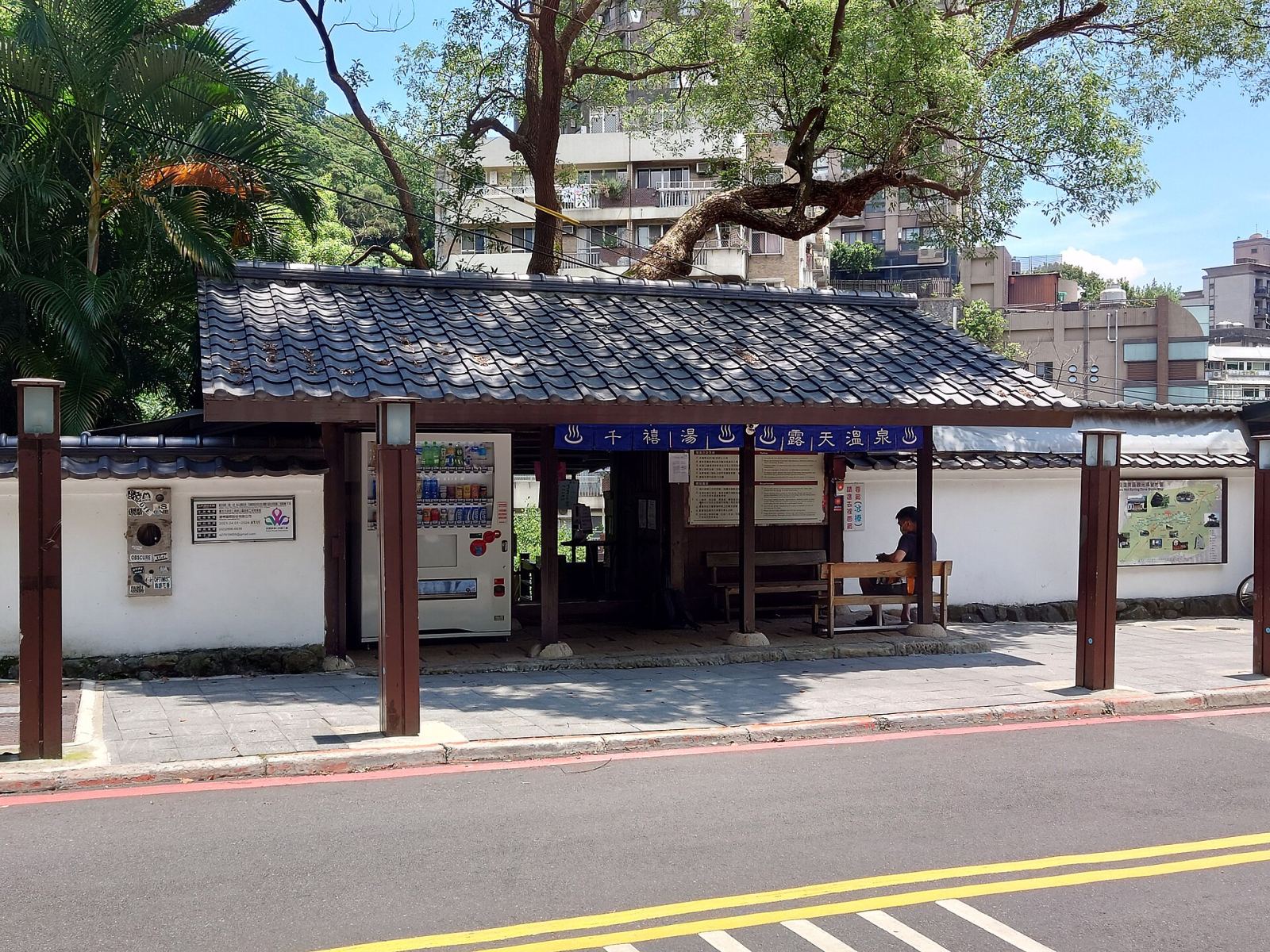
Most Beitou bathhouses follow Japanese-style onsen etiquette: shower thoroughly before entering the water, no swimsuits in gender-separated pools (though some resort-style facilities allow swimwear in mixed pools), and no photography inside bathing areas. Tattoo policies vary by venue, so check ahead if you have visible tattoos, since some more traditional bathhouses still enforce restrictions that resort-style facilities have relaxed.
Further up the valley, Thermal Valley (Dixinggu) is the visual centerpiece of the district: a milky, sulfurous pool that steams dramatically, especially in cooler weather, with water temperatures historically reaching near-boiling before controls were added for visitor safety. Swimming isn't permitted, but the surrounding boardwalk offers some of the most striking photo opportunities in Taipei, and the sulfur smell, while strong, is part of the authentic experience many visitors specifically come for. The valley's steam rises most dramatically in the early morning and on cooler, damper days, so timing a visit around weather can improve the spectacle considerably, and photographers in particular tend to favor the first hour after the park opens, when both light and steam are at their most dramatic.
For an actual soak, options range widely in price and formality. Budget travelers can use the free public foot baths in Beitou Park, while modest public bathhouses charge a small entrance fee for shared gender-separated pools. At the higher end, hotels and dedicated spa resorts around the park offer private hot spring rooms, often with large picture windows overlooking the forested valley, ideal for couples or those wanting privacy rather than a communal soak. Many visitors combine a museum visit, a walk through the valley, and a bathhouse soak into a single half-day loop, since everything sits within about fifteen minutes' walk of the MRT station, and towels or basic toiletries are usually available to rent or buy on-site for anyone arriving without their own.
Beyond the springs themselves, Beitou rewards a bit of extra wandering. The Puji Temple, a short walk uphill from the park, is a serene Japanese-style Buddhist temple built in 1905, its wooden architecture and quiet garden offering a peaceful contrast to the steam and crowds below. Further up the valley, trailheads lead into the lower reaches of Yangmingshan National Park, where short, well-marked paths pass through subtropical forest and offer views back down over the Beitou basin. Even travelers who only intend to bathe often find themselves adding an extra hour or two once they see how much green space and quiet heritage architecture surrounds the springs themselves, a pleasant surprise for anyone expecting the area to be little more than a row of bathhouses.
Getting to Beitou is one of the simplest excursions in Taipei: take the MRT Red Line to Beitou Station, then transfer to the short branch line one stop to Xinbeitou Station, which deposits you directly at the edge of Beitou Park. The whole ride from Taipei Main Station takes well under 40 minutes. Because the district sits at the base of Yangmingshan, it's also possible to continue further uphill for hiking after a soak, making Beitou a good half-day or full-day combination trip for travelers who enjoy both nature and relaxation in the same outing, and one that feels a world away from the density of downtown Taipei despite the short commute.