Bugis Street: Singapore's Largest Street Market, Explained
From a legendary nightlife strip to an 800-stall shopping maze inside Bugis Junction — what Bugis Street is today, what it used to be, and how to shop it well.

Ask a Singaporean where Bugis Street is and they'll point you toward a glass-roofed shopping arcade attached to Bugis Junction mall, packed with racks of SGD10 tops, phone cases, and souvenir keychains. Ask someone who visited in the 1970s and you'll get a completely different answer — one involving neon lights, late-night crowds, and a nightly spectacle that made Bugis Street famous on the other side of the world. Both people are talking about the same patch of ground in downtown Singapore, and both are right. Bugis Street today is the largest street-shopping destination in the country, a sprawling, air-conditioned bazaar of 800-plus stalls where budget fashion, cheap souvenirs, and street food collide. But the name carries a much stranger history underneath it, and knowing that history makes a visit to the market a little more interesting than just another shopping stop.
The area gets its name from the Bugis people, seafarers and traders originally from South Sulawesi in Indonesia, who settled around this part of the Rochor River in the early 1800s and built a reputation — fairly or not — as formidable sailors and, in some 19th-century British accounts, as pirates. The old Chinese community in the area knew the wider neighborhood as "Xiao Po," meaning "little slope," a name that has mostly faded from use but still turns up in older histories of the district. For most of the 20th century Bugis Street was an unremarkable market street. Its real transformation — and the one that put it on the map internationally — happened after dark, starting in the 1950s.
From the 1950s through the mid-1980s, Bugis Street became internationally known — nicknamed "Boogie Street" by the British and American servicemen who passed through Singapore on shore leave — for its nightly open-air gathering of transvestite and transsexual performers and hostesses, who turned the street into one of the most talked-about nightlife scenes in Southeast Asia. It was a period piece of old Singapore that drew sailors, tourists, and journalists from around the world, and for a couple of decades it was arguably the single most famous street in the city after Orchard Road. That entire scene came to an abrupt end in the mid-1980s, when construction of the Bugis MRT station physically took over the site. The old street was demolished, the community that had defined it scattered, and by the time the dust settled, Bugis Street as the world had known it was gone.
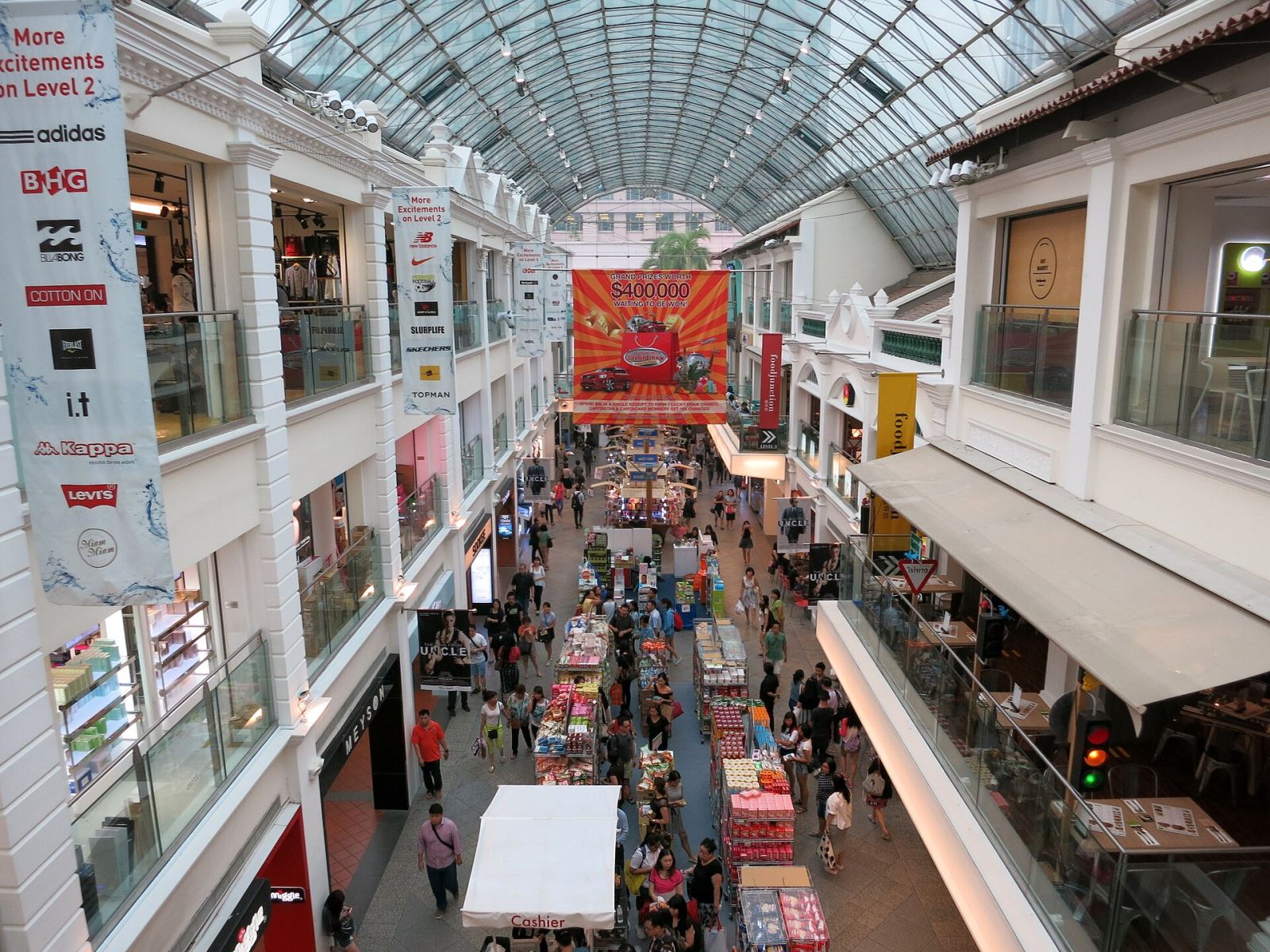
What replaced it, a few years later, was Bugis Junction — one of Singapore's first air-conditioned shopping malls, opened in 1995, built with a genuinely clever architectural idea: rather than erase the old street grid entirely, the developers recreated a version of the original Bugis Street as a covered, climate-controlled pedestrian lane running through the middle of the mall, complete with a glass barrel-vault roof overhead. So the street you walk through inside Bugis Junction today, lined with shops like Cotton On, Levi's, and BHG, sits on almost exactly the footprint of the original road — just roofed over and thoroughly gentrified. It's a rare case of a Singapore redevelopment project literally building a monument to what it replaced.
Here's where it gets confusing for first-time visitors: the market stalls that most tourists mean when they say "Bugis Street" today — the 800-stall bazaar of cheap clothes and souvenirs — aren't actually inside Bugis Junction at all. That covered street inside the mall is closer to a retail heritage feature. The real shopping action, officially marketed as "New Bugis Street," is a separate multi-storey building on what used to be Albert Street, just a short walk from Bugis Junction and directly connected to it and to the neighboring Bugis+ mall via underground linkways. This is the one worth actually visiting if you're after the market experience, and it's also the one people usually mean when they recommend "Bugis Street" as a shopping stop.
| Time | Crowd & Atmosphere | Best For |
|---|---|---|
| Weekday mornings (10am-12pm) | Quietest window; stalls still setting up but open for business | Unhurried browsing, photos without crowds in frame |
| Weekday afternoons | Moderate; local shoppers and tourists mixed in | Casual shopping with room to compare stalls |
| Weekend afternoons | Busiest; narrow aisles get genuinely packed | Atmosphere and people-watching, not fast shopping |
| Evenings (after 6pm) | Steady but comfortable; food stalls at their best | Dinner plus a slower shopping wind-down |
Prices at most stalls are already low and fairly fixed, but light bargaining is normal if you're buying multiple items from the same stall. Bring small cash — many of the smaller stalls (especially food and accessories) don't take cards, though the larger fashion stalls generally do.
New Bugis Street itself is a purpose-built, four-storey market hall rather than an open street, which keeps it comfortable regardless of Singapore's heat or the occasional downpour. The ground floor mixes food stalls with a wet market section and general bargain goods, and it's the busiest, noisiest level of the building. Head up to the first floor for the bulk of the women's fashion — dresses, tops, and swimwear typically run from about SGD10 to SGD35, among the cheapest prices you'll find anywhere in Singapore, including well below what similar items cost at Orchard Road malls or in the Changi Airport shops. The second floor carries more fashion alongside accessories and jewelry, while the third floor is where you'll find electronics accessories, phone cases, novelty items, and the kind of cheap souvenirs — magnets, keychains, tote bags — that make for easy gifts without denting a travel budget. Men's clothing and sunglasses are scattered across the fashion floors at similarly low prices. Realistically, budget somewhere between 45 minutes and 90 minutes to work through the building properly, longer if you're a committed bargain-hunter.
Getting to Bugis Street is about as easy as Singapore transit gets. Bugis MRT station, served by the East-West Line and Downtown Line, sits right beneath the complex — take Exit B or C and you'll surface within a minute's walk of the market entrance. There's no need to plan around opening hours too carefully; stalls generally trade from mid-morning into the evening seven days a week, though exact hours vary stall to stall since this is an independently run market rather than a single managed retailer.
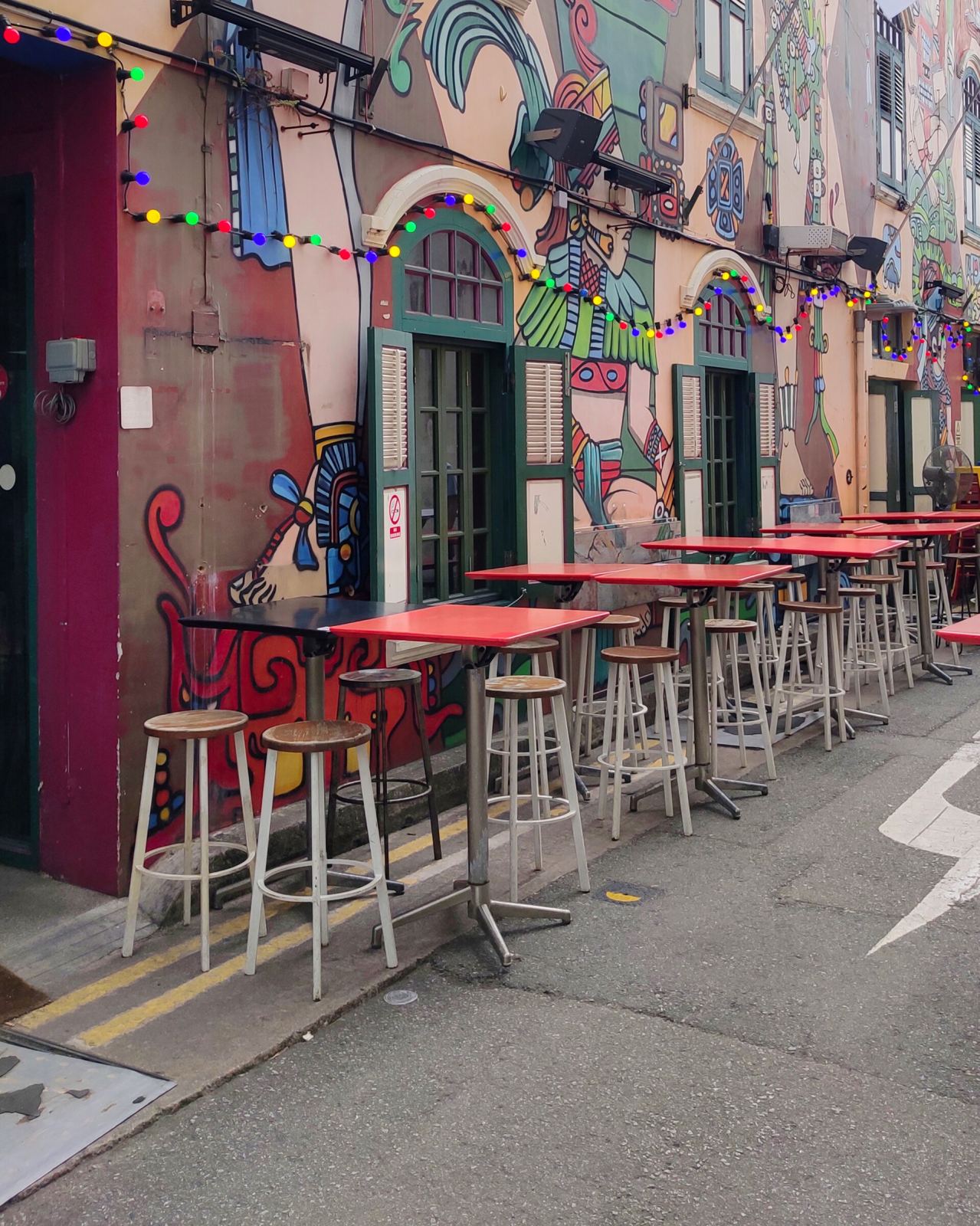
Bugis Street sits within easy reach of some of Singapore's other classic quarters, which makes it a natural stop to combine with a longer walking day rather than a standalone destination. It's a short ride or a manageable walk from the historic districts covered in our guide to Chinatown, Little India, and Kampong Glam, all of which share a similar mix of heritage streets and low-cost shopping. If you're after a different style of shopping altogether — smaller, independent boutiques with better design and noticeably higher prices — the comparison holds up in person too: Haji Lane is about a 10-minute walk away and feels like Bugis Street's stylish, expensive cousin. And if you're only in the city briefly, Bugis Street is exactly the kind of low-commitment, high-payoff stop we recommend in Is Singapore Worth a 2-Day Layover?