Burano: Venice's Colorful Lagoon Island
Visit Burano, the rainbow-colored fishing island in the Venetian Lagoon famous for its painted houses, centuries-old lace-making tradition, and quiet canals.

Burano: Venice's Colorful Lagoon Island
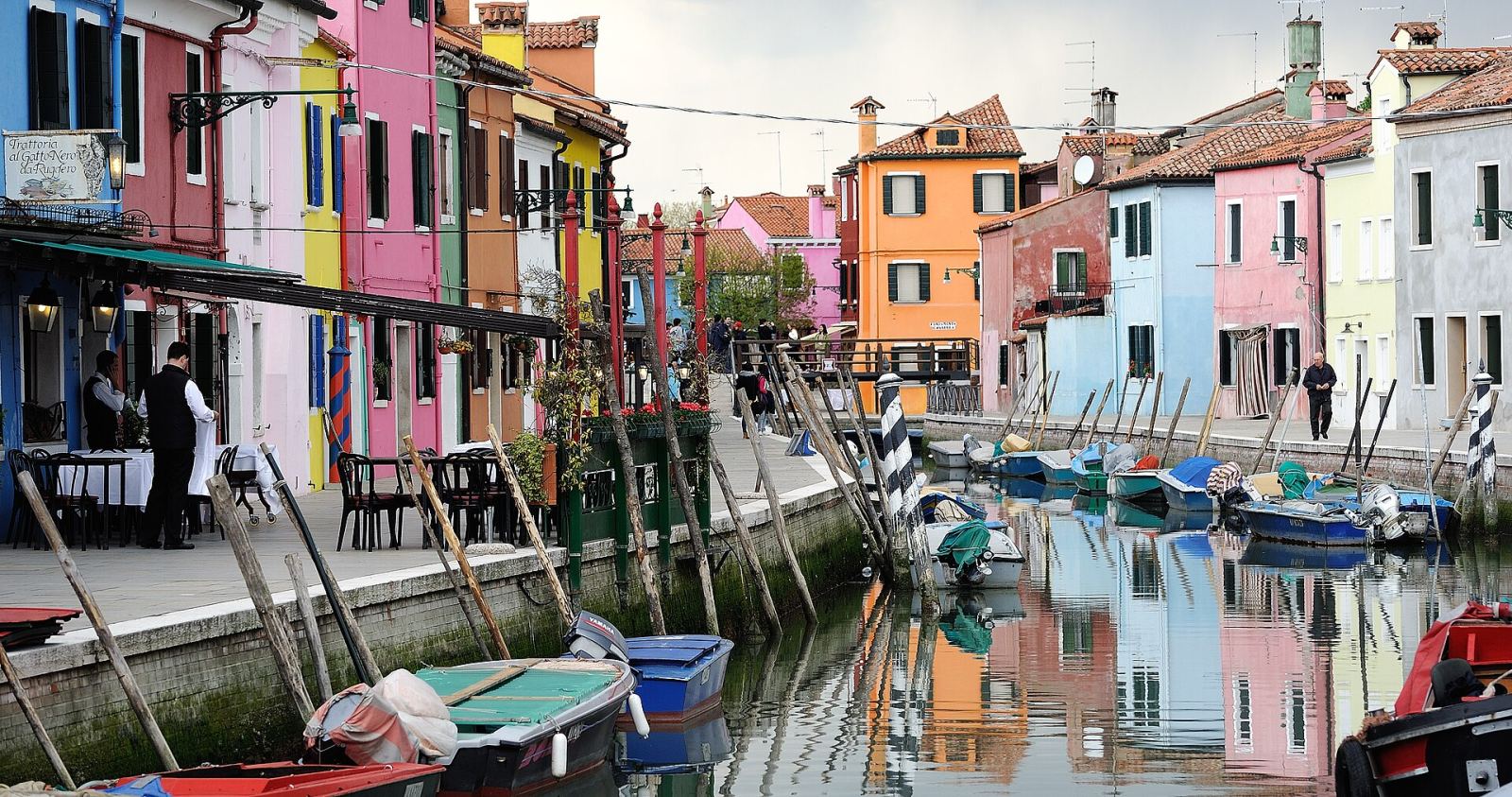
Burano sits roughly forty-five minutes by vaporetto from central Venice, a cluster of four small islets in the northern lagoon that has become one of the most photographed places in the entire Venetian archipelago, thanks almost entirely to its houses. Painted in a dense patchwork of reds, blues, yellows, and pinks, often with two or three colors on a single small facade, Burano's waterfront looks less like a working fishing village and more like a painter's deliberate composition, which is more or less exactly what it has become for the crowds of day-trippers who now arrive specifically to photograph it. The settlement itself is thought to date back to the fifth century, founded by refugees fleeing the mainland city of Altino in the path of Attila's invasions.
The origins of the colorful houses carry two commonly told explanations, and both are likely true in part. Practically, the different colors are said to have originally helped mark property boundaries and let fishermen identify their own homes from a distance while still out on the water, particularly useful when returning through fog, a genuine hazard in the lagoon. Today, the tradition is maintained through local regulation: residents wishing to repaint their house must submit a request to the local authority, which responds with a specific list of colors permitted for that particular building, ensuring the patchwork effect continues in a controlled, deliberate way rather than through pure individual whim.
Burano's other defining tradition is lace-making, a craft that reached its peak here in the sixteenth century, when Venetian point lace, known as Punto di Burano, became prized across European courts for its intricate, needle-made patterns. The industry gradually declined and had effectively died out by the late eighteenth century, until a dedicated lace-making school was founded on the island in 1872, established specifically to revive the craft and combat local poverty following a period of economic hardship. That school's legacy lives on in the Museo del Merletto, the island's lace museum, and in a handful of remaining artisans who still practice and teach the technique, making Burano one of the last places in the world where genuine hand-made lace in this tradition is still produced.
| Activity | Where | Time Needed |
|---|---|---|
| Photographing colorful houses | Via Baldassare Galuppi and side canals | 30-60 minutes |
| Lace museum visit | Museo del Merletto, Piazza Galuppi | 30-45 minutes |
| Seafood lunch | Waterfront trattorias along the canals | 1-1.5 hours |
Burano gets very busy with day-trip groups arriving late morning through mid-afternoon. Taking an early vaporetto to arrive by 9am, or staying until after 5pm when tour groups thin out, gives a noticeably calmer, more photogenic experience of the same streets.
Beyond the postcard views, Burano remains a genuine fishing community, and its restaurants reflect that heritage more directly than almost anywhere else in the Venice area. Risotto de go, made with a small lagoon fish called goby, is considered the island's signature dish, alongside other seafood pulled straight from the surrounding waters that morning. The island's compact size, walkable in well under an hour end to end, means visitors rarely need more than half a day here, which pairs naturally with a stop at nearby Murano, the glass-making island, on the same vaporetto route back toward Venice.
The leaning bell tower of the Church of San Martino, visibly tilted at an angle that rivals Pisa's more famous tower, provides Burano's other well-known landmark, standing at the edge of the main square, Piazza Baldassare Galuppi, named after the eighteenth-century composer who was born on the island. Sitting at one of the small cafes ringing the square, away from the busiest photo-taking streets nearer the vaporetto stop, offers a quieter way to take in the same colorful backdrop without competing for the perfect shot alongside dozens of other visitors doing exactly the same thing.
A short vaporetto hop from Burano also connects to Torcello, the lagoon's original settlement and, by most accounts, the birthplace of Venice itself before the population shifted to the main islands centuries ago. Today Torcello holds only a handful of residents and the striking Cathedral of Santa Maria Assunta, whose Byzantine mosaics rank among the oldest and best preserved in the entire lagoon. Pairing the two islands in a single outing, colorful Burano followed by near-empty Torcello, gives a vivid sense of how dramatically the lagoon's fortunes have shifted over the centuries, from ancient beginnings to quiet obscurity to modern tourist fame, all within the same small stretch of shallow lagoon water.
Reaching Burano requires the LN vaporetto line, which departs from Fondamente Nove on Venice's northern edge and takes roughly 45 minutes each way, so budget transit time carefully alongside your visit. Many travelers combine the trip with a stop at Murano, roughly midway along the same route, though doing both islands properly in one day means keeping the pace brisk. Because the last return vaporettos run at a fixed schedule and can fill up during peak season, it's worth checking departure times before you arrive so you aren't left waiting for a later boat back to the main city.