Rialto Market: Venice's Historic Marketplace
Explore the Rialto Market, Venice's centuries-old produce and fish market beside the Grand Canal, where the Republic's economic heart still beats every morning.

Rialto Market: Venice's Historic Marketplace
The Rialto Market (Mercato di Rialto) has occupied the same bend of the Grand Canal for nearly a thousand years, making it one of the oldest continuously operating markets in Europe. Its origins trace back to 1097, when two wealthy Venetians, Pietro and Tiso Orio, donated a large plot of land including shops and warehouses to the Republic of Venice, and the city's main market was relocated here by the close of the eleventh century. For the length of the Venetian Republic's existence, Rialto was not just a market but the economic engine of the entire city, the point where goods arriving from across the Mediterranean and beyond were unloaded, weighed, taxed, and sold.
The market's layout still reflects centuries of specialization. Following a destructive fire in the sixteenth century, a complex of squares and porticoes was built to the west of the Rialto Bridge, with different sections dedicated to specific goods, a division still recorded today in the names of local lanes and squares: the Erberia for fruit and vegetables, the Naranzeria for oranges, the Speziali for spices, and the Pescaria for fish. The Pescaria's origins reach back to at least the thirteenth century, and though its exact location shifted over the years, most notably in 1459, fish has been sold on this spot in some form for the better part of Venice's history.
Arrive early, ideally before 9am, and the market feels almost unchanged from centuries past: gondolas and delivery boats nose up to the canal-side docks, porters wheel crates of glistening fish and impossibly fresh produce between stalls, and vendors call out prices in rapid Venetian dialect. The Pescaria in particular rewards an early visit, its marble counters piled with local lagoon specialties like moeche, soft-shell crabs caught during their brief molting season, alongside cuttlefish, scampi, and whatever the day's boats have brought in from the Adriatic. Even visitors with no intention of cooking find the sheer sensory density of the fish market worth the early wake-up call.
| Section | What's Sold | Best Time to Visit |
|---|---|---|
| Erberia | Fruit and vegetables | 7:00-10:00am for best selection |
| Pescaria | Fresh fish and lagoon seafood | 7:00-9:00am, closes by early afternoon |
| Surrounding calli | Cheese, wine, cured meats, souvenirs | Open later into the afternoon |
The Pescaria fish market is closed on Sundays and Mondays, so plan a Tuesday through Saturday morning visit if seeing the fish stalls in full swing matters to you. The Erberia produce section runs daily except Sunday.
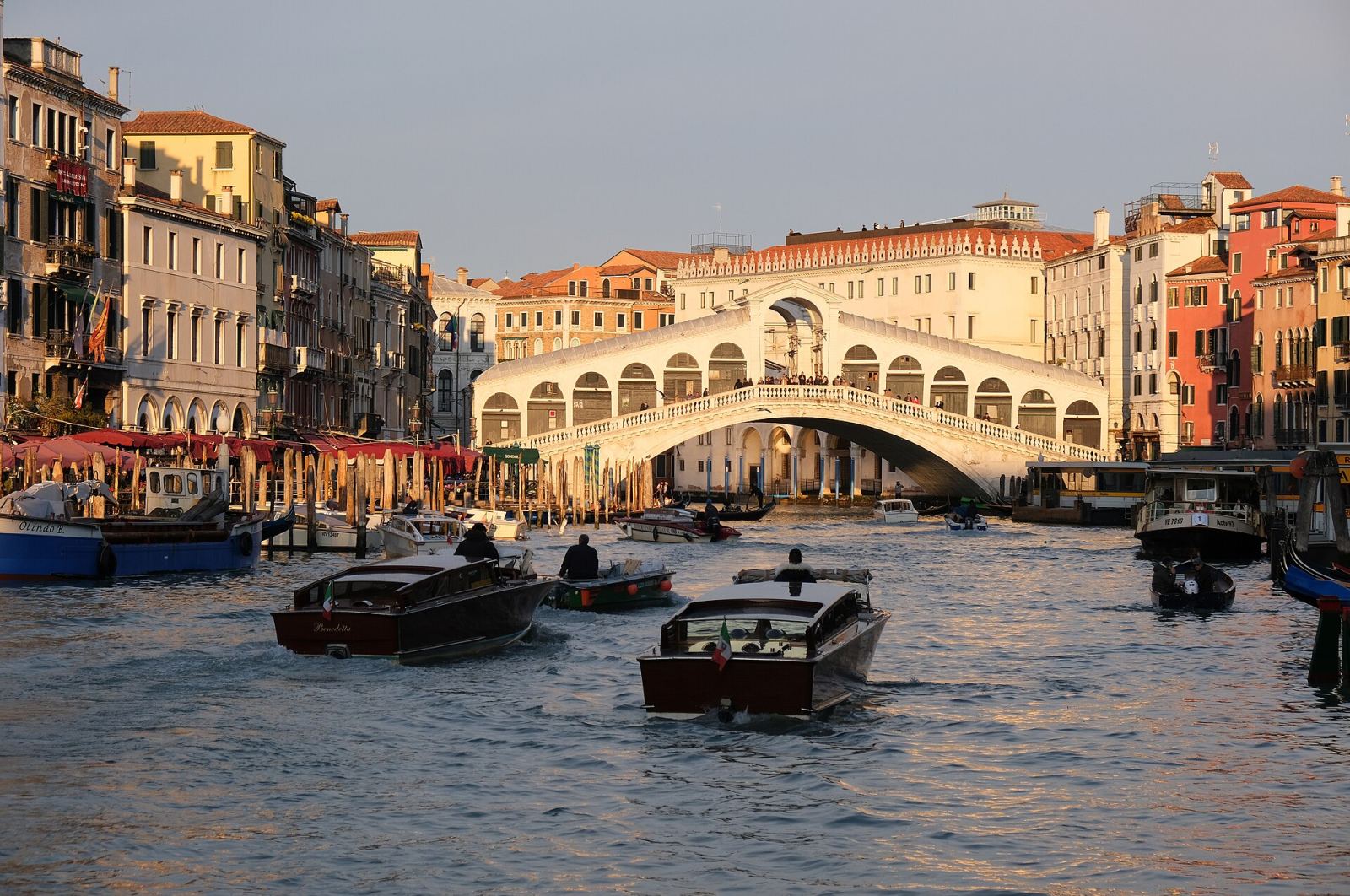
Just steps from the market stalls, the Rialto Bridge itself deserves unhurried attention. The current stone bridge, completed in 1591 after a design competition that reportedly included submissions from Michelangelo and Palladio, replaced a series of wooden bridges that had collapsed or burned over the centuries. Its single arch spans the Grand Canal in one dramatic leap, lined on both sides with small shops selling jewelry, leather goods, and Venetian souvenirs, a commercial tradition that has continued on this exact spot since the bridge first opened. Climbing to the bridge's central point offers one of the most photographed views in the city, looking directly down the Grand Canal's gentle curve.
Beyond the stalls, several small bacari, traditional Venetian wine bars, cluster in the streets immediately behind the market, serving cicchetti, bite-sized snacks of baccala mantecato, fried seafood, or marinated vegetables, alongside inexpensive glasses of local wine. This tradition of an ombra, a small glass of wine taken standing at a bar counter, paired with a few cicchetti, effectively functions as Venice's answer to tapas, and doing a short bacaro crawl through the streets around Rialto is one of the most authentic ways to experience how Venetians actually eat and socialize, well away from the more tourist-oriented restaurants near St. Mark's Square.
Shopping at Rialto goes well beyond food. The streets radiating from the market, particularly toward San Polo, hold small workshops selling hand-made paper, Murano glass jewelry, and carnival masks crafted by artisans who still work in back rooms visible from the street. Unlike the mass-produced souvenirs sold near the train station, many of these shops have operated for decades, are family-run across multiple generations, and are happy to explain how a piece was made if you ask, often taking real pride in walking a curious visitor through the process. Combined with the bacari and produce stalls, this makes the streets immediately around Rialto one of the few parts of central Venice where shopping, eating, and simply observing daily life all overlap in the same few blocks, rewarding visitors who linger rather than rush straight through toward the bridge.
Getting to the Rialto Market is straightforward: the Rialto Mercato vaporetto stop on the number 1 line sits directly beside the produce section, or you can walk from San Marco in roughly ten to fifteen minutes along well-signposted streets. Because the market's best hours are genuinely early, staying overnight somewhere within walking distance pays off if you want to see it at its liveliest, before the crowds of day-trippers arrive and while the stalls are still being restocked from the morning's deliveries.