The Champs-Élysées: Paris's Most Famous Avenue, Explained
Nearly two miles of "the most beautiful avenue in the world" — its 400-year history, what to actually see, and how it connects to the rest of Paris.
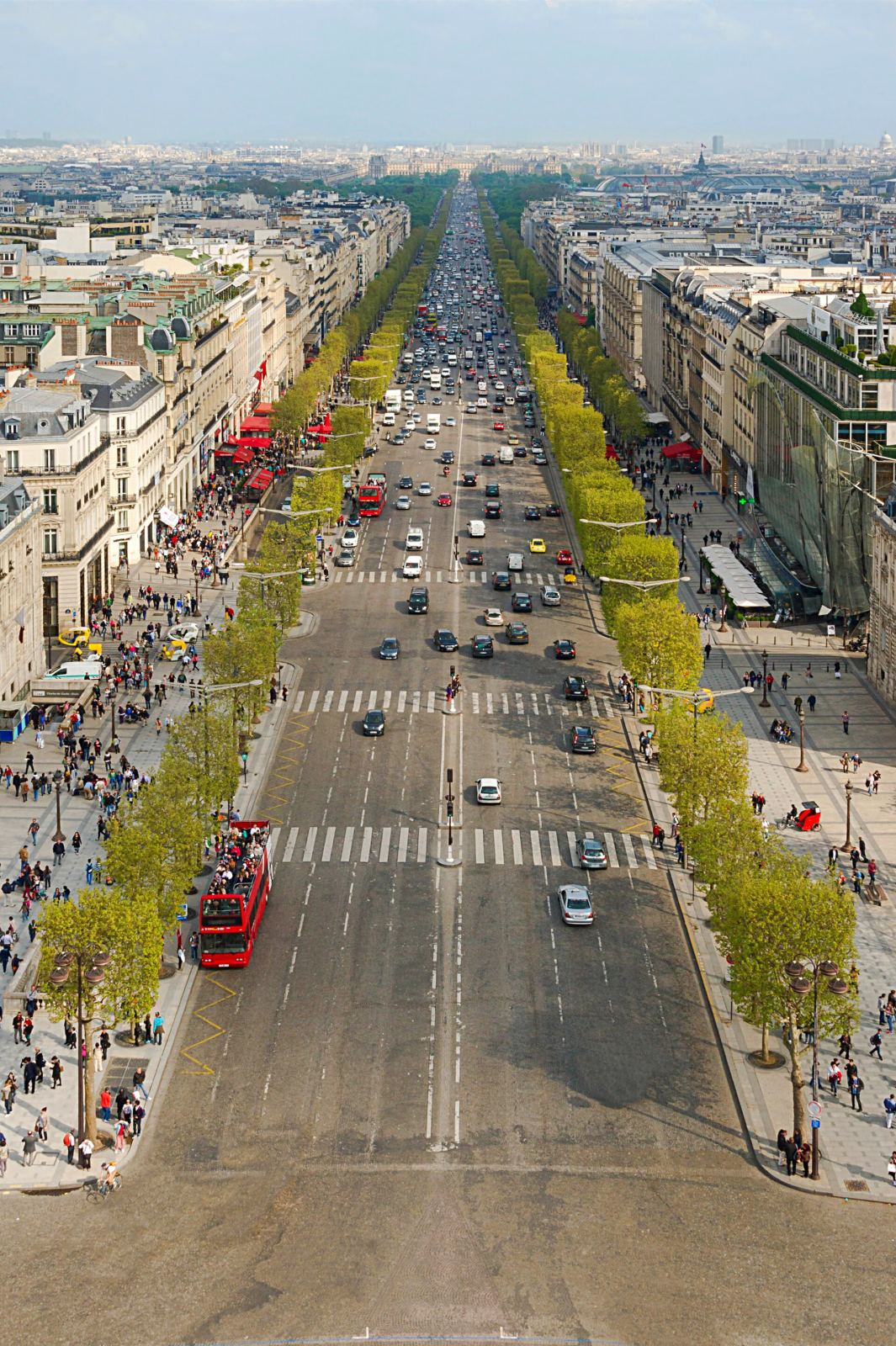
The French call it "La Plus Belle Avenue du Monde" — the most beautiful avenue in the world — and the Avenue des Champs-Élysées has spent close to two centuries living up to that billing. Running dead straight for 1.9 kilometers between Place de la Concorde and the Arc de Triomphe, it's the street most people picture the instant someone says "Paris," and it carries that reputation into everything from Bastille Day military parades to the final sprint of the Tour de France. It's also, unavoidably, one of the most crowded and commercialized stretches of pavement in the city — which doesn't make it any less worth walking, just worth knowing what you're actually walking into.
The avenue's history starts, improbably, as vegetable fields. In the early 1600s, Queen Marie de Médicis — who adored her Tuileries Garden nearby — had a tree-lined promenade laid out extending from the palace grounds through what was then open farmland. Later in the century, the renowned royal gardener André Le Nôtre (the same designer behind Versailles) redesigned and extended the corridor further. By the early 1700s, the promenade had earned the name Champs-Élysées, borrowed from Greek mythology's Elysian Fields — the resting place of heroes and the blessed dead. The avenue as it looks today owes a great deal to architect Jacques Hittorff, who rebuilt it in 1840 and installed roughly 1,200 gas lanterns, turning it into one of the first grand illuminated boulevards in Europe.
The avenue is traditionally divided into two distinct halves by locals, even though visitors tend to walk it as one continuous stretch. The lower half, closer to Place de la Concorde, runs through the Jardins des Champs-Élysées — a genuinely green, tree-shaded park section rather than a shopping strip, home to the Grand Palais, Petit Palais, and several theaters. Only past Rond-Point does the avenue turn into the wide, retail-lined boulevard most people picture, running the rest of the way up to the Arc de Triomphe. Knowing this split in advance helps set expectations: the postcard version of the Champs-Élysées is really only the upper half.
Today's Champs-Élysées is 70 meters wide and lined with a mix that swings from ultra-luxury flagship stores to mainstream chains, cinemas, car showrooms (several major manufacturers keep a permanent presence here), and cafés built for people-watching more than for a quiet meal. The Arc de Triomphe anchors the northwestern end, honoring Napoleon's military campaigns and offering a rooftop viewing platform with one of the best panoramic views in Paris. At the opposite end, Place de la Concorde — with its Egyptian obelisk, a genuine 3,300-year-old gift from the ruler of Egypt in 1836 — opens onto the Tuileries Garden and, beyond it, the Louvre.
| Time | Atmosphere | Best For |
|---|---|---|
| Weekday mornings | Quietest window, shops just opening | A calmer first walk down the avenue |
| Afternoons/evenings | Busiest; full tourist and shopping crowds | Shopping and general atmosphere |
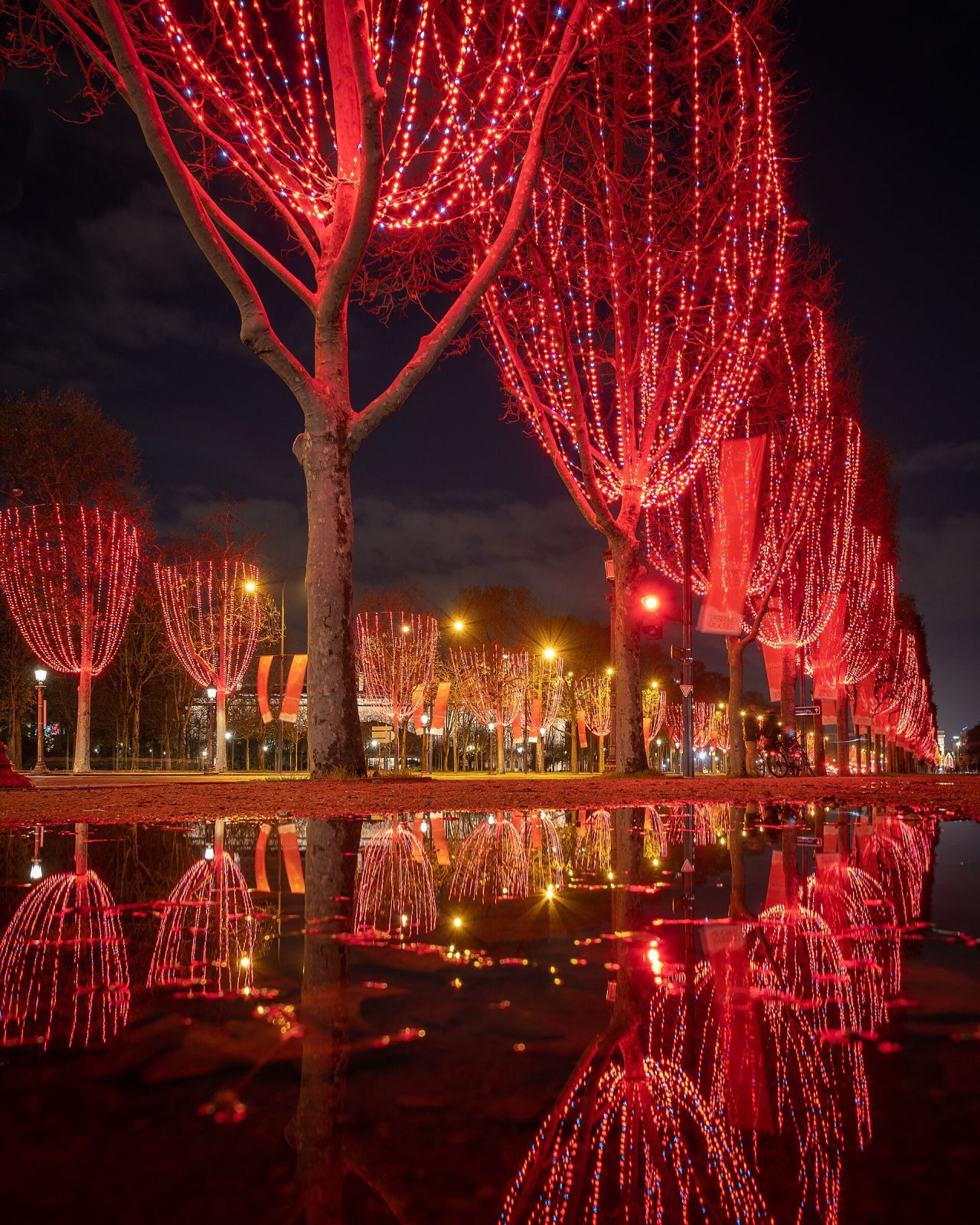
| November-January (Christmas lights) | Trees along the avenue wrapped in illuminated lights | Evening photography, one of Paris's best free seasonal displays |
| July 14 (Bastille Day) | Military parade and huge crowds | The parade itself, not casual sightseeing |
The Champs-Élysées is one of the most pickpocket-targeted stretches in Paris, precisely because of the dense, distracted tourist crowds. Keep bags zipped and in front of you, and be extra alert around the metro entrances and outdoor café seating, both classic pickpocket zones.
The avenue's retail character has shifted noticeably over the past few decades, and locals will often tell you the Champs-Élysées "isn't what it used to be" — a complaint that reflects a real trend of independent boutiques and historic cafés giving way to chain stores and flagship outlets for global brands. The city of Paris has periodically floated plans to reduce car traffic and add more greenery along the avenue to bring back some of its former prestige, though as of now it remains a major traffic thoroughfare as well as a pedestrian one, and vehicles are very much part of the experience of walking it.
Beyond the avenue itself, the surrounding neighborhood rewards a detour. The Grand Palais and Petit Palais, two Belle Époque exhibition halls built for the 1900 World's Fair, sit just south of the avenue near the Concorde end, both worth a look even if you don't go inside for a current exhibition. The Champs-Élysées also hosts the last stage of the Tour de France every July, when cyclists finish laps of the avenue amid enormous roadside crowds — one of the few times of year the street's shopping-mall character gives way to genuine sporting spectacle.
The Champs-Élysées sits at the heart of central Paris, an easy walk or short metro ride from the Louvre and the Eiffel Tower. If you're planning how to fit it into a broader trip, our guide on How Many Days Do You Need in Paris? can help you budget the time. And if the avenue's cafés leave you wanting something more specifically Parisian, see our guide to Cheese and Wine Tasting in Paris.
The avenue is served by several metro stations along its length: Charles de Gaulle–Étoile at the Arc de Triomphe end, George V and Franklin D. Roosevelt in the middle (both on Line 1), and Concorde at the southeastern end. All put you within a minute or two's walk of the avenue itself, and because the whole stretch is a straight, flat, pedestrian-friendly walk, most visitors simply pick one end and walk the full length rather than hopping between stations.


