Abu Dhabi Corniche: The City's 8-Kilometer Waterfront, Explained
From working harbor to Blue Flag beach and landscaped promenade — how Abu Dhabi built its favorite public space.
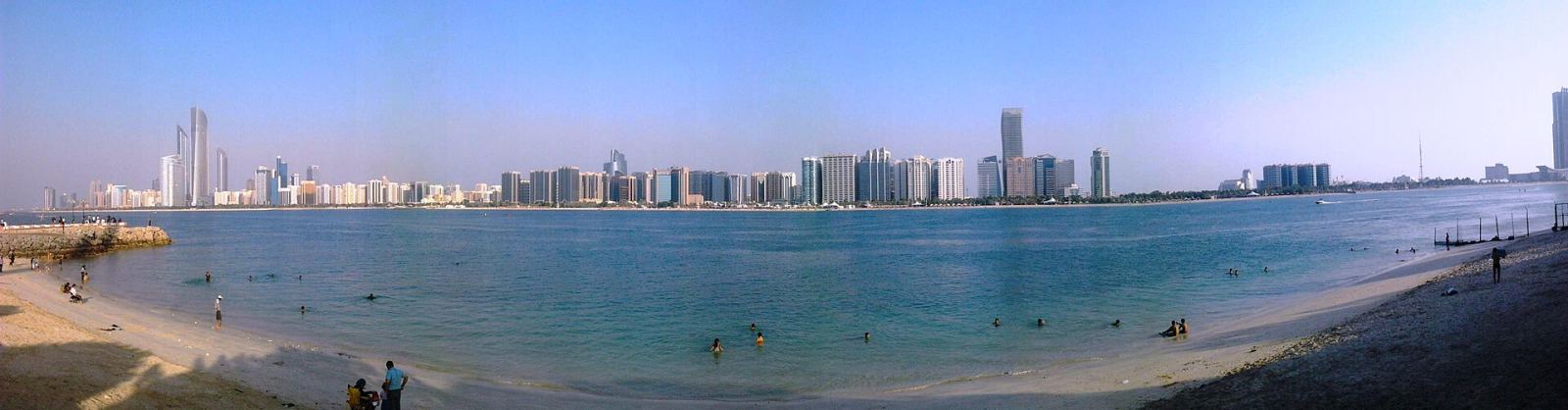
Abu Dhabi's Corniche is an eight-kilometer curve of manicured waterfront running along the city's northern edge, and it functions as something close to the emirate's living room — a place locals actually use daily, for cycling, evening walks, family picnics, and swimming, rather than a photo-op strip built primarily for visitors. It's also one of the clearest physical illustrations of how quickly Abu Dhabi transformed: the entire promenade sits on ground that was, within living memory, an unremarkable working harbor rather than a landscaped public park.
Before the 1970s, this stretch of coastline consisted primarily of small docks where traditional dhows and fishing boats anchored — a functional harbor, not a recreational space. The discovery of oil and Abu Dhabi's subsequent rapid development changed that calculus entirely, and city planners recognized early on that the growing capital needed a proper public waterfront. Extensive redevelopment through the 1970s and 1980s reshaped the coastline with modern landscaping, dedicated roads, and pedestrian paths, and a further round of major land reclamation between 2002 and 2004 extended the Corniche to roughly its current scale, adding significantly more usable shoreline than the original coastline ever offered.
Corniche Beach, the promenade's flagship stretch, holds Blue Flag certification — an international eco-label awarded for cleanliness, safety, and environmental management — and draws an estimated 30,000 to 50,000 visitors monthly across its roughly 2-kilometer length, divided into distinct sections for families, general public use, and other purposes. Beyond the beach itself, the wider Corniche includes children's play areas, separated cycling and pedestrian paths, cafés and restaurants, sports facilities, and outdoor gyms spread along its full length, making it functionally closer to a linear city park than a single beach.
| Time | Atmosphere | Best For |
|---|---|---|
| Early morning | Quiet, joggers and cyclists, cooler temperatures | Exercise and a peaceful walk before the heat builds |
| Midday (especially summer) | Very hot, considerably fewer people outdoors | Not recommended outside of air-conditioned café stops |
| Late afternoon-evening | Busiest, families, cyclists, and picnickers out in force | The fullest Corniche atmosphere, especially in cooler months |
| Weekend evenings | Peak local usage, popular for family outings | Experiencing the Corniche the way Abu Dhabi residents do |
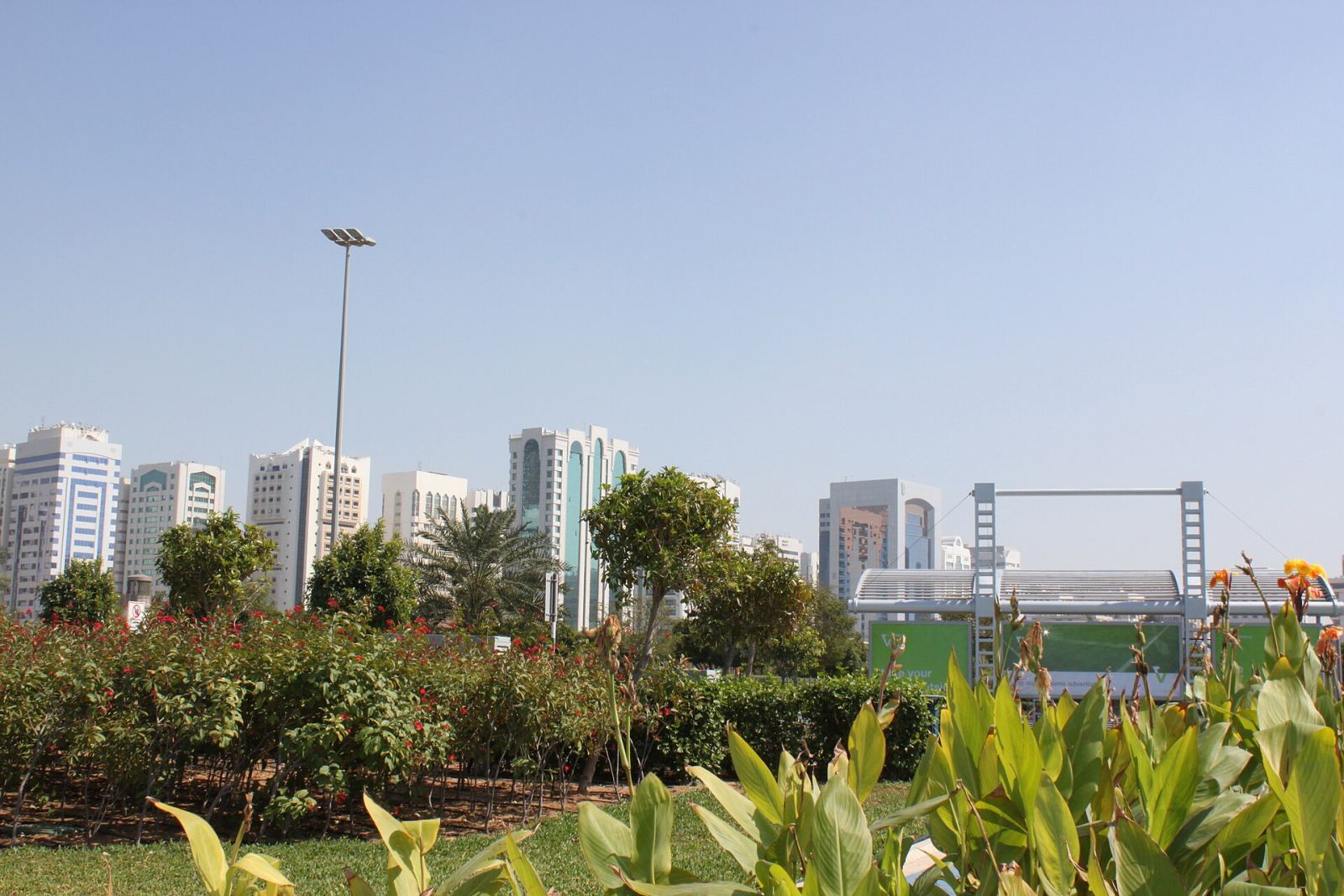
Public art and sculpture installations dot several points along the Corniche's length, adding visual interest to what could otherwise be a fairly uniform stretch of park and beach — a mix of contemporary pieces and more traditional works that reward slowing down rather than treating the promenade purely as a route from one end to the other.
Abu Dhabi's summer heat (often well above 40°C/104°F from roughly June through September) makes the Corniche a largely evening-and-early-morning destination during those months. The cooler period from November through March is when the promenade sees its heaviest and most comfortable daytime use.
The scale of the reclamation project that created much of today's Corniche is easy to underestimate from ground level — a considerable portion of the land the promenade now occupies simply didn't exist as usable shoreline before the early 2000s, meaning that the wide beaches, gardens, and paths visitors experience today are, geologically speaking, a remarkably recent addition to the city rather than a naturally occurring feature that was merely tidied up.
The Corniche's dedicated, physically separated cycling path is one of the more practical amenities for visitors — bike rentals are available at several points along the route, and the flat, well-maintained surface makes it one of the easier ways to cover the promenade's full length without needing a car. At the western end, the Corniche connects toward the Marina area and the Emirates Palace, while the eastern stretch leads toward the older parts of the city center, giving the promenade a genuine role as a connective spine through Abu Dhabi rather than an isolated attraction.
The Corniche connects easily to central Abu Dhabi's other landmarks, including a reasonable trip to Sheikh Zayed Grand Mosque. For planning a broader Abu Dhabi itinerary around it, see Abu Dhabi's Best Ticketed Attractions and Abu Dhabi on $60 a Day.
The Corniche runs along the city's northern waterfront and is easily reached by taxi or ride-hailing app from anywhere in central Abu Dhabi, typically a short ride from most hotels. Public buses also serve several points along the route. Given its 8-kilometer length, most visitors pick a specific access point close to their accommodation rather than trying to walk the entire promenade in one visit.
Water sports and activities along the Corniche extend beyond simple swimming — kayak rentals, paddleboarding, and other calm-water activities are available at several points, taking advantage of the promenade's generally sheltered, gentle surf conditions compared to more exposed stretches of coastline elsewhere in the emirate. Lifeguards are stationed along the main beach sections during operating hours, adding a reasonable layer of safety oversight that's not always guaranteed at less formally managed public beaches in the region.
Frequently Asked Questions
The Corniche's sheer usability, day after day, by ordinary Abu Dhabi residents distinguishes it from a lot of Gulf waterfront developments built primarily to impress visitors — this promenade genuinely functions as public infrastructure, maintained to a standard that keeps locals coming back rather than treating it as a one-time photo stop, which is ultimately the clearest measure of whether a piece of urban planning like this actually succeeded.
Even for visitors with only a short layover or a single free evening in Abu Dhabi, a walk along even a small stretch of the Corniche gives a genuinely useful sense of the city's rhythm and scale — arguably more so than a rushed visit to any single landmark, since the promenade puts the skyline, the water, and the everyday life of the city all in view at once.