Gaeng Hang Lay: The Burmese-Influenced Pork Curry
A guide to gaeng hang lay, the northern Thai pork belly curry with Burmese roots, including what it tastes like and where to try it in Chiang Mai.
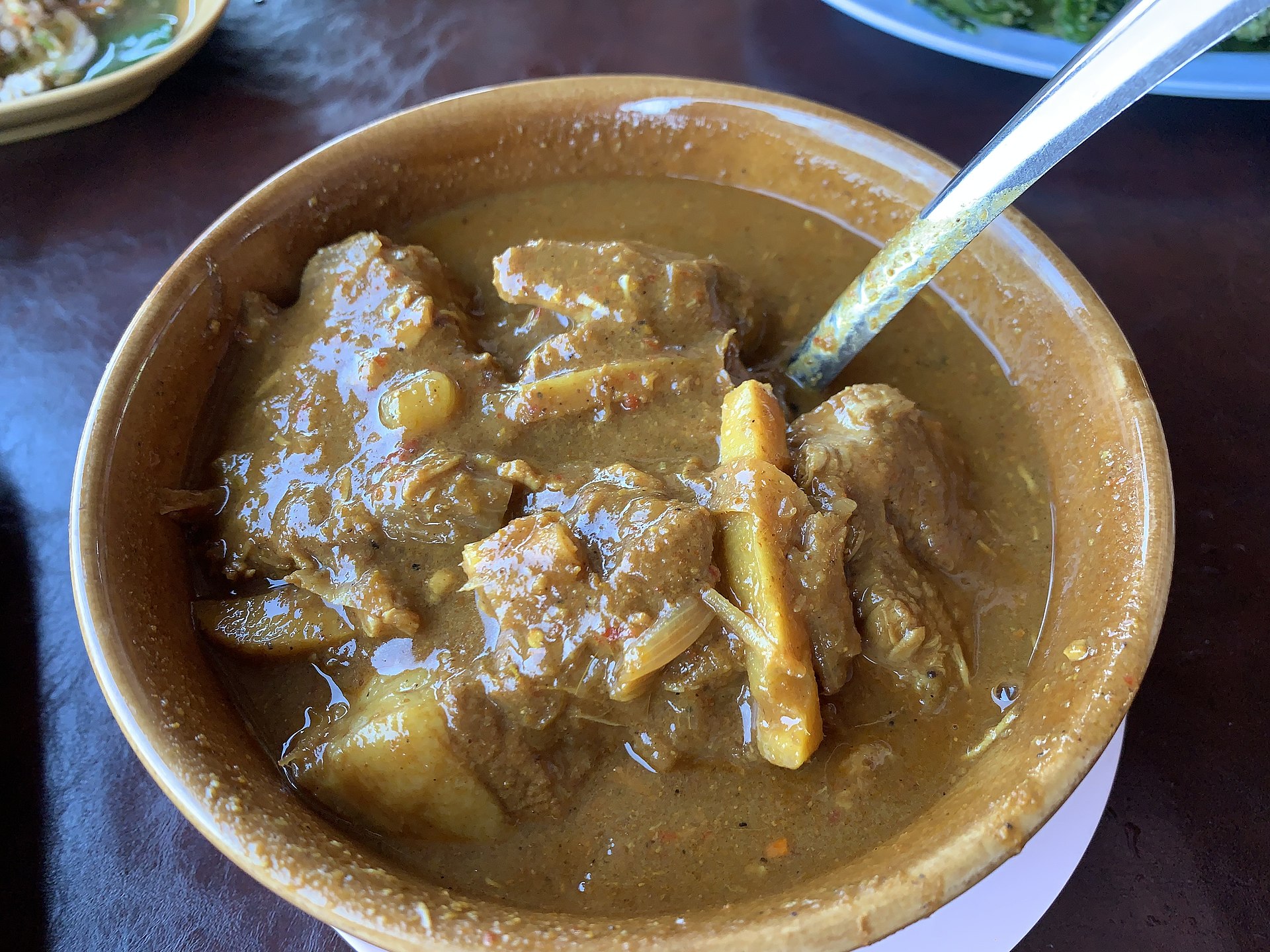
Gaeng Hang Lay: A Curry With a Border-Crossing Past
Gaeng hang lay is a northern Thai pork curry that tastes quite unlike the coconut-based curries most people associate with Thai food. It is made from slow-cooked pork belly or shoulder in a dry-spiced paste of ginger, garlic, tamarind, turmeric and curry powder, with a sweet and sour balance and no coconut milk. The result is tender, glossy meat with a rich, slightly sticky sauce and a warm, mellow spice rather than fiery heat.
The dish is of Burmese origin, arriving in northern Thailand through the long cultural and trading connections between the Lanna region and Myanmar. The name comes from a Burmese word for the curry, and it remains a staple of northern Thai home cooking and festive meals. In Chiang Mai it is served in small restaurants and at market stalls with sticky rice, often as part of a spread of northern dishes.
How to Eat Gaeng Hang Lay
| Step | What to Do |
|---|---|
| 1 | Order it with sticky rice, the traditional northern accompaniment |
| 2 | Pinch off a ball of rice with your fingers and use it to scoop up the pork and sauce |
| 3 | Add a few fresh slices of ginger from the curry or the side dish for sharpness |
| 4 | Balance the richness with raw vegetables or a green salad on the side |
Where to Try Them
Look for it at northern Thai restaurants in the Old City and in Nimmanhaemin, and at market stalls where curries are served from large pots. It is also commonly offered at khan toke dinners, a traditional Lanna style of dining on low tables with a selection of dishes. Prices are modest, and a plate with rice costs only a few dollars at local shops.
Ask if the pork is belly or shoulder. Belly is richer and more tender, while shoulder is leaner, and local cooks often have a strong opinion about which is better.