The Louvre Abu Dhabi: What to See and Why the Dome Matters
A guide to the Louvre Abu Dhabi's collection and its striking dome architecture on Saadiyat Island.

The Louvre Abu Dhabi
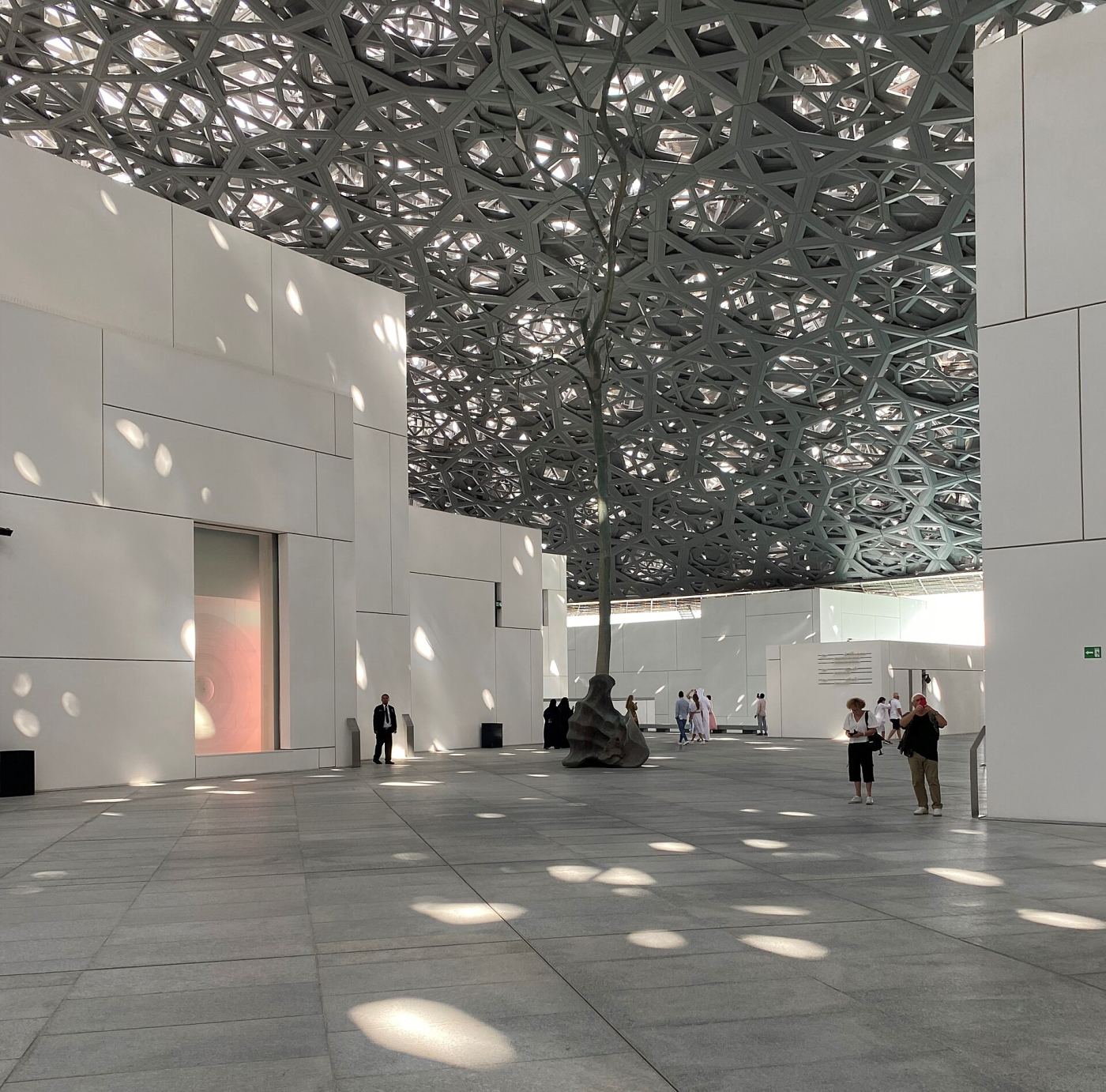
The Louvre Abu Dhabi, on Saadiyat Island, is a striking museum defined by its massive perforated dome — 180 meters in diameter, designed to let light filter through in a pattern meant to evoke palm fronds, creating a distinctive "rain of light" effect across the museum's white buildings below. Unlike the original Louvre in Paris, this is an independent museum under a long-term partnership agreement, with its own curated collection spanning human history and art from across civilizations rather than a branch of the Paris collection.
What's Inside
| Gallery Theme | What It Covers |
|---|---|
| Ancient civilizations | Artifacts spanning early human history across multiple cultures |
| Religious art | Objects representing major world religions side by side |
| Global connections | Exhibits highlighting trade and cultural exchange across history |
| Modern and contemporary art | Works from the 20th and 21st centuries |
Visiting the Museum
The museum's approach of displaying art and artifacts from different civilizations side by side, organized thematically rather than by region, is a deliberate curatorial choice meant to highlight shared human experiences across cultures and eras. Budgeting at least 2–3 hours lets you see the main galleries without rushing, and the dome itself — best appreciated from underneath in the courtyard — is worth some unhurried time.
Spend some time simply standing under the dome in the courtyard rather than moving straight into the galleries — the shifting light pattern is one of the museum's most distinctive features and easy to rush past.