Marble Mountains: Caves, Pagodas and Viewpoints Near Da Nang
How to visit the Marble Mountains near Da Nang, including Thuy Son's caves and pagodas, the elevator and the nearby stone-carving village of Non Nuoc.
Marble Mountains: A Cluster of Sacred Hills
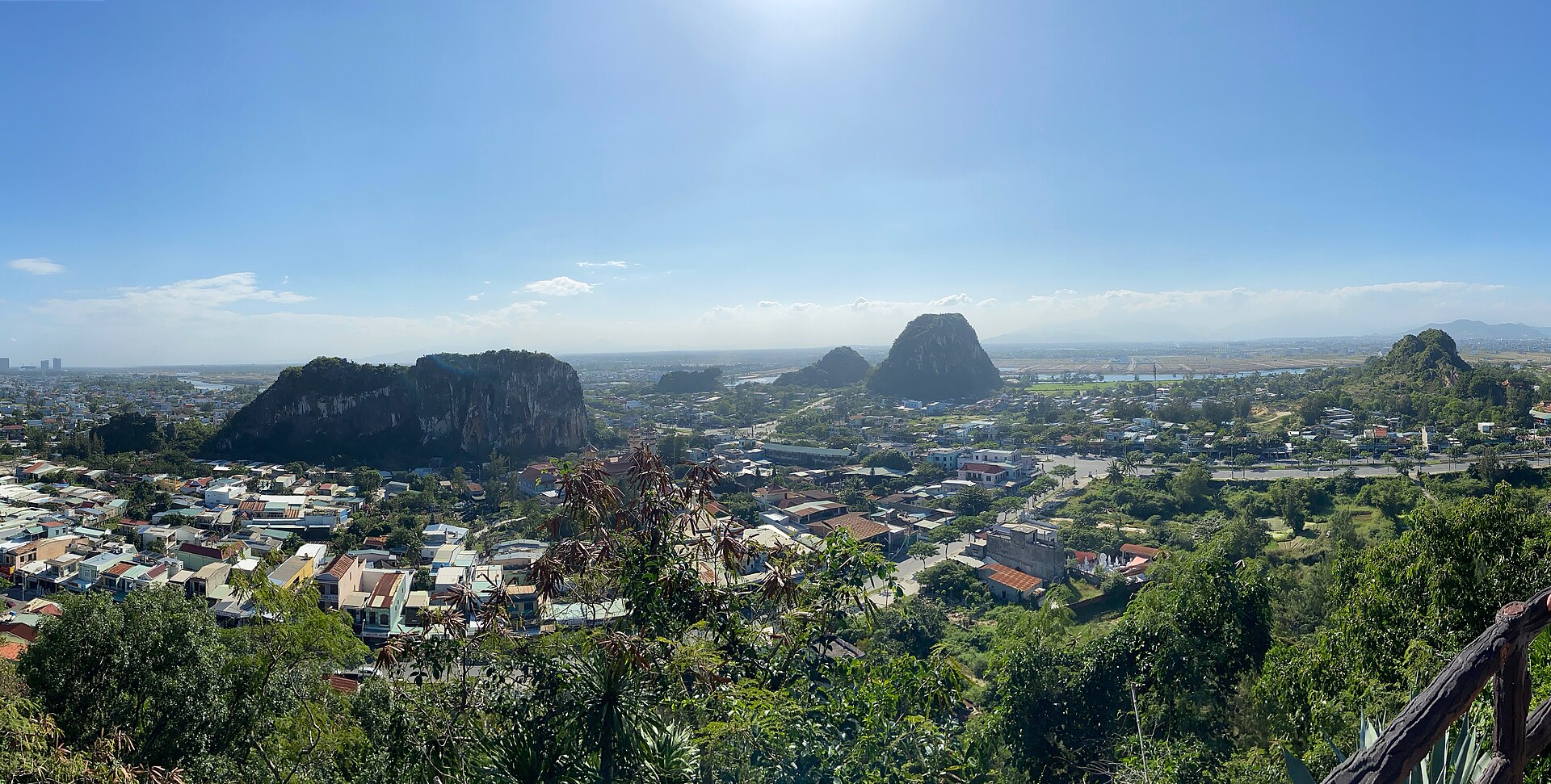
The Marble Mountains, known in Vietnamese as Ngu Hanh Son, are a cluster of five limestone and marble hills that rise abruptly from the flat coastal plain about eight kilometers south of Da Nang. Each hill is named after one of the five elements in traditional Chinese thought: metal, wood, water, fire and earth. The hills have been sacred places for centuries and are riddled with caves that hold Buddhist and Hindu shrines, carved statues and sunlit chambers that open to the sky.
The largest and most visited is Thuy Son, the Water Mountain, which has the main trail, several pagodas and a series of caves to explore. Visitors climb stone steps past carved gates and shrines to reach cave temples such as Huyen Khong, whose giant chamber is lit by shafts of light from an opening in the roof. Higher up, viewpoints overlook the coast, the sea and the surrounding countryside, and there is also an elevator for visitors who prefer not to climb the first section.
Visiting the Marble Mountains
| Detail | Info |
|---|---|
| Best Time to Visit | Early morning, to avoid heat and tour groups |
| Cost | A small entrance fee, with an optional extra for the elevator and a few caves |
| Getting There | About 20 minutes by Grab, taxi or bus from the center of Da Nang or from My Khe Beach |
| Time Needed | 1.5 to 2 hours |
What Else Is Nearby
At the foot of the mountains, the village of Non Nuoc has been a stone-carving center for generations, with workshops that produce statues, vases and decorative items from the local marble. Non Nuoc Beach, a quieter beach to the east, is a pleasant place to rest after the climb. Hoi An lies about 15 kilometers further south, so many visitors combine the two in one trip.
Wear sturdy shoes with good grip. The stone steps and cave floors are polished by countless visitors and can be slippery, particularly after rain, and carry water since it gets hot and humid on the climb.