Palais des Nations: Inside Geneva's International Quarter
The UN's European headquarters, a giant broken chair protesting landmines, and the district built for global diplomacy.
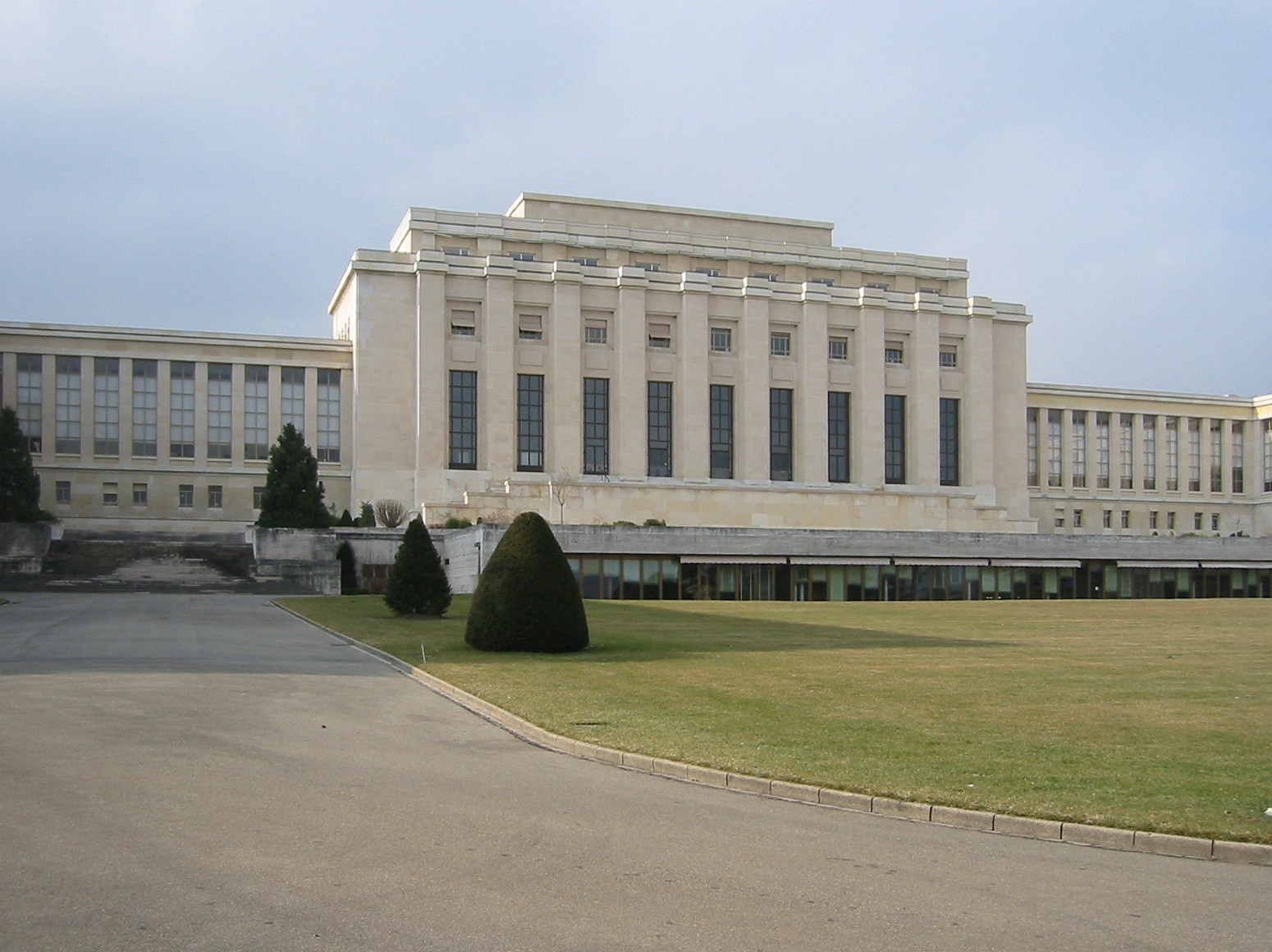
The Palais des Nations sits at the heart of Geneva's international quarter, serving as the European headquarters of the United Nations and, after New York, the second-largest UN seat anywhere in the world. Set within Ariana Park, a genuinely tranquil green space dotted with centuries-old cedars and roaming peacocks, the complex is home to more than 25 international organizations, making this stretch of Geneva one of the most concentrated centers of global diplomacy on the planet — a striking contrast to the city's equally famous identity as a banking and watchmaking capital.
Construction on the Palais des Nations ran from 1929 to 1938, originally built to house the League of Nations, the UN's predecessor organization formed in the aftermath of the First World War in an attempt to prevent future global conflict through international cooperation. The League ultimately failed to prevent the Second World War and was formally dissolved in 1946, but the building itself survived that failure, becoming the European headquarters of the newly formed United Nations shortly afterward — a physical link between two very different eras of international diplomacy housed in the same monumental structure.
Guided tours of the Palais des Nations are available and genuinely worthwhile for visitors interested in international affairs, taking in spaces like the Human Rights and Alliance of Civilizations Room, notable for its striking, contemporary painted ceiling, and the solemn assembly halls where international negotiations continue to take place today. Visitors enter through the Pregny Gate on Avenue de la Paix, directly opposite the International Committee of the Red Cross headquarters, and are advised to arrive at least thirty minutes ahead of a booked tour, since security screening takes real time.
| Time | Atmosphere | Best For |
|---|---|---|
| Weekday morning | Palais open for tours, quiet park | Guided tour of the Palais des Nations |
| Weekday afternoon | Diplomats and staff around the quarter | Walking Ariana Park and the Broken Chair |
| Weekend | Palais closed to visitors, park still open | A quiet park walk rather than an interior tour |
| Any time | Peacocks roam the grounds | A relaxed stroll through Ariana Park itself |
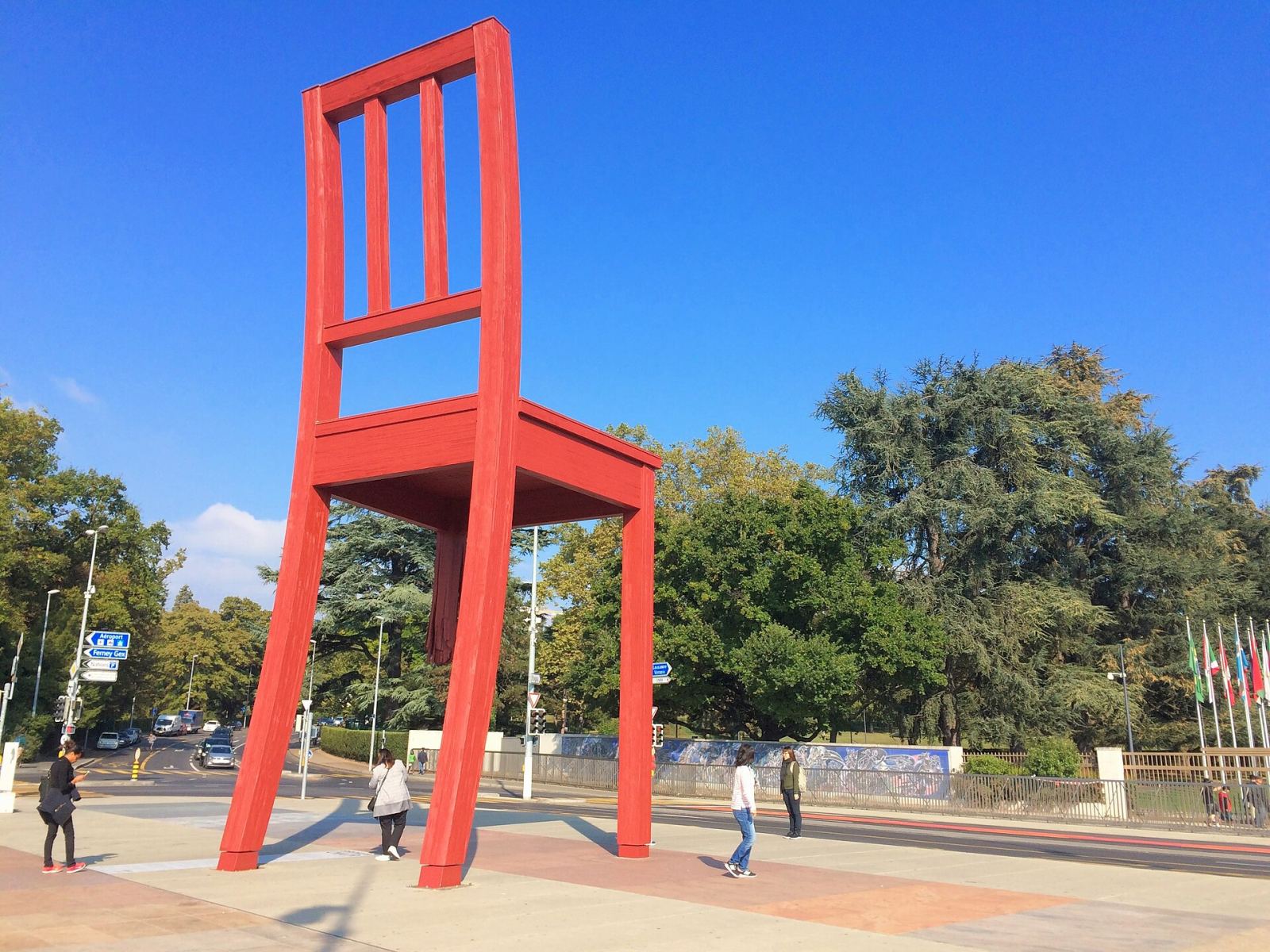
The Broken Chair, standing directly across from the Palais des Nations entrance, is the international quarter's most photographed and most immediately striking landmark — a twelve-meter wooden sculpture of an ordinary chair with one leg shattered, created in 1997 as a protest against landmines and cluster bombs, timed deliberately to coincide with the Ottawa Treaty banning anti-personnel mines. It has remained in place, on and off, ever since, and has become something close to an unofficial symbol of Geneva's role as a center for humanitarian advocacy, standing quietly at odds with the formal diplomatic architecture surrounding it.
The Palais des Nations is closed to visitors on weekends, and guided tours must be booked in advance rather than arranged on arrival. Bring a passport or national ID card, since security checks at the Pregny Gate require identification before entry.
Beyond the Palais itself, the wider international quarter includes the headquarters of numerous other major organizations, including the World Health Organization and the International Committee of the Red Cross, whose own museum nearby offers a genuinely powerful, sometimes difficult look at the history of humanitarian work in conflict zones and is well worth combining with a Palais des Nations visit for anyone with a deeper interest in the subject.
Several monuments scattered through the quarter's parks commemorate specific humanitarian causes and historical tragedies, including memorials related to the Srebrenica genocide and broader peace advocacy, reinforcing the area's identity as something closer to a working monument to 20th and 21st century international cooperation than a purely administrative government district.
The Palais des Nations is reachable from central Geneva by tram or bus, with several stops serving Avenue de la Paix directly, and it's roughly a twenty to thirty minute walk from Cornavin station for visitors who prefer to walk along the lakefront rather than take public transport. Given the security procedures involved in touring the Palais itself, booking a tour slot in advance and planning to arrive early is genuinely important rather than optional.
Geneva's role as an international diplomatic hub actually predates the League of Nations by decades, rooted in the city's founding involvement with the Red Cross movement in the 19th century, and the Palais des Nations essentially formalized and expanded on a role the city was already playing informally as a neutral meeting ground for international negotiation, a reputation Switzerland's official political neutrality has helped sustain ever since.
Ariana Park itself, surrounding the Palais on land donated to the city in the late 19th century, remains open to the public even outside of guided tour hours, making it entirely possible to walk the grounds, see the Broken Chair, and take in the general atmosphere of the international quarter without booking anything in advance, reserving the formal interior tour for a separate, planned visit.
The flags lining the approach to the Palais des Nations, representing the UN's member states, are one of the more understated but genuinely striking sights in the quarter, particularly on a clear day when the full row is visible against the backdrop of the park and, on the clearest days, the distant peaks of the Alps beyond the city.
Diplomatic license plates and official delegation vehicles are a genuinely common sight around the international quarter's streets, a small but constant reminder that this part of Geneva functions as a working diplomatic hub year-round rather than existing purely as a historical site for visitors to pass through.