Shinsaibashi: Osaka's Great Covered Shopping Arcade
Shop, snack and browse Shinsaibashi, Osaka's covered arcade and fashion district, from department stores and drugstores to Amerikamura's youth culture.
Shinsaibashi: Osaka's Great Covered Shopping Arcade
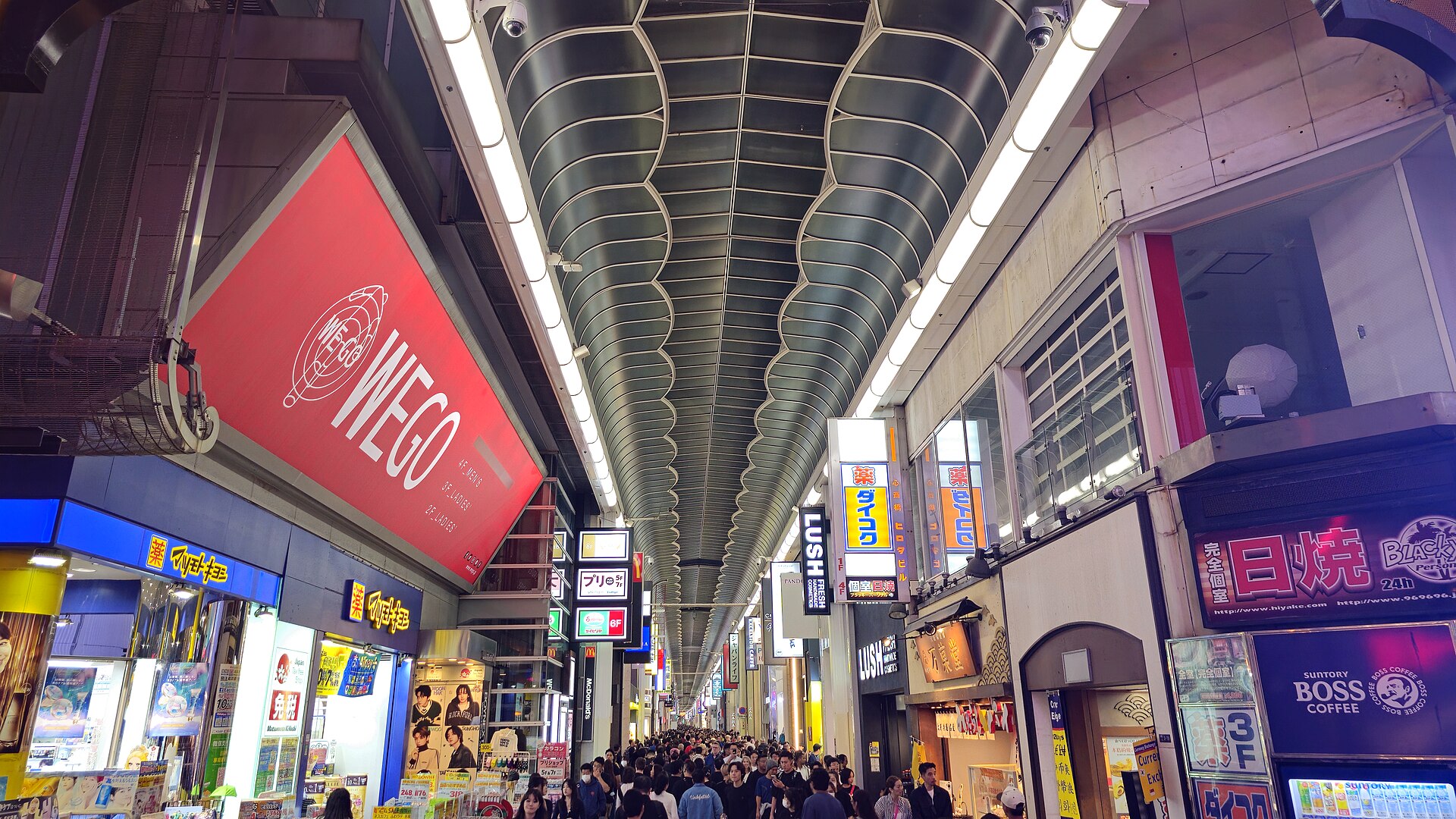
Shinsaibashi is the long retail spine of central Osaka and the main shopping district in the Minami (southern) half of the city. Its heart is Shinsaibashi-suji, a covered pedestrian arcade that runs for roughly 600 meters from Nagahoribashi Station up to Dotonbori, packed with department stores, chain shops, drugstores, cafés and small boutiques. Because it is roofed, it works in any weather, and it is busy from late morning until the shops close in the evening.
The area's history as a merchants' district goes back centuries. The name comes from a bridge over a canal that no longer exists, and the arcade followed the old trading streets. The large Daimaru department store at the northern end has roots dating to the 18th century, and its main building, completed in the 1930s, is one of the few architectural showpieces here, with a handsome façade preserved around the modern interior. That mix of old merchant tradition and modern retail is what gives Shinsaibashi its character.
Walking the arcade, you will find a little of everything. Japanese and international fashion brands sit beside discount drugstores that sell cosmetics and snacks, electronics and gadget stores, souvenir shops and a steady supply of takoyaki and sweets stands. Tourist-friendly shops offer tax-free shopping on presentation of your passport, which can mean a worthwhile discount on larger purchases. The side streets branching off the arcade hold small cafés, restaurants and dessert shops that locals prefer to the busier main street.
To the west of the Midosuji boulevard, across the main road from the arcade, lies Amerikamura, usually shortened to Amemura. This compact grid of streets grew up in the 1970s as a youth hub selling imported American clothing, and it has since become the center of Osaka's street fashion, vintage clothing, music and tattoo shops. Triangle Park, a small open space in the middle, is a gathering place for young people, and the crêpe stands and bars around it keep the area lively into the night.
| Area | What You Will Find |
|---|---|
| Shinsaibashi-suji arcade | Chain stores, drugstores, souvenirs, snacks and cafés under a covered roof |
| Daimaru Shinsaibashi | Historic department store with a restaurant floor and food hall |
| Amerikamura (Amemura) | Vintage clothing, street fashion, music shops and crêpe stands |
| Horie / Orange Street | Boutiques, interior shops and quiet specialty cafés |
Bring your passport for tax-free shopping. Many larger shops in the arcade offer a consumption-tax exemption on purchases over a set amount, and some process it at a dedicated counter inside the store.
North and west of Amemura, the Horie district is a calmer, more stylish version of the same idea. The streets around Orange Street have independent boutiques, furniture and interior shops, and some of the city's best coffee bars and bakeries, and the pace is noticeably slower than in the main arcade. If Shinsaibashi's crowds begin to wear on you, a short walk toward Horie gives you something quieter and often more interesting.
Shinsaibashi is also a good place for a meal, as the whole district sits between Dotonbori and the business streets to the north. You will find everything from standing-only sushi bars and ramen counters to department-store restaurant floors, so it is easy to eat well at any price. Combining the arcade, Amemura and Horie takes a relaxed half day, and the area is best reached by the Midosuji Line, which stops at Shinsaibashi Station directly beneath the district.
Practical details help. Most shops accept credit cards, but a few small stalls and cafés still take only cash, and the larger drugstores and department stores have counters that process tax refunds for foreign visitors. Prices for the same items vary noticeably between shops, particularly for cosmetics and snacks, so it can pay to compare before you buy, and the cheapest drugstores are usually the ones with the most crowded entrances. Luggage lockers at Namba and Shinsaibashi stations make it easy to drop your bags before you start browsing for the day.
For a break from shopping, the area has plenty of good places to eat and drink. Sweets shops in the arcade sell cheesecake, castella and cream-filled pastries, and there are several well-known takoyaki and ramen shops just off the main street. Evenings are lively, with locals and tourists crowding the arcade after work. If you want to experience Osaka's retail culture without spending much, simply walking the arcade in the early evening, sampling free tastes in the food shops and watching the crowd gives you a real sense of how the city shops and eats, and costs you nothing at all.
Shinsaibashi works best as part of a wider Namba and Minami day rather than on its own. Many visitors start in the morning at a café in Horie, walk through Amemura at midday, shop the arcade in the afternoon and finish at Dotonbori for dinner, which covers the entire district in a natural north-to-south line. Allow at least three to four hours if you plan to shop seriously, and more if you want to browse the department stores' food halls and restaurant floors, which are among the best places in Osaka for a good, quick meal.