Canal Saint-Martin: Paris's Hipster Waterway, Explained
A Napoleonic drinking-water project turned favorite Parisian hangout — footbridges, picnics, and the Amélie connection.
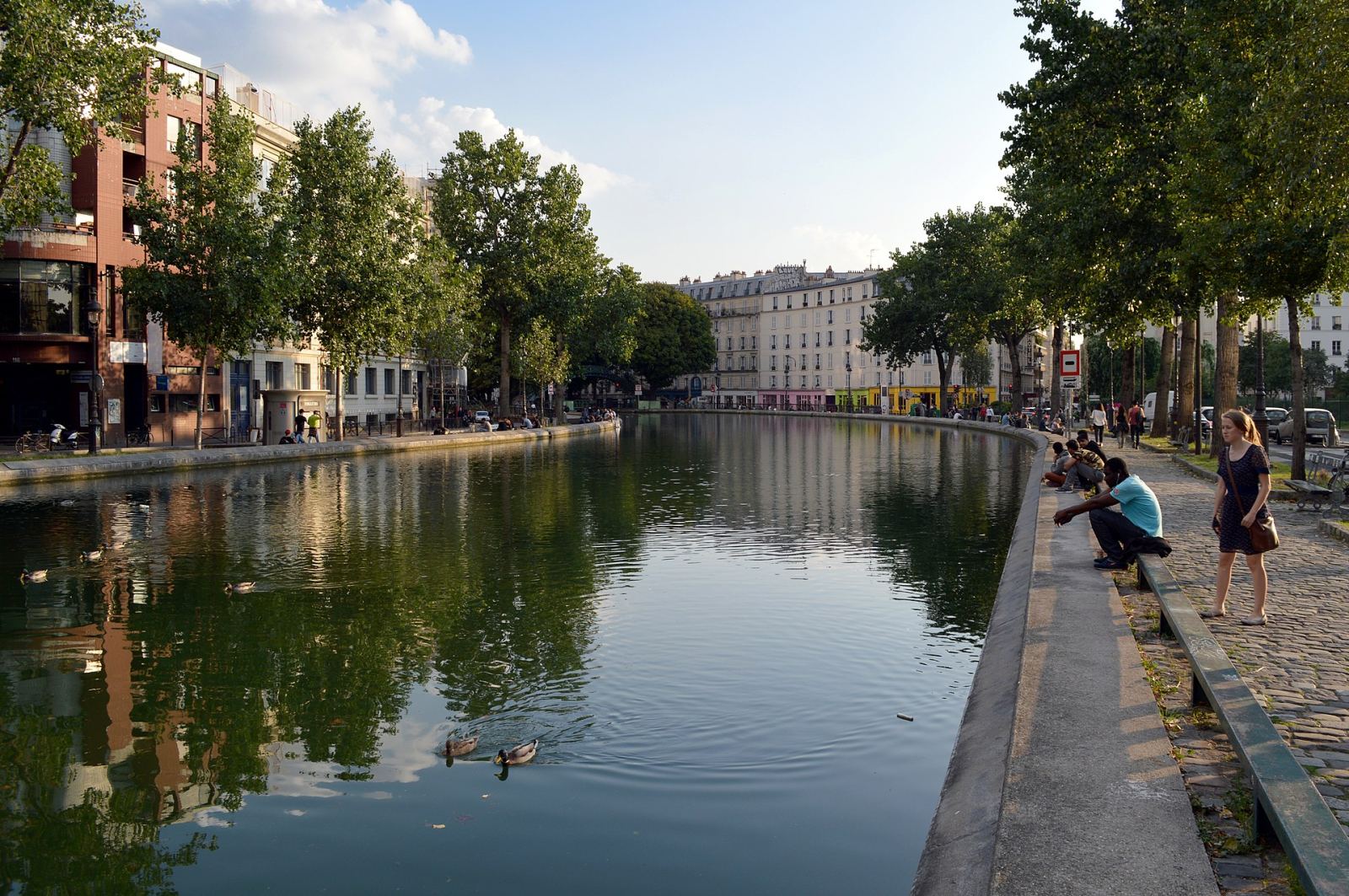
Canal Saint-Martin doesn't have the marble monuments or centuries-old churches that define most of Paris's famous districts — its main draw is simpler: a 4.6-kilometer waterway lined with iron footbridges, plane trees, and locks, running through the 10th arrondissement, that has become the unofficial living room for a whole generation of young Parisians. On a warm evening, the canal's stone quaysides fill with people sitting in loose rows, wine bottles and baguettes between them, watching the water rather than any particular sight — which is, more or less, the entire point of visiting.
The canal exists for a thoroughly unglamorous reason: Napoleon Bonaparte ordered its construction in 1802 to bring fresh drinking water into Paris and reduce outbreaks of dysentery and cholera, which were rampant in a city whose water supply badly needed supplementing. It functioned as a working commercial and industrial waterway for over a century, moving goods rather than sightseers. By the 1960s, with boat traffic in steep decline, city planners seriously considered paving over the canal entirely to build a motorway — a fate the canal escaped mainly because the project ran out of budget, not because anyone was fighting to preserve it. That accident of frugality is the only reason the canal exists in its current form today.
Much of the canal actually runs underground for a stretch beneath Place de la Bastille and the Boulevard Richard-Lenoir, a design decision made in the 1860s to free up surface space for a wider boulevard above — meaning the waterway most visitors picture isn't the whole story, and a portion of Napoleon's original canal has been invisible from street level for more than 150 years. What's visible today, the open-air stretch through the 10th arrondissement, is really only the northern half of the full canal system connecting to the Seine.
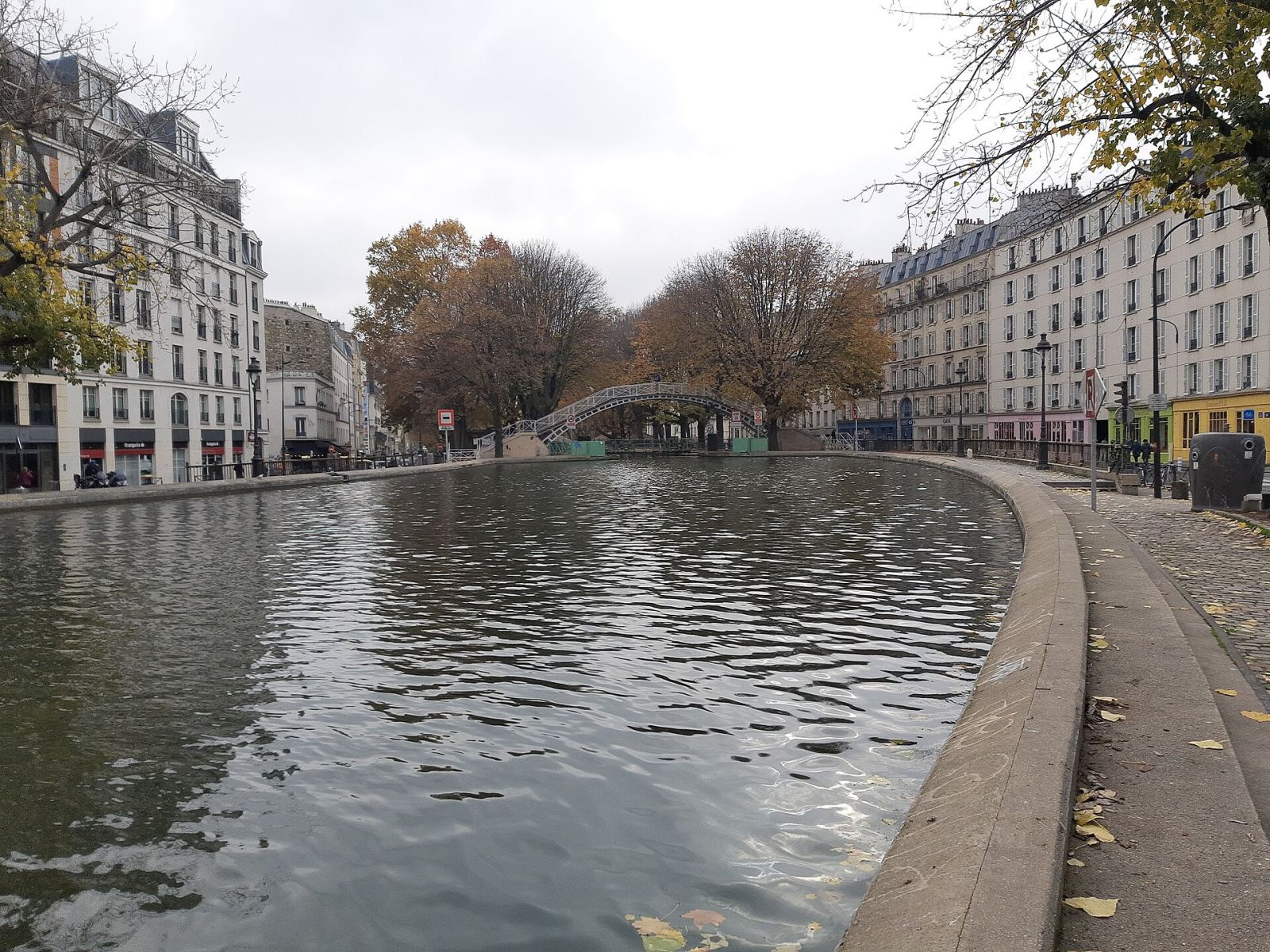
Since shedding its industrial role, the canal has become one of Paris's most recognizable "hipster" neighborhoods, a label that shows up in nearly every description of the area and isn't far off: independent bookshops, vintage clothing stores, art galleries, and a dense concentration of natural wine bars and small-plate restaurants have filled the streets running alongside the water. The canal itself is punctuated by a series of locks (écluses) that raise and lower boats along its length, along with several distinctive cast-iron pedestrian footbridges arching over the water — instantly recognizable to anyone who's seen the 2001 film Amélie, in which the character famously skips stones across this exact stretch of water.
| Time | Atmosphere | Best For |
|---|---|---|
| Sunny weekend afternoons | Extremely popular for picnicking; quaysides fill up fast | The full local experience, arrive early for a good spot |
| Weekday evenings | Quieter, bars and restaurants filling up gradually | A relaxed dinner or drinks without the weekend crowds |
| Weekday mornings | Very quiet, mostly commuters and joggers | Photography without crowds |
| Autumn | Fewer picnickers, but the tree-lined canal is especially photogenic | A quieter, visually rich walk |
The single most popular thing to do here costs almost nothing: pick up bread, cheese, and wine from a nearby shop and find a spot along the quay, the same way Parisians do most warm-weather evenings. No reservation, no ticket, and it's arguably the most authentic canal experience available.
The 10th arrondissement surrounding the canal was, for most of the 20th century, one of the less fashionable, more working-class corners of Paris, which is part of why rents stayed low enough for independent galleries, secondhand bookshops, and small design studios to take root here starting in the 1990s and 2000s — well before the neighborhood became genuinely trendy. That history matters for understanding why the area feels different from more curated, uniformly upscale Paris districts: its current cool-neighborhood status grew organically out of affordability and artistic experimentation rather than top-down development, and traces of its rougher, more working-class past are still visible a few streets back from the water.
Part of the canal's appeal is how much it functions as a genuine neighborhood rather than a single attraction — locals live above the shops lining the quays, walk their dogs along the towpaths every morning, and treat the water itself as background rather than spectacle. That everyday quality is precisely what draws visitors looking for a break from the more monument-heavy, crowd-heavy parts of central Paris; there's no ticket to buy and no queue to join, just a long stretch of water to walk beside for as long as you like.
The canal runs south from the Bassin de la Villette — a much larger basin further north with its own cinema, cafés, and waterside bars — down through the 10th arrondissement before disappearing underground and eventually rejoining the Seine. Most visitors focus on the central stretch between Rue du Faubourg du Temple and Rue de la Grange aux Belles, where the footbridges and lock mechanisms are concentrated and the canal-side café and boutique scene is at its densest.
Canal Saint-Martin sits in the 10th arrondissement, a short metro ride from central Paris and easily combined with a day exploring Le Marais, which lies just to the south. For the wider question of how much time to give each Paris neighborhood, see How Many Days Do You Need in Paris?, and if a canal-side picnic has you in the mood for more French food culture, our guide to Cheese and Wine Tasting in Paris covers exactly what to pick up on the way.
République (Lines 3, 5, 8, 9, and 11) is the single best-connected station for reaching the canal, putting you within a short walk of its central stretch regardless of which direction you're arriving from. Jacques Bonsergent (Line 5) and Goncourt (Line 11) both drop you even closer to specific footbridges and lock crossings. The area is compact and entirely walkable once you arrive, and most visitors simply follow the water rather than planning a fixed route.