Cho Lon and Binh Tay Market: Saigon's Chinatown, Explained
Vietnam's largest Chinatown, built by Chinese refugees in 1778 — its wholesale market, temples, and how it differs from central Saigon.
Cho Lon means "Big Market," and it's the name given to the sprawling Chinatown district on the western edge of Ho Chi Minh City — the largest and oldest Chinatown in Vietnam, and a genuinely distinct city-within-a-city that most visitors barely scratch the surface of. At its commercial heart sits Binh Tay Market, an enormous wholesale market that has supplied Saigon's shops and restaurants for well over a century. Where District 1's central streets have been thoroughly gentrified for tourism, Cho Lon remains a working neighborhood first, its temples and markets serving the local Chinese-Vietnamese community as much as any visitor passing through.
The district's history dates to 1778, when ethnic Chinese (Hoa) refugees fleeing conflict with Tay Son forces settled in the area, establishing what would become Vietnam's most significant Chinese-Vietnamese community. Cho Lon developed for over a century as a separate town before formally merging with Saigon in 1931 — but even after that administrative merger, it retained (and still retains) a distinct identity visible in its temple architecture, festival calendar, and daily community life. Binh Tay Market itself was built in 1880 by a wealthy Chinese businessman, and its ornate facade still reflects the architectural style of the community that built it, blending French colonial construction techniques with Chinese decorative motifs.
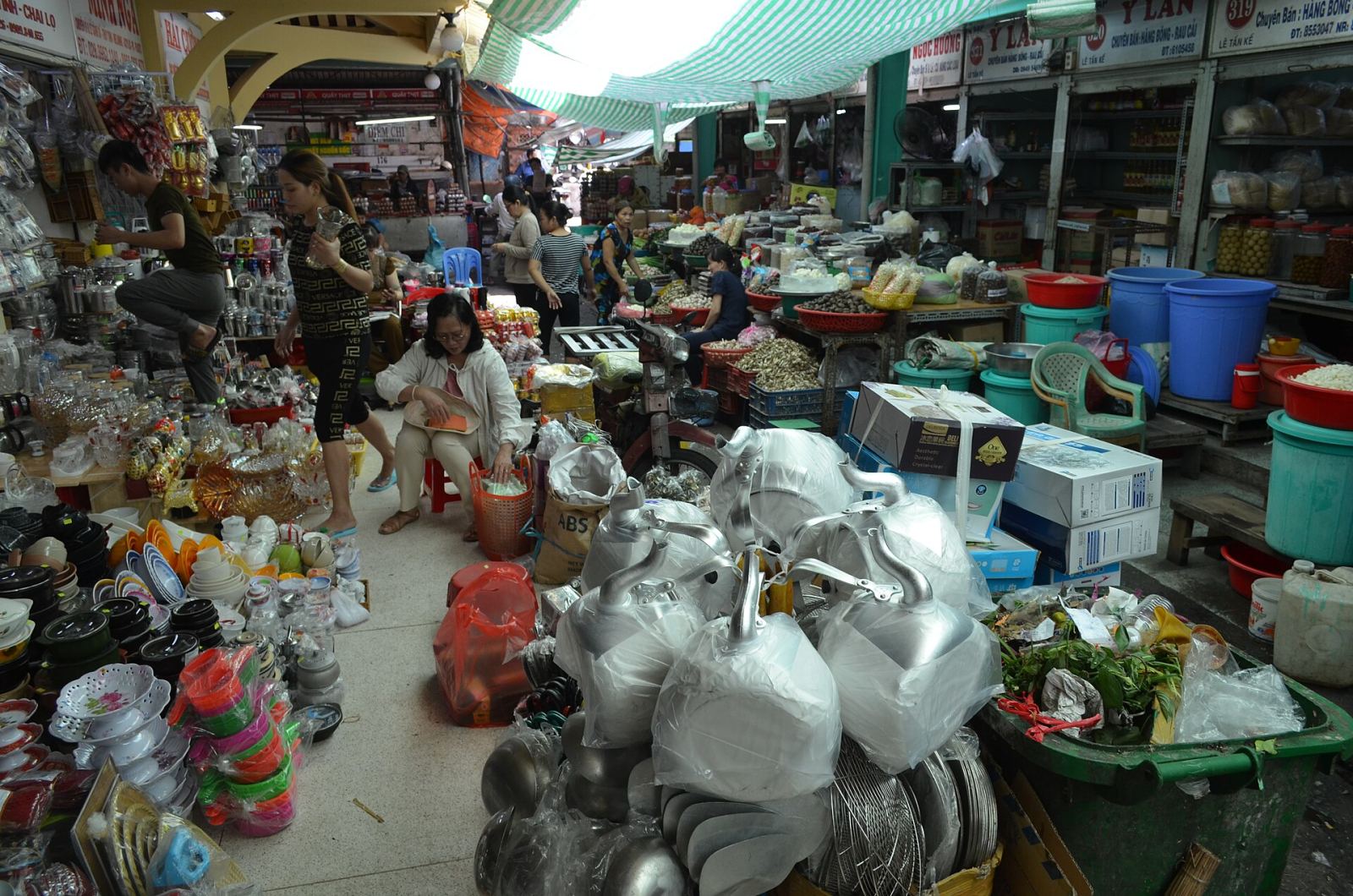
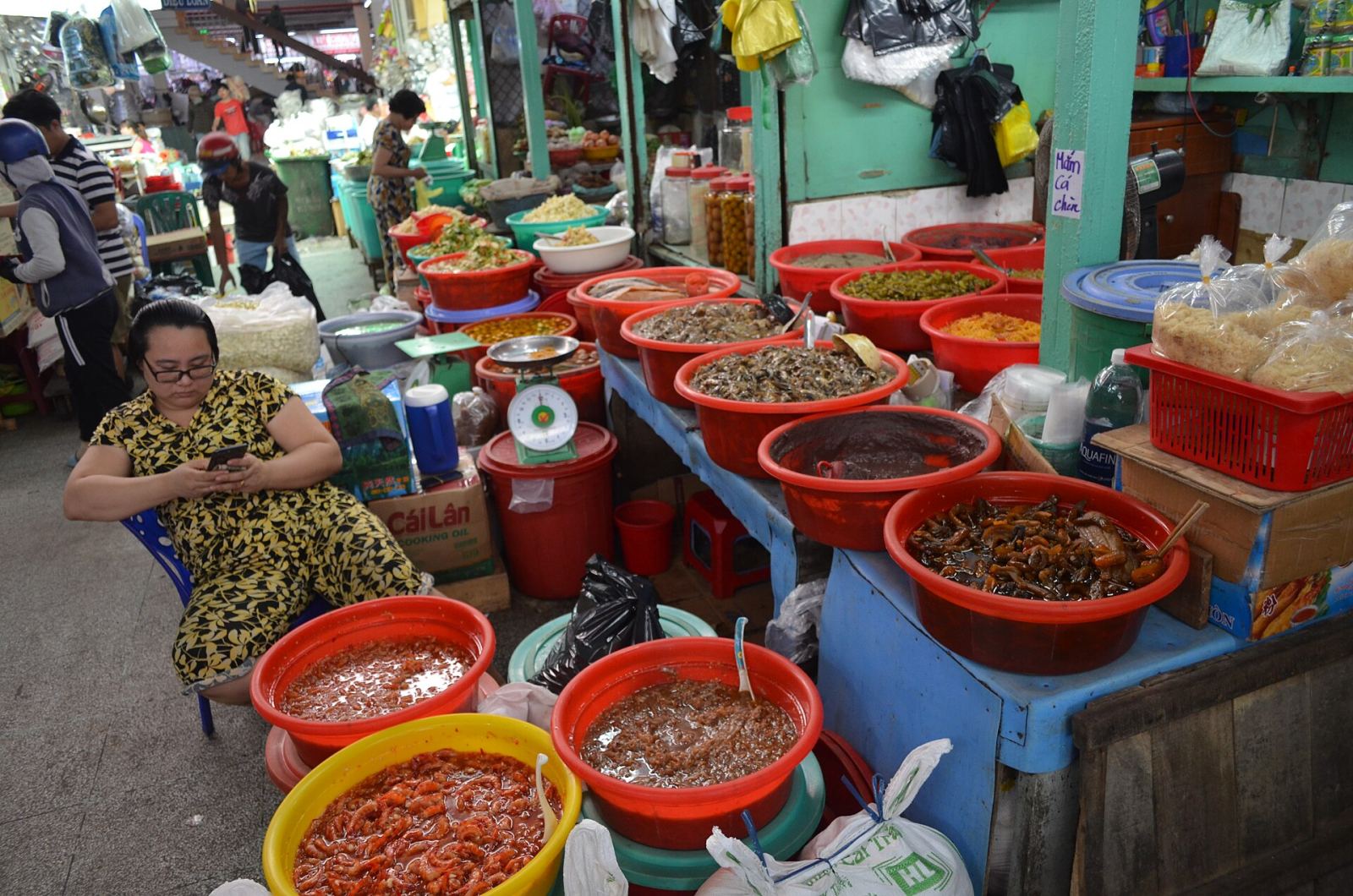
Covering some 25,000 square meters and housing roughly 2,300 stalls, Binh Tay Market functions primarily as a wholesale market — a genuine working supply chain for retailers and restaurants across the city, rather than a market built for tourists the way Ben Thanh Market is. That distinction matters for what you'll actually find: fewer souvenir stalls, considerably more bulk textiles, dried goods, spices, kitchenware, and produce, sold at prices aimed at business buyers. It's a rawer, more authentic shopping experience precisely because it wasn't designed with visitors in mind.
| Time | Atmosphere | Best For |
|---|---|---|
| Early morning (6-9am) | Market at its busiest, freshest produce and seafood available | The authentic wholesale market experience |
| Midday | Steady activity, less crowded than early morning | Comfortable browsing without the earliest rush |
| Late afternoon | Winding down, some stalls beginning to close | Not ideal — arrive earlier in the day |
| Chinese festivals (Lunar New Year, Mid-Autumn) | Especially vibrant, decorations and special goods throughout the district | Experiencing Cho Lon's Chinese-Vietnamese cultural calendar firsthand |
Cho Lon is dotted with historic Chinese temples worth combining with a market visit — Thien Hau Temple, dedicated to the Chinese sea goddess Mazu, is one of the oldest and most atmospheric, typically thick with incense smoke coiling from large spiral incense coils hung from the ceiling.
The 1931 merger with Saigon never fully erased the administrative and cultural distinctness that gave Cho Lon its identity, and that distinctness is still legible today in small but telling ways — shopfront signage that mixes Vietnamese with Chinese characters far more often than in central Saigon, temple festivals timed to the Chinese lunar calendar rather than purely Vietnamese observances, and a noticeably older, more established building stock that escaped some of the redevelopment pressure central District 1 has faced. Walking a few blocks off the main market streets makes this older layer of the city considerably more visible than a quick pass through Binh Tay Market alone would suggest.
Beyond Binh Tay, Cho Lon spreads across a genuinely large area of District 5 and District 6, with its own distinct restaurant scene — Cantonese and Teochew-style Chinese-Vietnamese cooking that differs noticeably from the food found in central Saigon. Traditional Chinese medicine shops, herbal apothecaries, and family-run businesses that have operated for multiple generations line many of the surrounding streets, giving the district a texture that rewards slower exploration rather than a quick photo stop.
Cho Lon sits a bit further from the District 1 core than Saigon's other famous streets, making it a good half-day trip on its own rather than a quick add-on. If you're planning your Saigon time more broadly, Ho Chi Minh City on $20 a Day and Best Ticketed Attractions can help fit it into a longer itinerary alongside sights like Ben Thanh Market, its more tourist-oriented counterpart in District 1.
Cho Lon sits roughly 4-5 kilometers from central District 1, too far for a comfortable walk, but easily reached by Grab or taxi in 15-20 minutes depending on traffic. Public buses also run routes connecting District 1 to Cho Lon for a considerably cheaper (if slower) alternative. Once there, the district is dense enough that walking between the market and nearby temples is the most practical way to get around.
Frequently Asked Questions
Cho Lon's temple calendar is worth planning around if timing allows — beyond Thien Hau Temple, the district hosts several other significant Chinese assembly halls and temples built by different regional Chinese communities (Cantonese, Teochew, Hokkien, and Hakka among them) that settled here at different points, each maintaining its own distinct architectural style and festival traditions. Visiting even two or three of these temples in a single afternoon gives a much richer sense of Cho Lon's internal diversity than a market visit alone ever could.
Language is a small but useful thing to expect here: while Vietnamese is universal, older vendors and residents in Cho Lon are considerably more likely to speak Cantonese or Teochew as a first language than in central Saigon, a direct legacy of the district's founding by Chinese refugee communities nearly 250 years ago. It's not a barrier to visiting — pointing and basic Vietnamese phrases work fine for shopping — but it's one more marker of how genuinely distinct this corner of the city remains.