Bui Vien Walking Street: Saigon's Backpacker Nightlife Strip, Explained
An 850-meter street of bars, street food, and budget guesthouses that turns into Saigon's biggest weekend party zone after dark.
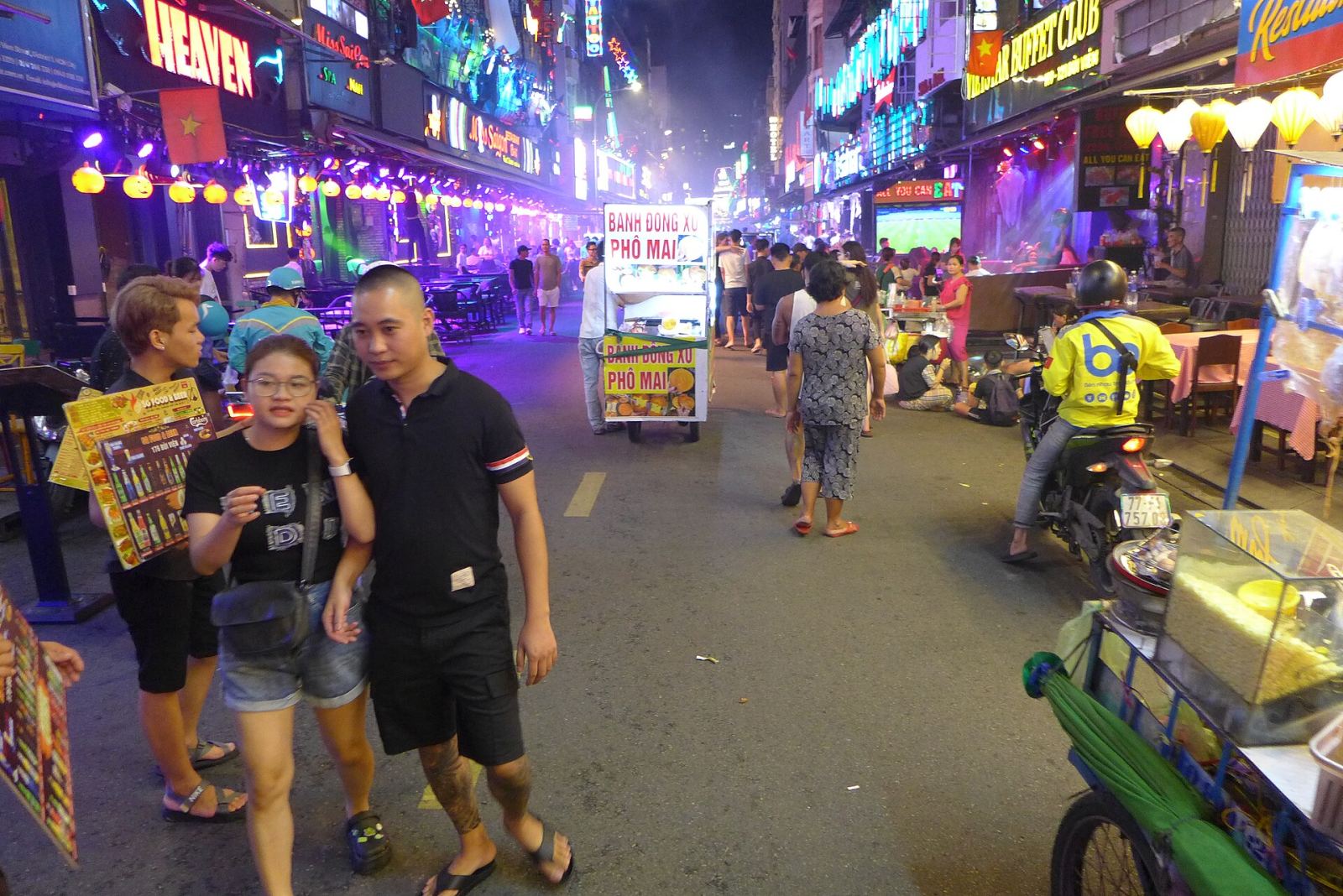
Bui Vien is the street Saigon's backpackers gravitate toward the moment the sun goes down, and it has held that role consistently enough over the past two decades to become genuinely institutional rather than a passing trend — an 850-meter strip in District 1 so thoroughly given over to bars, cheap beer, and street food that locals nicknamed it "Western Street" long before the city made it official. It's frequently compared to Bangkok's Khao San Road, and the comparison holds up: neon signs stacked three stories high, plastic stools spilling onto the pavement, and a crowd that skews young, loud, and unbothered by the noise. It's not a place to come looking for quiet, historic Saigon — it's a place to come looking for a party, and on that count it delivers reliably.
Before 1975, this same cluster of streets was known informally as the "International Intersection," a name coined by journalists and writers who worked out of the printing houses and newsrooms clustered here near the old Nguyen Van Hao cinema. After reunification, the neighborhood's character shifted toward budget tourism, and the nickname "Western Street" stuck as backpackers began filling its guesthouses. The pedestrianization came much later: Bui Vien officially closed to traffic and reopened as a dedicated walking street on August 20, 2017, becoming the second such pedestrian street in Ho Chi Minh City after Nguyen Hue.
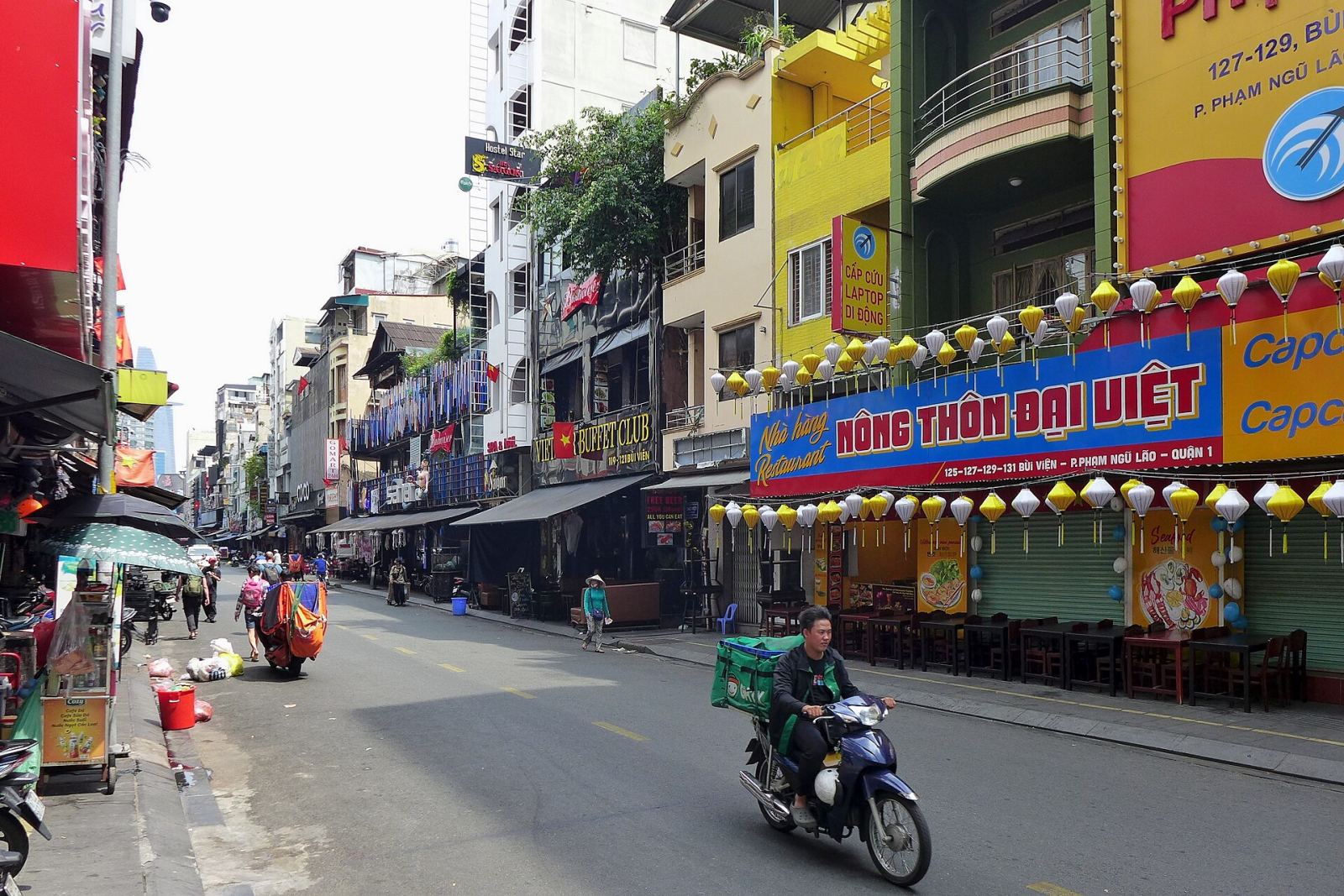
The area comprises three main streets — Bui Vien itself, De Tham, and Pham Ngu Lao — collectively known as Saigon's "Backpacker District," and it's easy to see why: budget guesthouses, tour agencies, laundry services, and SIM card stalls line the same blocks as the bars, catering to a constant churn of travelers moving through the city. During the day, the street looks almost unremarkable — shops open, traffic still moving, a fraction of the crowd. The full transformation happens specifically on weekend nights, when the road closes to vehicles and the entire strip becomes a dense, foot-traffic-only party zone.
| Time | Atmosphere | Best For |
|---|---|---|
| Daytime | Quiet, functions as a normal traffic street with shops open | Errands, budget travel bookings, quieter meals |
| Weeknight evenings | Bars open but noticeably calmer than weekends | A more relaxed first visit |
| Weekend nights (7pm-2am) | Street closed to traffic, packed with bars, music, and street performers | The full Bui Vien experience |
| Late night (after midnight) | Peak crowd density, loudest music | Committed nightlife, not for an early morning the next day |
Bui Vien's dense crowds and free-flowing beer make it a spot where petty theft and overcharging occasionally happen, particularly late at night. Keep valuables secure, confirm drink prices before ordering at unfamiliar bars, and use official taxi apps (Grab is standard in Vietnam) rather than unmarked vehicles to get home.
Bui Vien's relationship with the rest of Saigon is a little more complicated than its party-street reputation suggests. Local authorities have periodically tightened noise and safety regulations here in response to resident complaints and traffic concerns, adjusting operating hours and enforcement in the years since pedestrianization. That back-and-forth is worth knowing about mainly because it means the street's exact rules can shift — checking current opening hours locally, rather than assuming they're fixed, is sensible if you're planning an evening specifically around the walking-street closure.
Food is a genuine strength of the street, not just an afterthought to the drinking — street vendors sell everything from banh mi and grilled skewers to more adventurous options late into the night, and several sit-down restaurants along Pham Ngu Lao serve solid Vietnamese food at prices aimed squarely at budget travelers. It's a reasonable base for people trying to stretch a Saigon trip further, which is part of why the surrounding blocks remain one of the most consistently booked guesthouse areas in the city despite (or because of) the noise.
Bui Vien sits a short walk from Notre-Dame Cathedral and the Central Post Office, making it easy to combine daytime sightseeing with an evening out. If you're budgeting a trip, Ho Chi Minh City on $20 a Day factors in exactly this kind of budget-friendly nightlife district, and our Saigon food crawl guide covers several street-food staples you'll find right on Bui Vien itself.
Bui Vien sits in District 1, easily reached by taxi or ride-hailing app (Grab) from anywhere in central Saigon — expect a short, inexpensive ride from most District 1 or District 3 hotels. It's also within a 15-20 minute walk of Ben Thanh Market and the Notre-Dame Cathedral area, making it realistic to walk over after a day of sightseeing rather than arranging separate transport for the evening.
Frequently Asked Questions
Local authorities have also worked to diversify the street's offerings beyond straightforward drinking, adding organized street-performance slots, occasional live music stages, and designated zones for food vendors as part of the broader effort to keep the area appealing to a wider range of visitors, not just those purely there to drink. The result is a street that, on a good night, offers a genuinely wide spread of entertainment options rather than a single monotonous strip of identical bars — buskers, magicians, and dance performers are a regular part of the scene alongside the drinking.
For all its rowdy reputation, Bui Vien has genuinely functioned as an entry point for a lot of first-time visitors to Vietnam, a low-stakes place to acclimate to the country's traffic, food, and pace before venturing further afield. Plenty of longer-term travelers use it as a base for exactly that reason: cheap, central, easy to navigate, and forgiving of the culture-shock stumbles that come with a first day or two in a new country.