Com Tam: The Story Behind Saigon's Broken Rice Plate
Why com tam is called "broken rice," what goes on the plate, and how this everyday dish became a Saigon icon.

Com Tam: Saigon's Broken Rice Classic
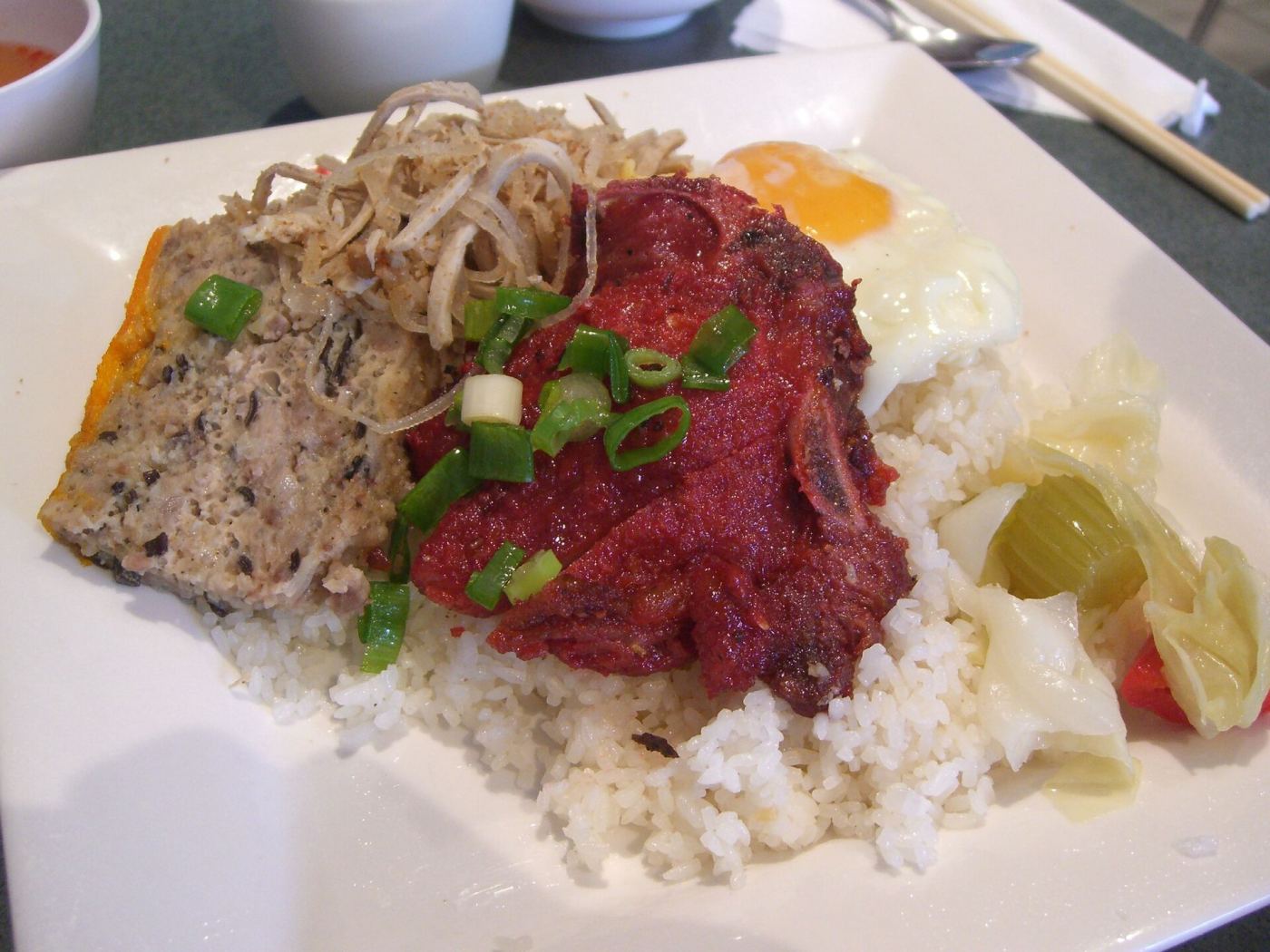
Com tam — literally "broken rice" — refers to rice grains that break during milling and were historically sold cheaper than whole-grain rice, considered a lower-status food. Over time it became a beloved Saigon staple in its own right, now served as a full plate: grilled pork chop, a fried or steamed egg, shredded pork skin (bi), and pickled vegetables, all served over the broken rice with a drizzle of fish sauce.
What's on the Plate
| Component | What It Is |
|---|---|
| Suon nuong | Grilled, marinated pork chop — the centerpiece of the dish |
| Bi | Shredded pork skin mixed with roasted rice powder |
| Cha trung | A steamed egg-and-meat custard, sometimes included |
| Do chua | Pickled carrots and daikon radish |
| Nuoc mam | Fish sauce, poured over the rice just before eating |
Why It's Called "Broken" Rice
During milling, some rice grains inevitably crack or break, and these broken grains were traditionally set aside and sold at a lower price since they were considered less visually appealing than whole grains. Saigon cooks began using the cheaper broken rice as an everyday base, and the dish built around it has since become one of the city's most iconic meals — broken rice by choice now, not just by economy.
Most com tam restaurants let you customize the plate — add extra bi, swap in a different egg style, or order it without one component — so don't hesitate to ask for exactly what you want.