Cu Chi Tunnels and the War Remnants Museum: A Heavy but Necessary Day
These two sites tell the same history from opposite ends — a rural tunnel network and a downtown museum. Visiting them on the same day gives a fuller, harder picture than either alone.

Of everything on a Ho Chi Minh City itinerary, the Cu Chi Tunnels and the War Remnants Museum are the two sites most likely to be visited on autopilot — ticked off because they are "on the list" rather than because a visitor understands what they are walking into. Both are worthwhile, but both also get misunderstood in fairly consistent ways, and knowing what to expect beforehand changes the day considerably.
What the Cu Chi Tunnels actually are
The tunnels sit about 40–70km northwest of the city center, depending on which section you visit (Ben Dinh, the closer option, or Ben Duoc, the further and less crowded one). They were part of a much larger underground network — over 120km at their peak — used by Viet Cong fighters and local villagers as shelter, supply routes, and hiding places during the war. What tourists see today is a preserved and, in places, deliberately widened section: the original tunnels were built for smaller frames and are genuinely tight, so most tour operators have carved out a longer, slightly larger stretch specifically so foreign visitors can crawl through without getting stuck.
The tunnel crawl is genuinely claustrophobic, hot, and physically awkward — not a quick photo op. If you have knee problems, back issues, or discomfort in enclosed spaces, most sites let you skip the crawl and still see the entrances, traps, and exhibits above ground, so ask your guide about opting out rather than forcing it.
Most visitors book a half-day tour rather than arranging transport independently, mainly because the site is spread out and a guide's narration adds a lot of context that plaques alone do not provide — details about how tunnel ventilation worked, how booby traps were disguised, and how families lived underground for extended periods. Guided half-day trips typically run from around 8am and return to the city by early afternoon, which leaves the second half of the day free.
The War Remnants Museum: a different register entirely
Where Cu Chi is experiential — you climb into the tunnels yourself — the War Remnants Museum, located centrally in District 3, is documentary. It is a formal museum building with room after room of photography, military equipment, and preserved artifacts covering the war, including an entire floor dedicated to the effects of Agent Orange that is difficult to walk through quickly. This is not a museum designed for a casual 20-minute pass-through; plan for at least 90 minutes, and be prepared for the content to be graphic.
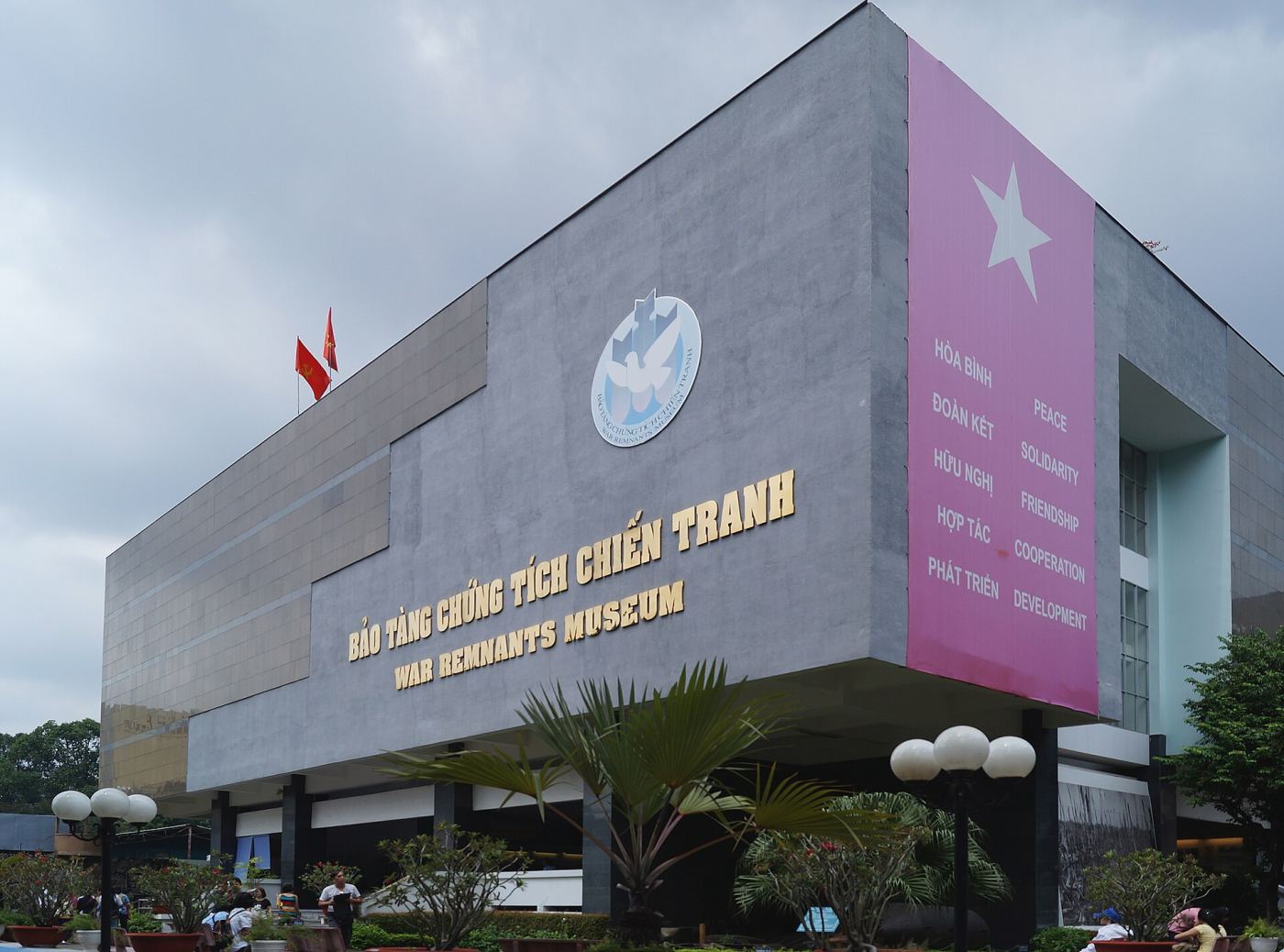
The museum presents a strongly Vietnamese perspective on the war, which some Western visitors find one-sided compared to accounts they grew up with — that is worth knowing going in, not as a criticism, but as context, since a museum built and curated in the country where the war was fought is naturally going to center a different set of facts than one built abroad.
Practical details for both sites
Booking the day
Because Cu Chi involves a 1.5–2 hour drive each way, a half-day tour that bundles transport, an English-speaking guide, and entry is usually more efficient than arranging it independently unless you already have a driver. Several well-reviewed half-day options are listed on Viator's Ho Chi Minh City tour page, where you can compare morning versus afternoon departure times and Ben Dinh versus Ben Duoc routes. If you are staying centrally, most hotels near District 1 and District 3 can also arrange the same tours directly at the front desk.