Gelato in Rome: How to Tell Good from Mediocre
The visual signs of quality gelato, what flavors to order as a test, and how gelato actually differs from regular ice cream.

How to Spot Good Gelato
Gelato and ice cream aren't the same thing — gelato has less fat and less air churned into it than typical ice cream, giving it a denser, more intensely flavored texture. But the bigger giveaway of quality in Rome isn't the name on the sign, it's how the gelato is actually displayed: real, well-made gelato is almost always kept in covered metal tins (pozzetti), not piled into tall, bright, glossy mounds.
Reading the Signs
| Sign | What It Suggests |
|---|---|
| Covered metal tins | Traditional, artisanal preparation — a strong positive sign |
| Tall, bright, glossy mounds | Often a sign of added stabilizers and artificial color |
| Muted, natural colors | Real fruit and ingredients — pistachio should be pale green-brown, not neon |
| Seasonal flavor changes | A sign the gelateria uses real, seasonal ingredients |
What to Order
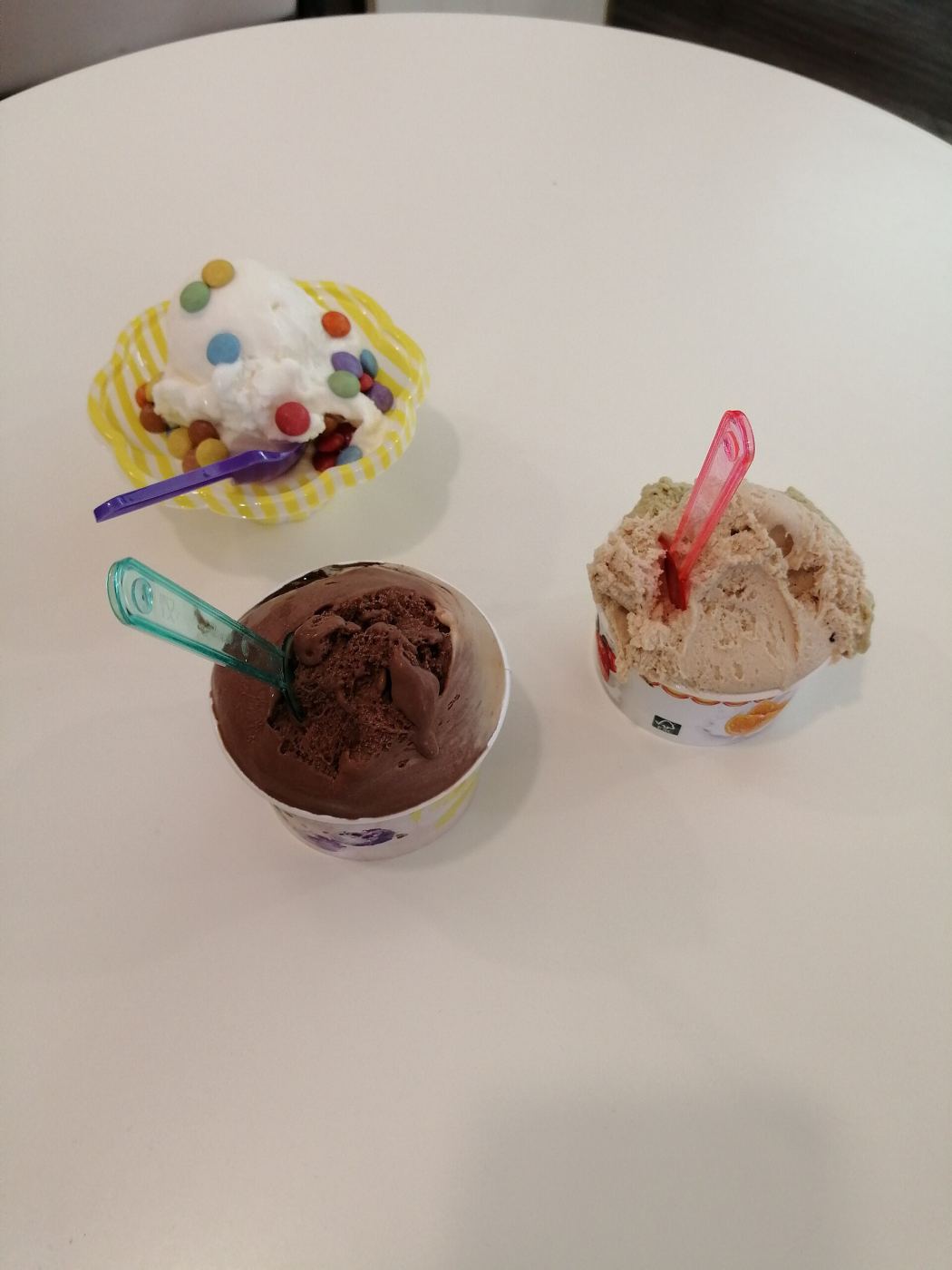
Pistachio, stracciatella (vanilla with chocolate shavings), and fior di latte (a simple, milk-forward flavor) are all good tests of quality — since none rely on strong fruit flavor to mask lower-quality ingredients. If a gelateria's pistachio and fior di latte both taste genuinely good, the rest of the menu is usually reliable too.
Most gelaterias let you choose two or three flavors per cup or cone at no extra cost — take advantage of it rather than committing to just one flavor.


