Grønland: Oslo's Multicultural Heart
Discover Grønland, Oslo's most multicultural district, where working-class roots and generations of immigration have created the city's richest food scene.

Grønland: Oslo's Multicultural Heart
Grønland sits in the eastern inner city, just a short walk from Oslo Central Station, and stands today as unquestionably the most multicultural district in the Norwegian capital, with over sixty percent of residents tracing their background to immigration from elsewhere in the world. The neighborhood's diversity didn't happen overnight; Grønland's role as an entry point for newcomers to the city stretches back generations, and that layered history of migration, work, and community-building is what gives the district its distinctive, unmistakably different atmosphere compared to almost anywhere else in central Oslo.
Long before Grønland became known for its multicultural character, the area developed as a peasants' neighborhood positioned directly on the main access road into historic Christiania, as Oslo was known for centuries. Through the nineteenth and early twentieth centuries, Grønland housed working-class families employed in factories scattered across the city, many of them early immigrants themselves, drawn to Oslo in search of industrial work. In a detail that captures the neighborhood's layered history well, the main road through Grønland was paved in the nineteenth century using remains salvaged from Hallvard's Cathedral, a medieval church damaged by fire and abandoned centuries earlier when the city center shifted location.
That working-class, immigrant-receiving character has continued largely unbroken into the present day, with Grønland and the neighboring district of Tøyen together forming Oslo's densest concentration of first- and second-generation immigrant communities. Walking through the neighborhood makes this immediately apparent: shop signs in multiple languages, halal butchers alongside Middle Eastern bakeries, and the shopping arcade inside Grønland's metro station famously offering cheap international calling rates alongside stalls selling vibrant fabrics from across Africa and Asia. This is not a curated, tourist-facing multiculturalism but a genuinely lived one, built up organically over decades rather than designed for visitors.
| Landmark | What It Offers | Notes |
|---|---|---|
| Grønland market street | Spice shops, produce stalls, ethnic groceries | Busiest on weekends |
| Central Jam-e-Mosque | Second-largest mosque in Norway | Established mid-1990s, holds 700+ |
| Intercultural Museum | Exhibition on Norwegian immigration history | Free entry, small but informative |
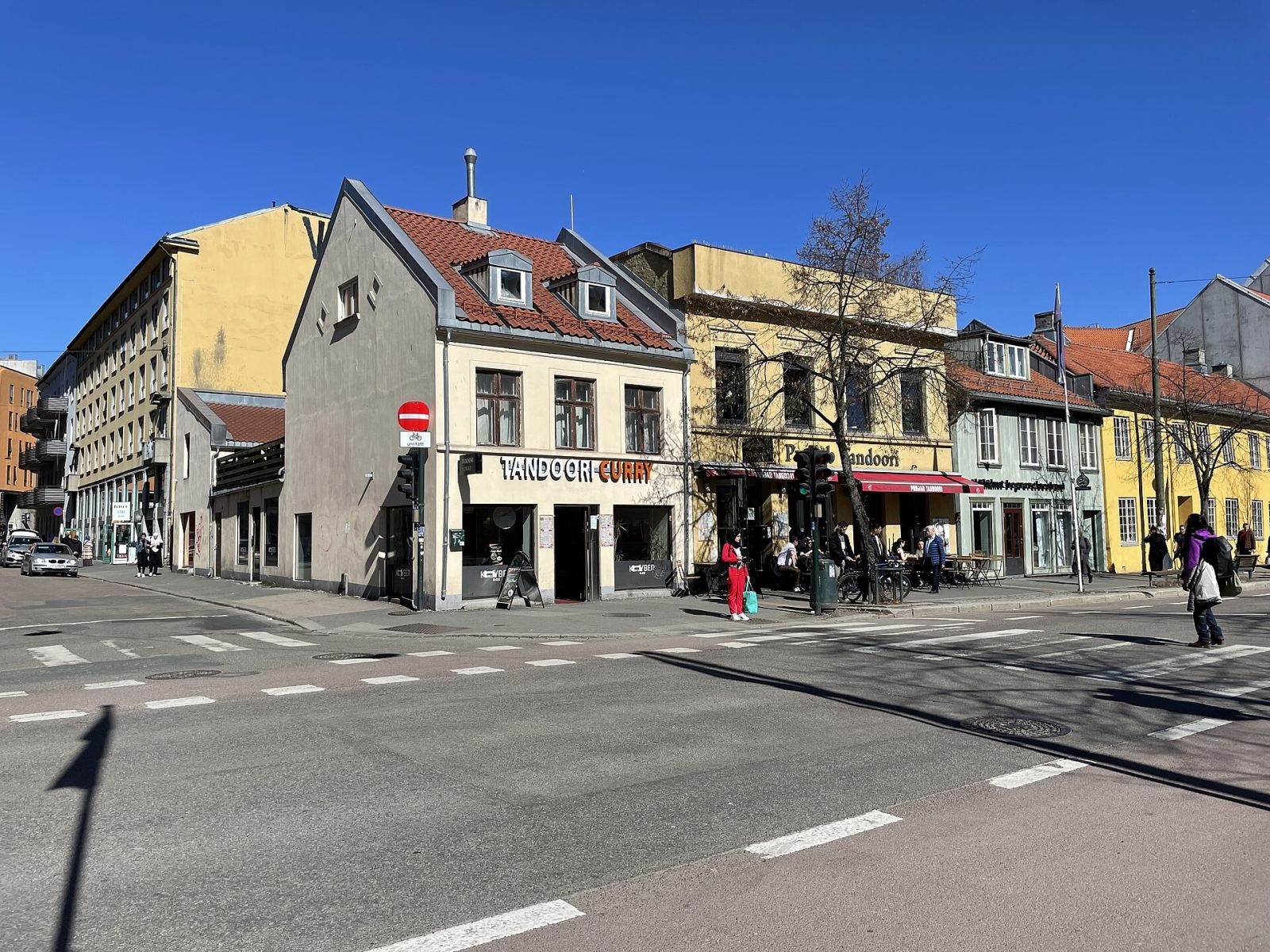
Grønland is widely considered to have some of Oslo's most affordable and authentic international dining, particularly for South Asian, Middle Eastern, and North African cuisine, at prices noticeably lower than the city center.
The Central Jam-e-Mosque, established in the mid-1990s, stands as the second-largest mosque in Norway, with capacity for more than 700 worshippers, and functions as a genuine community anchor for Oslo's Muslim population rather than simply a historical curiosity. Nearby, the Intercultural Museum offers a permanent exhibition documenting the broader history of immigration to Norway, tracing the cultural shifts of the past several decades through personal stories, artifacts, and photographs, making it one of the more quietly compelling small museums in the city for visitors interested in Oslo's demographic evolution.
Food remains Grønland's most obvious draw for visitors, with the district offering some of the best value and most authentic international dining anywhere in Oslo. Restaurants specializing in Pakistani, Somali, Middle Eastern, and Turkish cuisine cluster densely along the main streets, often run by families who have operated the same establishment for a generation or more, building loyal followings among both the local immigrant community and increasingly curious visitors from elsewhere in the city. Grocery stores stocked with ingredients rarely found in mainstream Norwegian supermarkets add another practical layer to the neighborhood's appeal for anyone cooking a global menu at home.
Grønland's identity has also become a subject of broader debate within Oslo, as rising property values push against its historically working-class, immigrant character in ways similar to gentrification pressures seen in Grünerløkka. Some longtime residents and business owners worry that continued redevelopment could gradually dilute the very qualities that make the neighborhood distinctive, while city planners and newer arrivals often frame the changes as simply another chapter in the area's long history of transformation. Whichever perspective proves more accurate over time, Grønland today still offers one of the most genuine, unpolished neighborhood experiences available anywhere in central Oslo, a quality worth experiencing before it potentially changes further.
Grønland is one of the most centrally located and easily reached districts in Oslo, sitting just a five to ten minute walk from Central Station, or directly accessible via Grønland metro station on the T-bane system. Because the neighborhood is compact and dense, everything worth seeing, the main shopping streets, the mosque, and the Intercultural Museum, sits within a comfortable walking radius of the metro stop. Evenings and weekends tend to be the liveliest times to visit, when restaurants fill and the shopping streets take on their fullest, most vibrant character, giving a much better sense of the district than a quick weekday lunchtime pass-through would.