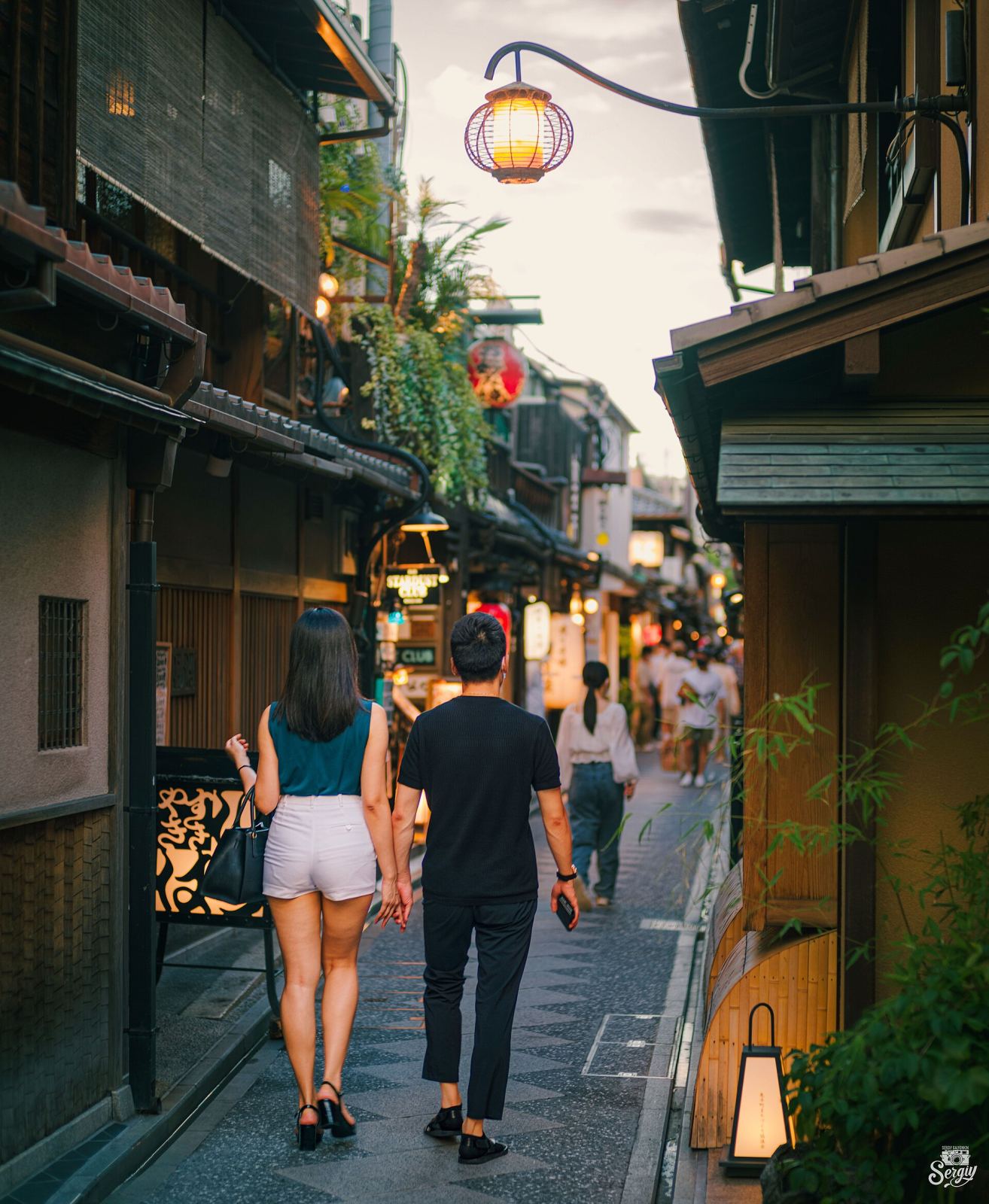
Sannenzaka and Ninenzaka: Kyoto's Historic Higashiyama Slopes, Explained
Two stone-paved streets leading to Kiyomizu-dera, a centuries-old legend about bad luck, and the first Starbucks in the world with tatami seating.
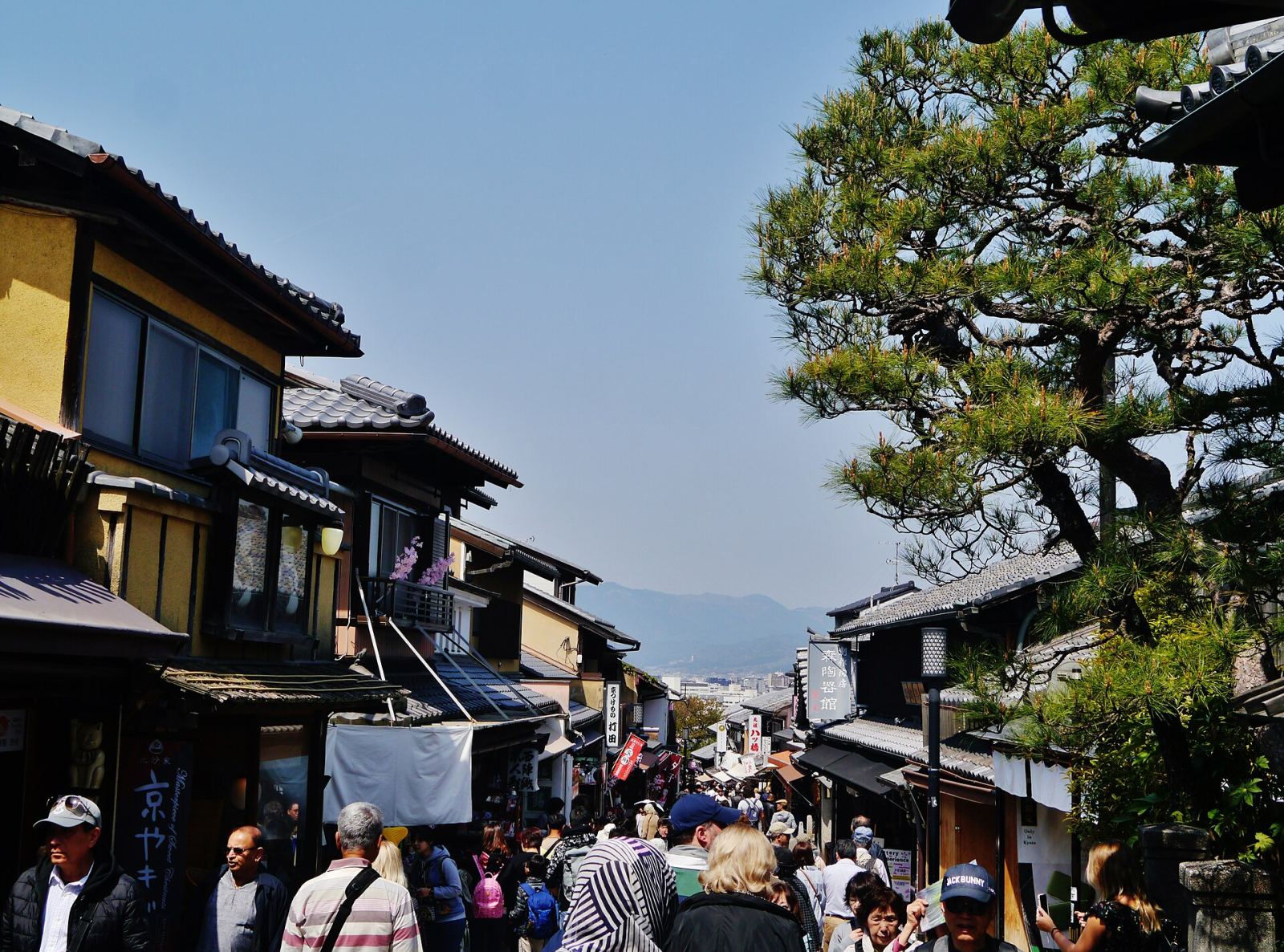
Sannenzaka and Ninenzaka are two short, steep, stone-paved streets in Kyoto's Higashiyama district, and together they form one of the most photographed walks in Japan. Neither is more than a couple hundred meters long, but strung together they create an unbroken corridor of Edo-period wooden buildings, teahouses, and souvenir shops leading directly up to Kiyomizu-dera, one of Kyoto's most famous temples. Cars have never been allowed on either slope, which has done more than almost anything else to preserve the atmosphere — this is one of the few places in central Kyoto where you can turn 360 degrees and see almost nothing modern.
These streets have functioned as approach roads to Kiyomizu-dera since ancient times, and their preserved townscape reflects that centuries-long role serving pilgrims and travelers heading up the hill. Sannenzaka ("Three-Year Slope") comes first when climbing from the Higashiyama side, followed by Ninenzaka ("Two-Year Slope") just beyond it. The area carries a well-known local legend: fall on Sannenzaka and, according to superstition, you'll have only three years left to live — a play on the slope's name — though tradition offers an out, with shops nearby selling small hyotan (gourd) charms said to ward off the curse. It's the kind of story locals tell half-jokingly, but it's repeated often enough that most guidebooks mention it, and it adds a bit of folklore to what would otherwise just be a very pretty, very uneven street.
The buildings lining both slopes house souvenir shops, sweet shops selling yatsuhashi (Kyoto's signature cinnamon-and-red-bean confection), pottery stores stocking Kiyomizu-yaki ceramics — a style of glazed pottery historically produced in this very neighborhood — and a steady scattering of cafes. The most unusual of these is the Starbucks at Ninenzaka Yasaka Chaya, opened in 2017 inside a 100-year-old traditional machiya house: it was the first Starbucks in the world with tatami mat seating, and shoes come off at the door just as they would in any traditional Japanese home. Painter and poet Yumeji Takehisa also lived in this neighborhood for about two years starting in 1917, and a small stone monument near his former residence marks the connection.
| Time | Atmosphere | Best For |
|---|---|---|
| Early morning (8-9:30am) | Quietest window before tour groups arrive | Photos of the empty stone streets |
| Midday | Busiest; both slopes fill with foot traffic | Shopping and people-watching, expect crowds |
| Late afternoon | Good golden-hour light on the traditional facades | A slower second pass after visiting Kiyomizu-dera |
| Cherry blossom / autumn foliage season | Extremely crowded but visually spectacular | Photography if you can tolerate the density |
Both slopes are uneven stone steps and paving, genuinely steep in sections, and can be slippery when wet — comfortable, closed-toe shoes make a real difference. The legend aside, the surface itself is the actual hazard most visitors underestimate, especially in crowds where it's hard to watch your footing.
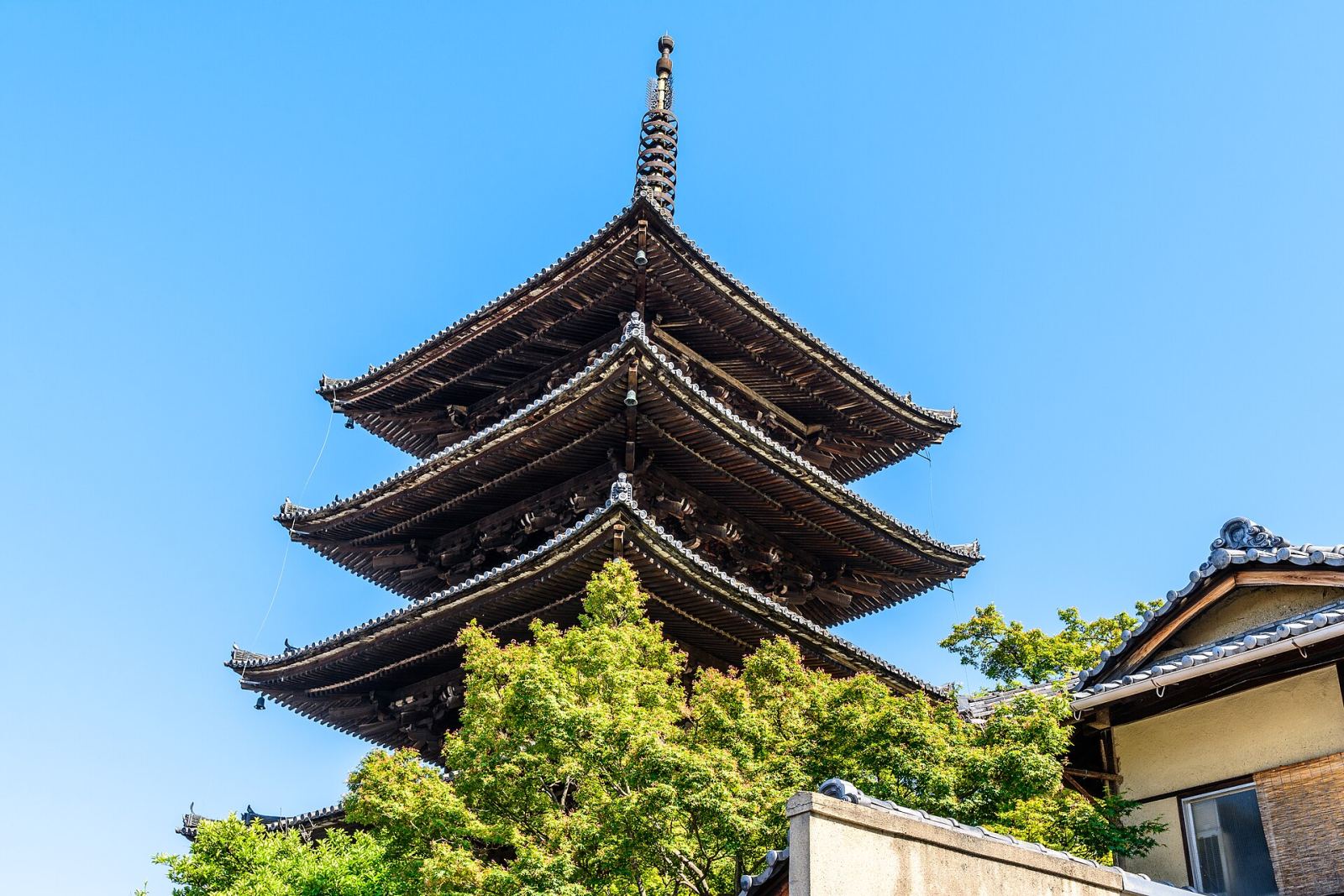
The Yasaka Pagoda (formally Hokan-ji), visible from several points along Ninenzaka, is one of Kyoto's most recognizable silhouettes and worth the short detour to see up close, even though the temple itself is small. Kodaiji Temple, founded in 1606 in memory of a feudal lord's wife, sits just off the slopes and has a notably peaceful garden compared to the crowds outside its gate. Yasaka Shrine anchors the northern end of the district, connecting Higashiyama directly to Gion. Combined, Sannenzaka-Ninenzaka and the surrounding lanes make for one of the few Kyoto neighborhoods where you can comfortably spend two or three unhurried hours without running out of things to see.
For a quieter detour off the main flow of foot traffic, Ishibe-koji — a tiny, easy-to-miss lane branching off near Kodaiji — is one of the best-preserved traditional streetscapes in the entire district, precisely because it sees a fraction of the crowds that Sannenzaka and Ninenzaka do. And if you're visiting in spring or autumn, several temples in the immediate area, including Kodaiji and the nearby Kiyomizu-dera grounds, hold special nighttime illumination events during cherry blossom and autumn foliage season, lighting up gardens and pagodas after dark for a few weeks each year — a dramatically different experience from the same streets at midday, and worth checking the seasonal calendar for before you visit if the timing lines up.
Because Sannenzaka and Ninenzaka are both genuinely narrow, foot traffic can bottleneck badly during peak hours, particularly where the slopes intersect with cross-lanes or narrow doorways into popular shops. Arriving early or visiting on a weekday morning makes a bigger practical difference here than at almost any other Kyoto attraction — the same street that's a slow, shuffling crowd at 1pm on a Saturday can be a near-empty, easy walk at 8:30am, with the same buildings and the same Yasaka Pagoda views, just without the crush.
Higashiyama connects directly north into Gion and Hanamikoji Street, making the two an easy combined half-day walk. For the temples this district exists to serve — Kiyomizu-dera chief among them — see our guide to Kyoto's Best Temples and Shrines. And if you're deciding how much time this side of the city deserves in a broader itinerary, How Many Days Do You Need in Kyoto? can help you plan around it.
The most common approach is by bus: take city bus 100 or 206 from Kyoto Station to the Kiyomizu-michi or Gojo-zaka stop, then walk uphill for about 10 minutes to reach the base of Sannenzaka. There's no train station directly at the slopes themselves — the nearest rail option is Kiyomizu-Gojo Station on the Keihan Main Line, followed by a 15-20 minute uphill walk. Because the streets are pedestrian-only stone paving, there is no vehicle or taxi drop-off at the top; plan to arrive on foot regardless of how you get to the neighborhood.