Istanbul's Best Ticketed Attractions: Which Ones Are Actually Worth It
From a $9.10 Bosphorus cruise to the palace that housed six Ottoman sultans, here's an honest comparison of Istanbul's best paid attractions — price, time needed, and who each is actually for.

Istanbul is the only city on Earth that straddles two continents, and its paid attractions reflect 1,600 years of Roman, Byzantine, and Ottoman history stacked on top of each other — sometimes literally, in the case of a mosque built as a church. Here's an honest, head-to-head comparison of six worth booking, from $9.10 to roughly $65, with what each one delivers and who it's a poor fit for.
| Attraction | From | Time Needed | Best For |
|---|---|---|---|
| Bosphorus Sunset Cruise | $9.10 | 2 hours | Tightest budget, views of two continents |
| Turkish Coffee & Fortune Telling Workshop | $33.50 | 2 hours | Hands-on culture, a take-home souvenir |
| Hagia Sophia | $33.65 | 1–2 hours | 1,500 years of Byzantine and Ottoman history |
| Dolmabahce Palace | $51.25 | 1–3 hours | 19th-century Ottoman opulence |
| Topkapi Palace | $64.05 | 2–3 hours | Classical Ottoman sultans' residence |
| Basilica Cistern | $64.99 | 1 hour | The full splurge, an underground marvel |
Bosphorus Sunset Cruise — the budget pick

At $9.10, this is by far the cheapest attraction on this list, and it delivers something none of the land-based sites can: a view of Istanbul from the water, gliding along the strait that physically separates Europe from Asia. The two-hour cruise passes Dolmabahce Palace, Maiden's Tower, and the Baroque-Ottoman Ortakoy Mosque, with an audio guide narrating the history along the way and snacks and soft drinks included. As the sun sets, the skyline's mosques and minarets catch a golden light that's genuinely hard to replicate from land. It's a poor fit for anyone prone to seasickness, though the Bosphorus is typically calm, and a poor fit for anyone wanting to actually enter the landmarks it passes rather than view them from the water.
Turkish Coffee & Fortune Telling Workshop — best hands-on culture

A two-hour workshop near Galata Tower where you select and hand-grind your own coffee beans, then brew the coffee slowly on hot sand in a copper cezve, before an instructor teaches the centuries-old Turkish tradition of reading the grounds left in the cup for fortune telling. Fresh Turkish tea, Turkish delight, and a taste of caffeine-free Menengiç coffee round out the session, and you leave with a handmade coffee pot, cup, coffee, and recipe booklet to take home. At $33.50 and rated 4.9 stars, it's the most genuinely participatory experience on this list, standing apart from the ticket-and-walk-through format of the historical sites. It's a poor fit for anyone who prefers passive sightseeing over a structured, guided activity, but for a real taste of Turkish daily ritual, nothing else on this list comes close.
Hagia Sophia — the essential landmark
Few buildings on Earth carry the layered history of Hagia Sophia: built as a Byzantine cathedral in the 6th century, it was the coronation site for Roman emperors and headquarters of Orthodox Christendom before becoming Istanbul's first mosque, and its dome held the record as the largest in the world for 800 years. Since 2020 it functions as an active mosque again, which means the ground floor prayer area isn't open to non-worshippers, but ticketed entry gets you close to the Ottoman tile work, calligraphy, and Byzantine mosaics that coexist within the same walls. At $33.65 for one to two hours, it's essential context for understanding Istanbul's entire history in a single visit. It's a poor fit for anyone visiting during prayer times expecting full access, and modest dress is required regardless of your visit time.
Dolmabahce Palace — best 19th-century opulence

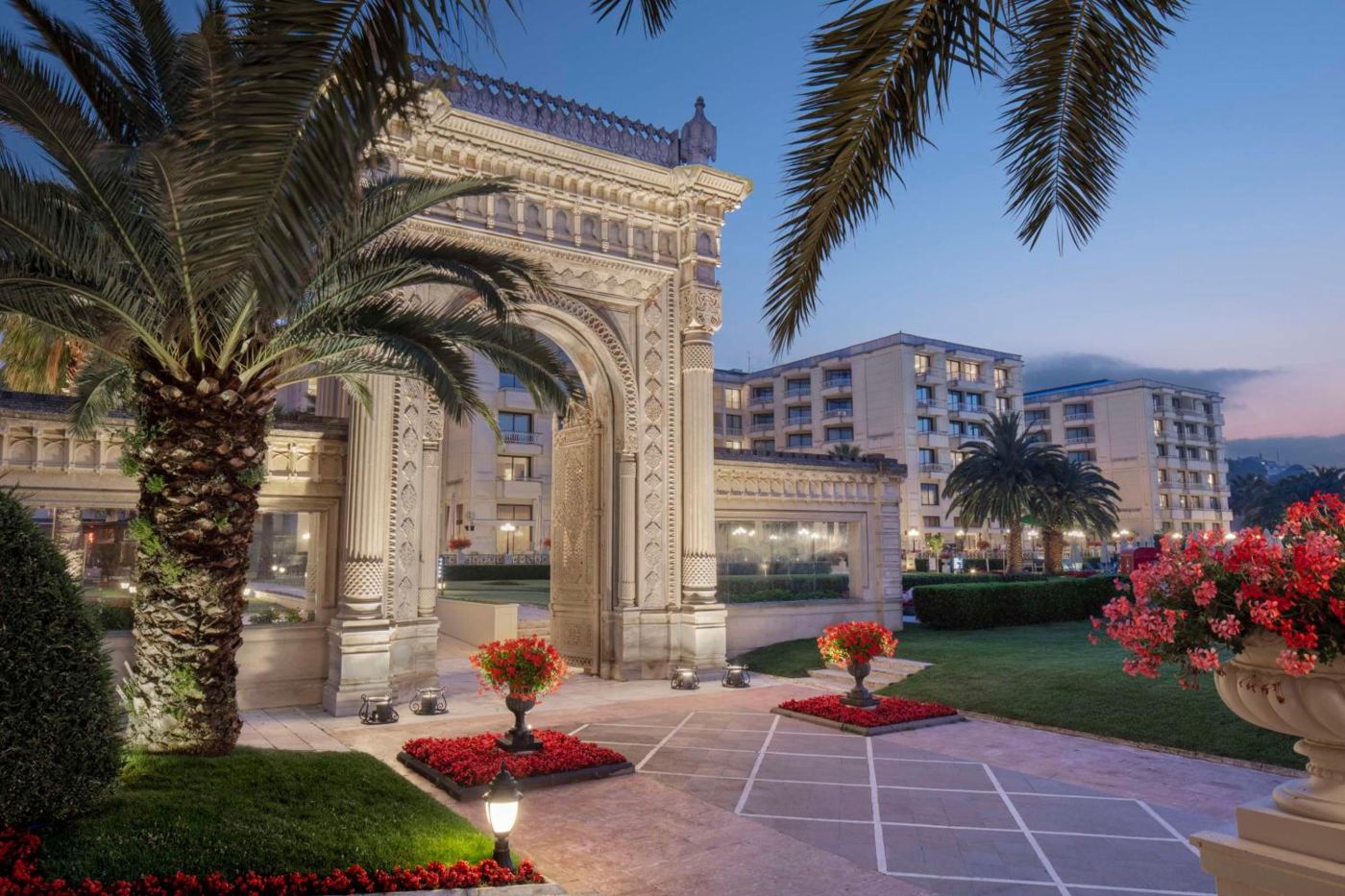
Built in the mid-19th century as the Ottoman Empire looked west for architectural inspiration, Dolmabahce Palace trades Topkapi's classical Ottoman courtyards for European Baroque, Rococo, and Neoclassical interiors, dripping with crystal chandeliers and gold leaf. It housed the last six Ottoman sultans and, later, Mustafa Kemal Atatürk, founder of the Turkish Republic, who died here in 1938 — the palace's clocks are famously stopped at the time of his death. Skip-the-line entry includes the Harem section, offering a genuine look at the private living quarters rather than just the ceremonial state rooms. At $51.25 it sits between Hagia Sophia and Topkapi in price, and it's a poor fit for anyone who prefers the older, more austere Ottoman aesthetic of Topkapi — Dolmabahce is deliberately, unapologetically grand.
Topkapi Palace — the classical Ottoman residence

The primary residence of Ottoman sultans from the 15th century onward, Topkapi Palace is less a single building than a sprawling complex of courtyards, pavilions, and gardens where the empire was actually governed for centuries — a working palace rather than a purely ceremonial one. Skip-the-line tickets come with a smartphone audio guide covering the intrigue-filled history of sultans, concubines, and courtiers that ran through these halls, and the palace grounds end with panoramic views over the Bosphorus. At $64.05 for two to three hours, it's priced for the scale of the site, and there's a mandatory security queue that even skip-the-line tickets can't bypass, so build in extra time. It's a poor fit for anyone wanting a quick, focused visit — Topkapi rewards unhurried wandering across its multiple courtyards more than a rushed checklist stop.
Basilica Cistern — the full splurge

Built in the 6th century as Constantinople's underground water reservoir, the Basilica Cistern holds 336 marble columns rising from softly lit, still water — including two mysterious, upside-down Medusa heads reused as column bases from an earlier Roman structure, their exact origin still debated by historians. At just an hour to explore, it's the shortest visit on this list, and skip-the-line tickets are worth it given how much foot traffic the cistern draws as one of Istanbul's most photographed interiors. At $64.99 it's technically the most expensive ticket here, though the sheer atmosphere, cool underground air, ambient lighting, and centuries of accumulated legend, arguably makes it the most memorable single hour in the city. It's a poor fit for anyone with claustrophobia or difficulty with damp, uneven underground walkways.
So Which Should You Actually Book?
Tightest budget or want the view from the water? The Bosphorus Sunset Cruise, at $9.10. Want a genuine hands-on cultural experience to take home? The Turkish coffee workshop. Only doing one historic landmark? Hagia Sophia, for its unmatched layered history. Drawn to 19th-century European grandeur? Dolmabahce Palace. Want the classical seat of Ottoman power? Topkapi Palace. And if you can spare just one hour for something genuinely unforgettable, the Basilica Cistern's Medusa heads deliver exactly that.
All six book through Klook with instant confirmation. Hagia Sophia closes its ground floor prayer area during the five daily prayer times, so check the schedule if full access matters to your visit. Topkapi Palace and the Basilica Cistern both draw heavy queues even with skip-the-line tickets — an early morning visit avoids the worst of the crowds at both.