İstiklal Street: Istanbul's Grand Pedestrian Avenue
A historic red tram, Ottoman-era grandeur, and the busiest, most cosmopolitan street on the European side of the city.

İstiklal Street, or İstiklal Caddesi, is Istanbul's most famous pedestrian avenue, stretching for roughly 1.4 kilometers through the heart of Beyoğlu on the European side of the city, connecting Taksim Square in the north to Tünel Square in the south. It's consistently among the busiest streets in the city at almost any hour, drawing residents, shoppers, and visitors in numbers that can make it feel less like a single street and more like a constantly moving crowd threading its way past cafés, cinemas, bookshops, and centuries of layered architecture.
The street's history stretches back to the Ottoman era, when it was known as Cadde-i Kebir, or 'The Great Avenue,' and later as Grande Rue de Péra among the many French, Italian, and other European residents who made Beyoğlu the cosmopolitan heart of the late Ottoman capital, home to foreign embassies, elite schools, and fashionable European-style apartment buildings. Its current name, İstiklal, means 'Independence' in Turkish, adopted after the founding of the Turkish Republic in the 1920s as a deliberate statement about the modern, secular nation being built out of the old empire's cosmopolitan core.
The street's famous red tram, officially Tram Line T2, has become almost as iconic as İstiklal itself. Trams first ran along this route back in 1871, were removed mid-20th century as the city modernized around cars and buses, and were reintroduced in 1990 after nearly forty years of absence, using stylized antique-style red carriages that now shuttle between Taksim and Tünel with five stops along the way. Riding it end to end takes only a few minutes, but doing so at a slow crawl through the packed pedestrian crowds is as much a piece of street theater as it is functional transport.
| Time | Atmosphere | Best For |
|---|---|---|
| Morning | Relatively quiet, shops opening | A calmer walk before the crowds build |
| Afternoon | Extremely busy, peak foot traffic | People-watching and browsing shops |
| Evening | Lively, restaurants and bars filling up | Dinner and a walk through the side streets |
| Late night | Nightlife venues active, still crowded | Bars and live music in the surrounding alleys |

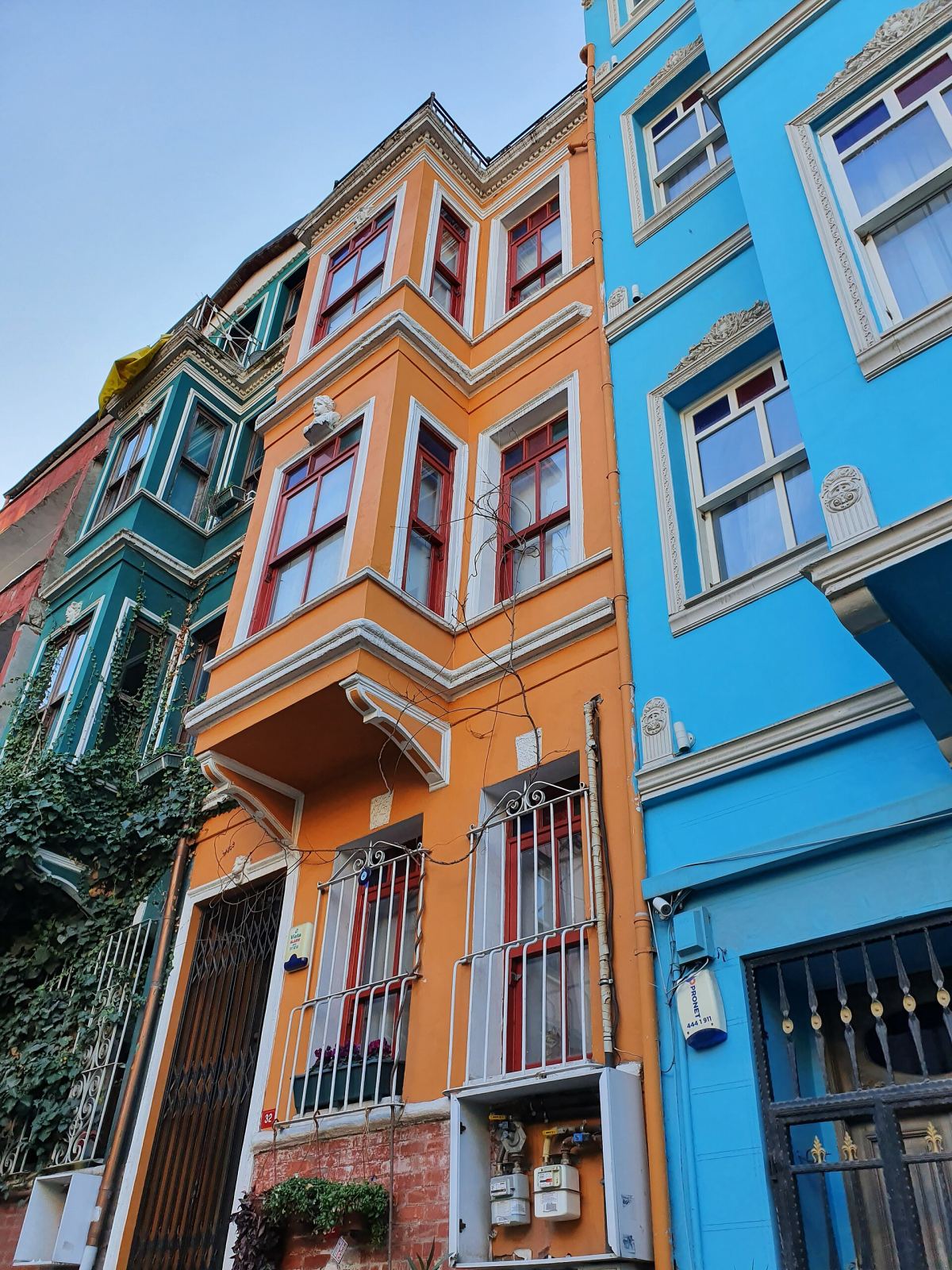
Walking İstiklal's full length is a genuine tour through architectural history, with Neoclassical and Art Nouveau façades standing alongside Art Deco detailing on the ornate balconies of side streets like Yeşilçam Sokak, once the heart of the Turkish film industry and still nicknamed Istanbul's own version of Hollywood. Historic churches, including several serving Istanbul's remaining Armenian, Greek, and Levantine Catholic communities, sit tucked behind courtyard gates just off the main avenue, offering quiet, largely overlooked stops for visitors willing to step away from the main pedestrian flow for a few minutes.
İstiklal Street's constant density of foot traffic makes it a known spot for pickpocketing, particularly in the busiest afternoon and evening hours. Keep bags zipped and in front of you, and stay alert in the most tightly packed sections near Taksim Square.
The side streets branching off İstiklal, known collectively as the Beyoğlu backstreets, hold much of the area's real character beyond the main pedestrian flow — small meyhanes (traditional Turkish taverns), independent bookshops, art galleries, and the historic Çiçek Pasajı, or Flower Passage, a covered 19th-century arcade now filled with restaurants and bars rather than the flower sellers it was originally named for. Wandering just one block off the main avenue in either direction is often more rewarding than staying on İstiklal itself for visitors seeking a quieter, more local pace.
Galata Tower, one of Istanbul's most recognizable landmarks, sits within easy walking distance of İstiklal's southern end near Tünel Square, and combining the two into a single outing is one of the most popular and efficient ways to spend a Beyoğlu afternoon, working the medieval Genoese tower and its panoramic city views into the same trip as the avenue's shops and cafés.
İstiklal Street is easily reached via the Taksim or Şişhane metro stations at either end, or via the funicular connecting Kabataş on the Bosphorus shore up to Taksim Square. Since the street is fully pedestrianized, no vehicle access is needed once you arrive, and most visitors find that simply walking its length at a relaxed pace, ducking into whichever side street looks interesting, is the most enjoyable way to experience it.
Cinema Emek, once one of İstiklal's grandest historic movie theaters and the traditional host of the Istanbul International Film Festival, was demolished and rebuilt inside a modern shopping complex following years of public protest, a saga that captures the broader tension playing out across the avenue between preserving genuine historic character and accommodating rapid commercial redevelopment. Several other historic cinemas along the street have faced similar pressures, with mixed outcomes between preservation and demolition.
Street musicians, artists, and political demonstrations have long been a fixture of İstiklal's public life, reflecting the avenue's historic role as a gathering point for Istanbul's more secular, cosmopolitan, and politically active population. Even on an ordinary day without any organized event, the sheer density of foot traffic tends to produce an unpredictable, constantly shifting mix of street performance, vendors, and spontaneous public life that's difficult to find concentrated so densely anywhere else in the city.
Simit carts, roasted chestnut vendors, and stalls selling fresh pomegranate and orange juice line the avenue at almost every hour, offering an easy, inexpensive way to snack while walking rather than committing to a sit-down meal, and these street vendors are as much a part of İstiklal's identity as any of its permanent shops or landmarks. Sunday afternoons in particular tend to draw the largest crowds of the week, as families and groups of friends turn the avenue into a genuine social destination rather than simply a shopping street, making it worth planning around if a quieter walk is the goal.