Lavash: The Bread Behind Every Armenian Meal
Why lavash matters in Armenian food culture, how it's traditionally made, and where to see or taste it fresh in Yerevan.

What Is Lavash?
Lavash is a thin, soft flatbread central to Armenian cuisine, traditionally baked by slapping stretched dough against the scorching-hot inner wall of a clay pit oven called a tonir. It cooks in under a minute, emerging soft and slightly charred, and is used less as a side dish than as a utensil — pieces of lavash are torn off and wrapped around khorovats, cheese, herbs, or nearly anything else on the table.
UNESCO added the preparation, meaning, and appearance of lavash to its Representative List of the Intangible Cultural Heritage of Humanity in 2014, recognizing it as a marker of Armenian identity that extends well beyond the food itself — sharing lavash is tied to hospitality customs and even wedding traditions.
How Lavash Is Traditionally Made
| Step | Detail |
|---|---|
| Dough | Simple flour, water, and salt, kneaded and rested |
| Stretching | Rolled and stretched paper-thin by hand |
| Baking | Slapped against the inner wall of a heated clay tonir oven |
| Cook time | Under a minute per piece, due to the oven's intense heat |
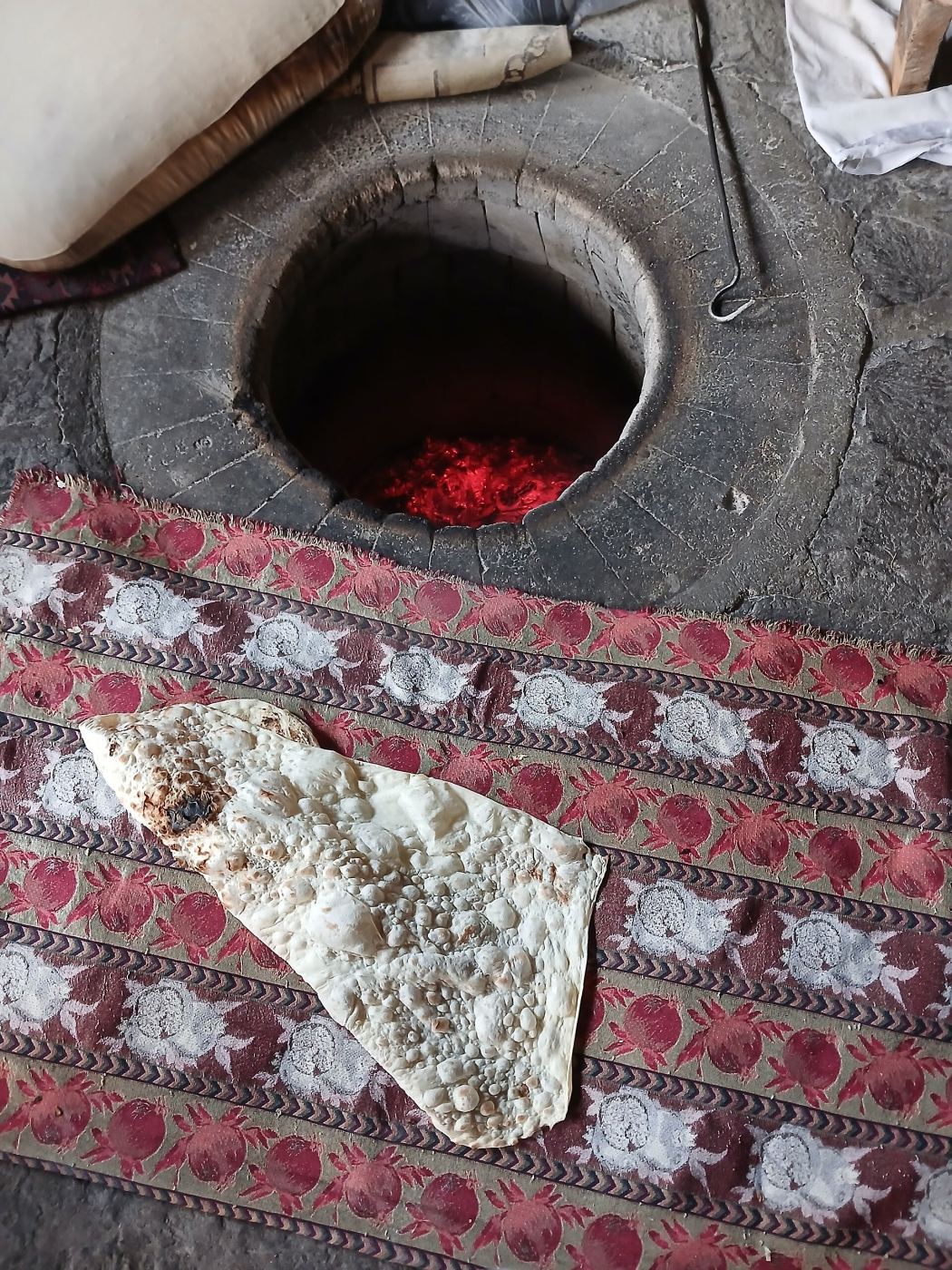
Where to See or Try It Fresh
Some traditional restaurants and bakeries in and around Yerevan still bake lavash in a wood-fired tonir on-site, and watching the process — the dough stretched paper-thin and slapped onto the oven wall — is worth seeking out if you get the chance. Fresh lavash, still warm, is noticeably better than the packaged, dried version sold for long-term storage, which is rolled up and kept for months at a time as a pantry staple.
Ask at your restaurant or a local market whether they bake lavash in-house — a visible tonir oven is a good sign, and watching a few rounds get made is a small but memorable part of a Yerevan visit.


