Nguyen Hue Walking Street: Saigon's Grand Pedestrian Boulevard, Explained
From a filled-in canal to Saigon's first car-free street — the history behind the boulevard connecting City Hall to the riverfront.
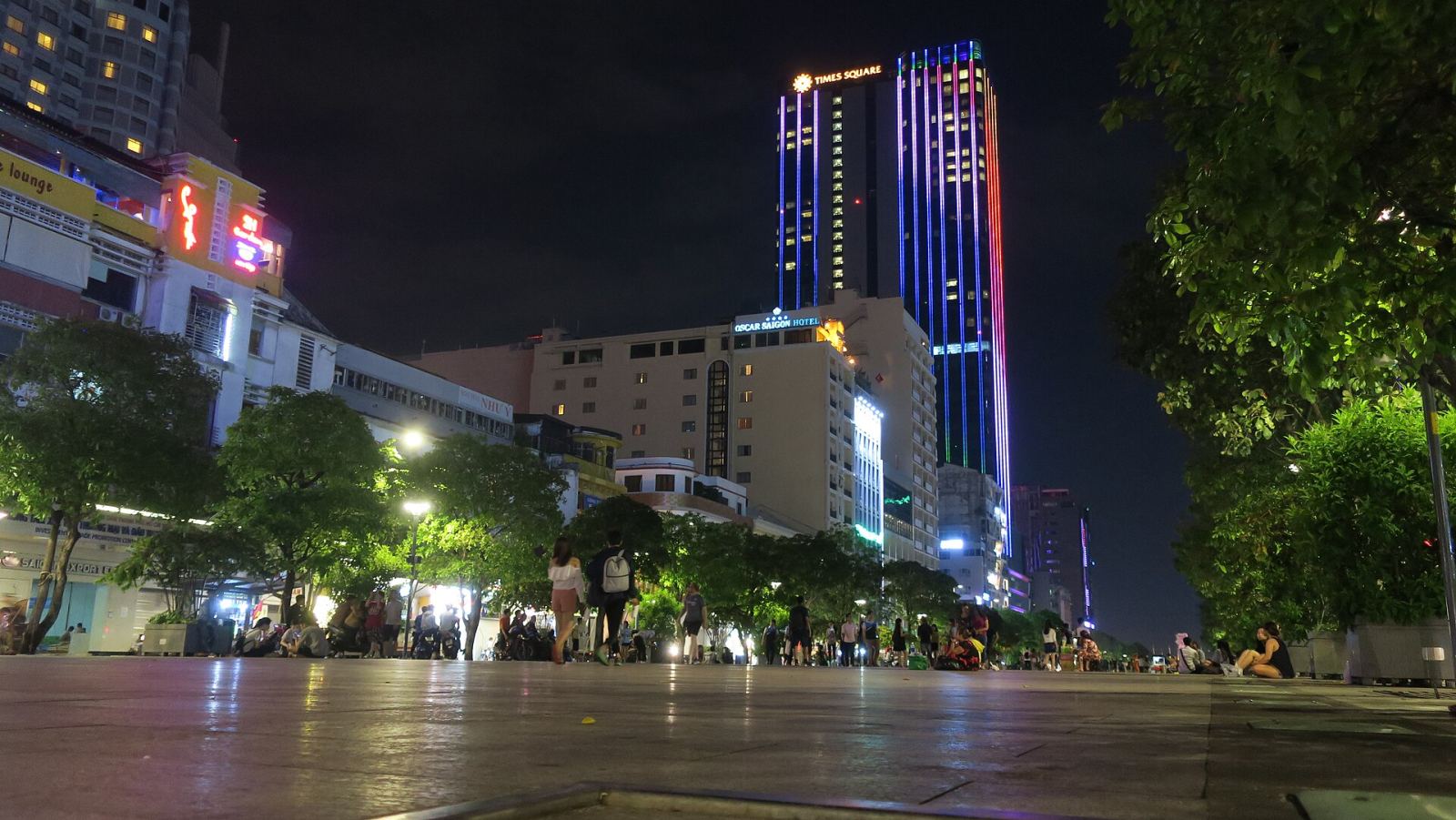
Nguyen Hue Walking Street is Saigon's grand civic boulevard — a nearly 700-meter pedestrian promenade running through the heart of District 1, connecting the ornate City Hall at its northern end to the Saigon River waterfront at its southern tip. It was the city's first dedicated walking street, opened in 2015 after extensive redevelopment, and it has become the default gathering place for everything from evening family strolls to major public celebrations, New Year's countdowns, and international sporting event viewing parties.
The street's history stretches back further than its modern pedestrian identity suggests. In the late 18th century, this was Kinh Lon — the "Big Canal" — an actual waterway connecting the Saigon River into the city. When the French arrived in the 1860s, they filled in the canal and built a grand boulevard atop it, naming it Charner Street after a French naval officer. After Vietnam's independence, the street was renamed Nguyen Hue, honoring Emperor Quang Trung (born Nguyen Hue), one of Vietnam's most celebrated national heroes for his military victories against foreign invasion. The transformation into a car-free pedestrian boulevard came much later, completed in 2015 as part of a broader push to create genuine public gathering space in central Saigon.
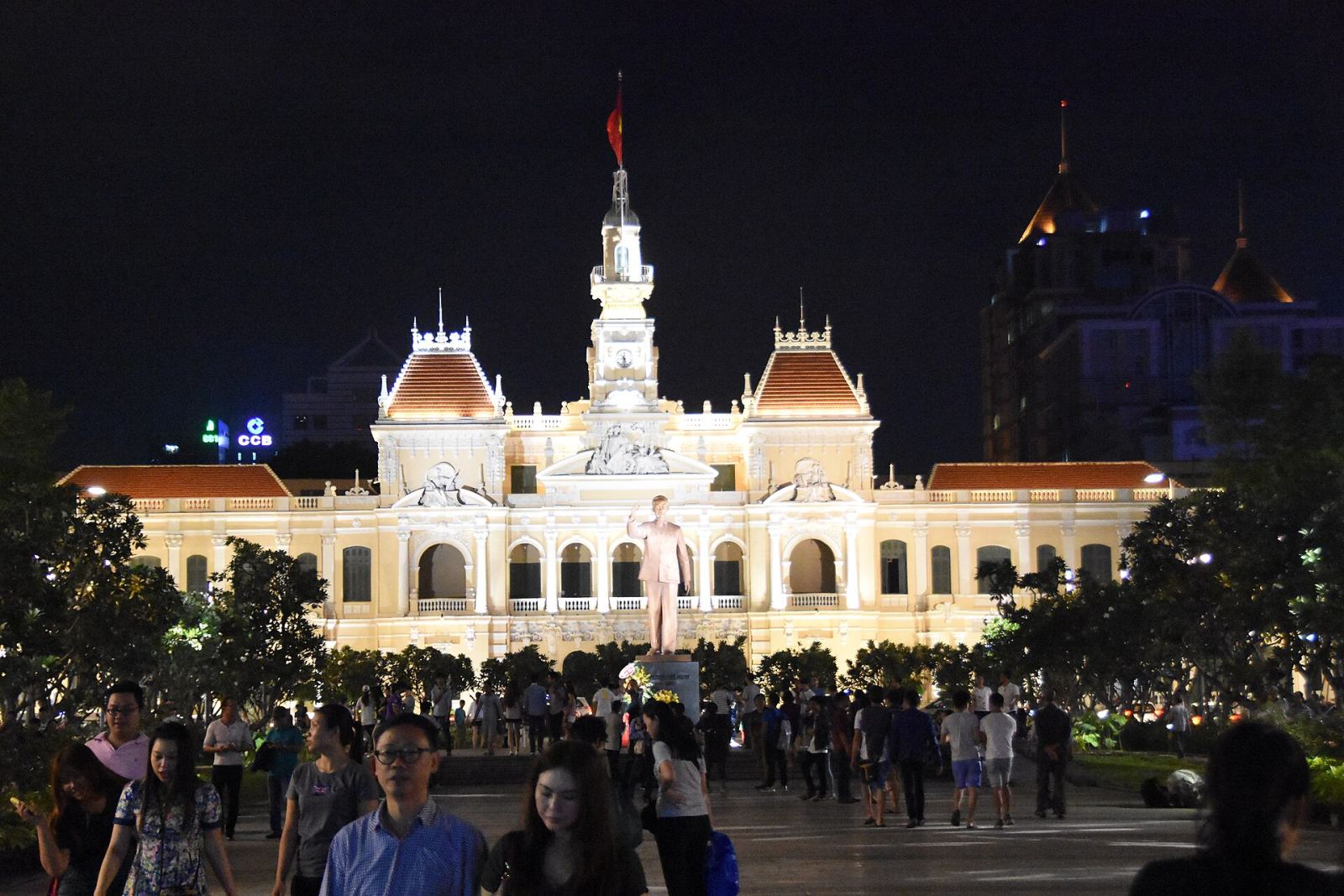
At the boulevard's northern end stands the Ho Chi Minh City People's Committee Head Office (often still called Saigon City Hall), a striking example of French colonial architecture completed in the early 20th century, its ornate facade, decorative reliefs, and central clock tower especially photogenic when illuminated at night. A statue of Ho Chi Minh stands in the plaza directly in front, a popular photo spot for both domestic and international visitors. While the City Hall's interior isn't open to the public, the exterior and surrounding plaza function as the natural anchor point for the entire walking street.
| Time | Atmosphere | Best For |
|---|---|---|
| Early morning | Quiet, some exercisers and street cleaners | Photos of the empty boulevard and City Hall |
| Daytime | Moderate foot traffic, hot given lack of shade | Sightseeing between other District 1 stops |
| Evening | Busiest; families, street performers, and vendors fill the boulevard | The full Nguyen Hue experience — locally considered the best time |
| Major holidays (Tet, New Year's Eve) | Extremely crowded with elaborate decorations and events | Festival atmosphere, though expect very large crowds |
Nguyen Hue regularly hosts free public events — flower festivals around Tet (Lunar New Year), outdoor screenings during major sporting tournaments, and elaborate light displays during holidays. Checking the local events calendar before a visit can turn a routine walk into something considerably more memorable.
The 2015 redevelopment that created the pedestrian boulevard was a genuinely significant piece of urban planning for a city that has historically prioritized vehicle traffic over public gathering space — Nguyen Hue's success in that respect is part of why Bui Vien followed with its own pedestrianization just two years later. Underneath the pavement runs an underground parking structure and connections to the city's ongoing metro construction, meaning the boulevard's calm surface conceals a fair amount of contemporary infrastructure working to keep the wider district functional even as car traffic is pushed below and around it.
The boulevard is lined with a mix of shopping malls, international coffee chains, and historic buildings, including the Rex Hotel — a Vietnam War-era landmark that once hosted the U.S. military's daily press briefings, nicknamed the "Five O'Clock Follies" by the journalists who attended them. Nearby, the Saigon Notre-Dame Cathedral and Bitexco Financial Tower are both within easy walking distance, making Nguyen Hue a natural hub for stitching together several of central Saigon's major landmarks into one continuous walk.
Nguyen Hue connects easily on foot to Bitexco Tower and Ben Thanh Market and to Notre-Dame Cathedral and the Central Post Office, making it one of the most efficient starting points for a day of central Saigon sightseeing. For the full range of what's worth paying for, see Ho Chi Minh City's Best Ticketed Attractions.
Nguyen Hue sits in the absolute center of District 1, walkable from virtually any hotel in the area. It's a five-minute walk from Ben Thanh Market and a similar distance from the Saigon River waterfront at its southern end. As a fully pedestrianized street, there's no vehicle drop-off directly on the boulevard itself — taxis and Grab rides will drop passengers at the nearest cross street instead.
Frequently Asked Questions
Public art installations rotate through the boulevard periodically, ranging from sculpture exhibitions to interactive light displays, giving repeat visitors a reason to return even after they've already photographed the City Hall and walked the full length once. Combined with the boulevard's role hosting flower markets before Tet and fan zones during major football tournaments, Nguyen Hue functions less like a single static attraction and more like a flexible civic stage that changes character with the calendar.
It's also worth noting that Nguyen Hue is genuinely a Saigonese gathering place rather than a tourist construction — the crowds you'll see most evenings are overwhelmingly local families, students, and couples rather than visitors, which gives the boulevard a lived-in, community feel that's easy to underestimate from photos alone. Sitting on the boulevard's edge with a drink from a nearby café and simply watching the evening crowd move past is, for many locals, the point of the street as much as any specific sight along it.
For anyone stitching together a walking route through central Saigon, Nguyen Hue works well as either a starting or ending point, given its central position and direct connections to the riverfront and several major landmarks nearby.