Roti Canai: How Malaysia's Flaky Flatbread Is Made and Eaten
The technique behind roti canai's flaky layers, the common variations, and how to eat it like a local.

Roti Canai: Malaysia's Everyday Flatbread
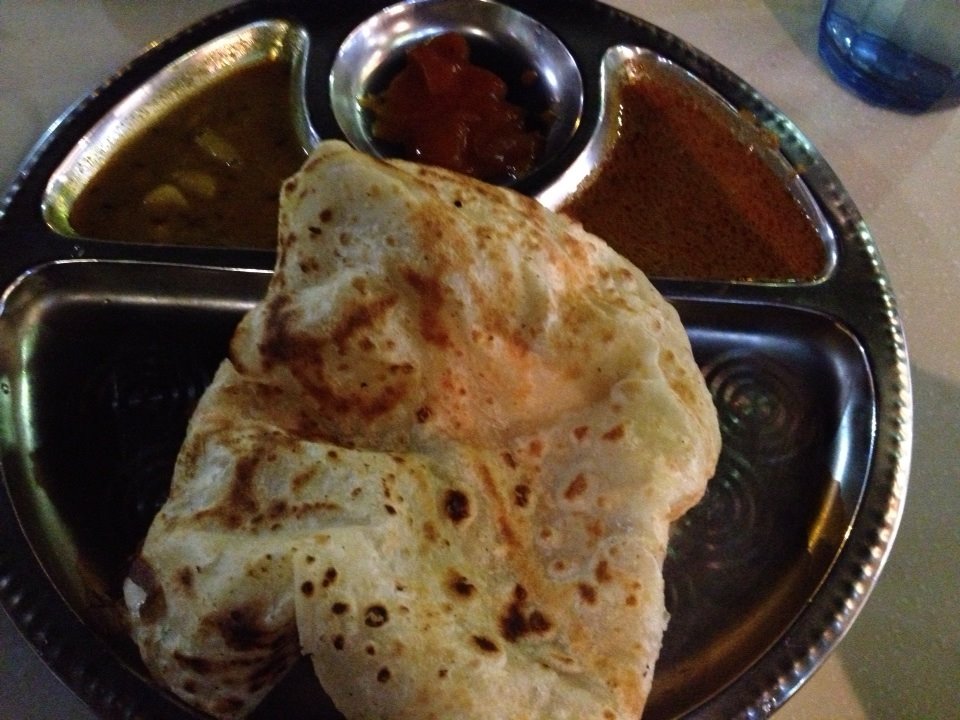
Roti canai is a flaky, layered flatbread made by stretching and folding dough thin before pan-frying it on a hot griddle — a technique that creates dozens of paper-thin layers, giving the finished bread a crisp exterior and a soft, slightly chewy interior. It's sold at mamak stalls (Indian-Muslim eateries) across Malaysia at nearly any hour, making it as much a breakfast staple as a late-night snack.
How It's Made
The dough is flattened and stretched by hand — sometimes with a dramatic tossing motion that's become part of the visual appeal of watching it made — folded over itself repeatedly to build up layers, then cooked on a flat griddle with generous ghee or oil until golden and crisp. The technique is what separates roti canai from a simple flatbread: the layering is what creates the flaky texture.
| Variation | What It Is |
|---|---|
| Roti kosong | Plain roti canai, the standard version |
| Roti telur | With egg mixed into the dough while cooking |
| Roti canai bawang | With chopped onion mixed in |
| Roti tissue | A thinner, crispier, often sweetened version, folded into a cone shape |
How to Eat It
Roti canai is served with a small bowl of curry (often dhal or a chicken/fish curry) for dipping, and it's typically eaten by tearing off pieces with your hand rather than using cutlery. It's commonly paired with teh tarik (pulled milk tea), making the combination a classic Malaysian breakfast.
Roti canai is inexpensive enough that ordering two different variations to compare (like roti kosong and roti telur) is completely normal and a good way to experience the range.