Sunday Walking Street: Chiang Mai's Biggest Weekly Market
How to enjoy Chiang Mai's Sunday Walking Street on Ratchadamnoen Road, with the best handmade crafts, street food, temple courtyards and tips for avoiding the crush.
Sunday Walking Street: Chiang Mai's Biggest Weekly Market
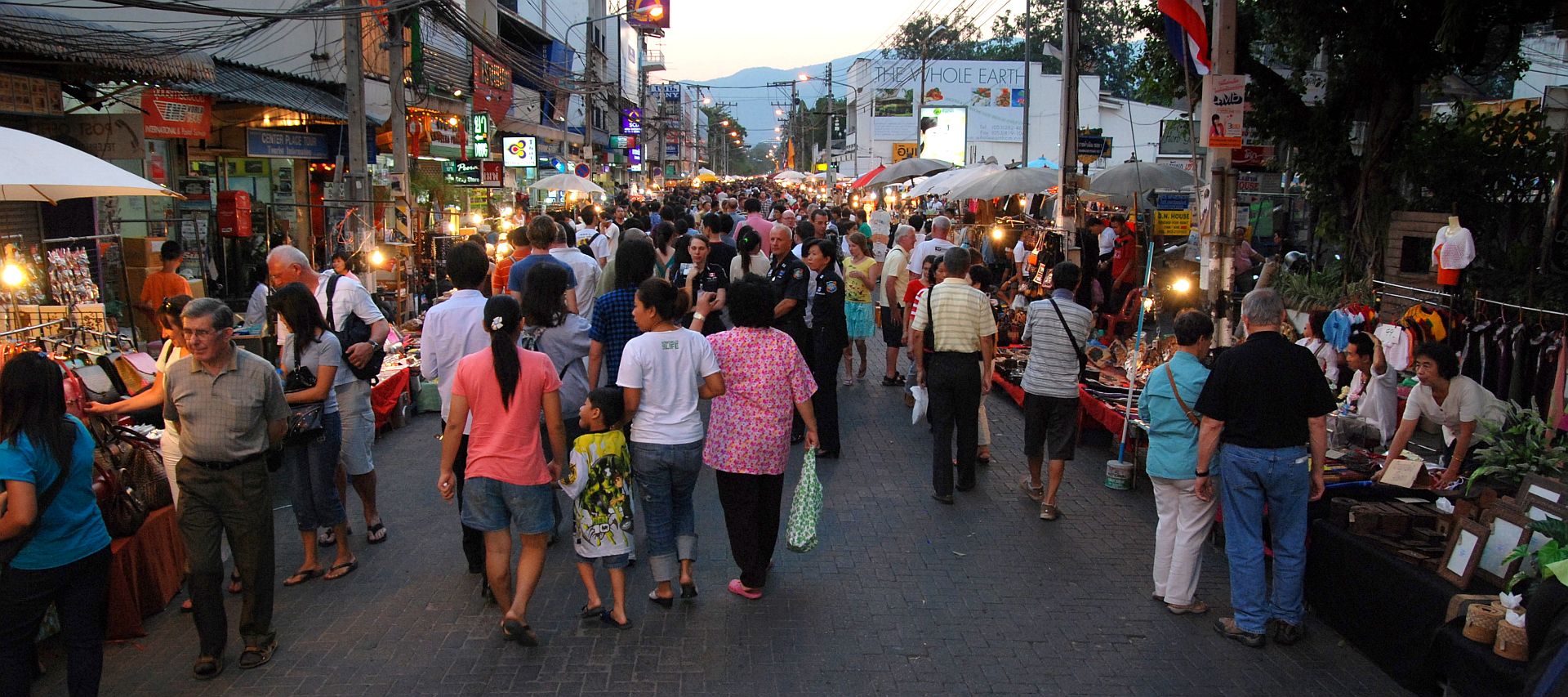
The Sunday Walking Street is one of the highlights of a visit to Chiang Mai: a long, lively market that fills Ratchadamnoen Road in the Old City every Sunday afternoon and evening. It stretches roughly a kilometer from Tha Phae Gate west to Wat Phra Singh, with side lanes and temple courtyards joining in, and it brings together handmade crafts, local food, live music and a festive crowd of visitors and residents. It is one of the city's best-loved events and well worth planning your week around.
The market starts in the late afternoon, usually around four o'clock, as vendors set up their stalls and the road is closed to traffic. By sunset, the street is packed, and it keeps going until about eleven at night. The scene is bright and busy, with rows of stalls under tents and lanterns, and the glow of the temples visible beyond. It feels more like a community festival than a tourist market, and many of the vendors are artisans selling their own work.
Handicrafts are the main draw. You will find hand-painted umbrellas, carved wooden items, silver jewelry, hill-tribe textiles, leather goods, paintings, handmade soaps and candles, and clothing in northern Thai styles. Because many items are made by the sellers themselves or by local cooperatives, quality and creativity are often higher than at generic souvenir markets. Prices are fair, and gentle bargaining is accepted, though not expected for small items.
Food is an essential part of the experience. Stalls along the road and in the temple courtyards sell grilled sausages, fried insects, noodle soups, banana pancakes, mango sticky rice, fresh juices and desserts, and the temples of Wat Phra Singh and others host large food courts with seating. It is a perfect place for a snack-based dinner, sampling multiple dishes for just a few dollars, and the food is mostly cooked fresh in front of you.
| Time | What to Expect |
|---|---|
| 4–5pm | Stalls setting up, thin crowds, best for browsing |
| 6–8pm | Peak crowds, most food stalls open, lively atmosphere |
| 8–10pm | Crowds thin slightly, good for a relaxed dinner |
| After 10pm | Stalls begin to pack up and the street clears |
Start at Tha Phae Gate and walk west toward Wat Phra Singh. The best food is often in the temple courtyards off the main road, where you can sit down and eat in a quieter setting.
Entertainment adds to the atmosphere. Along the street you will see traditional musicians, including players of the northern Thai khlui flute and sueng lute, as well as performers, buskers and, in some stretches, groups offering massages in the open air. Temples along the route often stay open, and you can step into a courtyard for a quiet break from the crowd or to join in the evening chanting.
The crowds are heavy, particularly between about six and eight in the evening, when the street can become shoulder-to-shoulder. Arriving soon after the market opens gives you more space to browse, and walking in the less crowded side lanes can help. Keep valuables in a front pocket or secure bag, and be aware that the crowd moves slowly, so allow plenty of time. It is not ideal for wheelchairs or large strollers.
A Saturday version of the market, the Wualai Walking Street, takes place on Wualai Road near the southern gate and is smaller and a little quieter, with a strong silver-working tradition. If you are in Chiang Mai over a weekend, you can see both, though the Sunday event is far larger and more famous. The Night Bazaar on Chang Klan Road is open every night but is more commercial and less handmade.
To make the most of the Sunday Walking Street, go with an empty stomach and a small amount of cash, wear comfortable shoes, and start at Tha Phae Gate, walking west. Allow two to three hours, stop for a snack at the temple food courts, and leave time for a few purchases of handmade gifts. It is an unforgettable way to see the city at its most social, and it is free to enter.
Visitors with limited time sometimes ask whether the market is worth it compared with the Night Bazaar. The answer is yes if you value handmade goods, local food and a festive setting, since the Sunday market is more varied and more authentically local. It also fits neatly into a day of sightseeing, since you can spend the day visiting temples in the Old City and end it at the market. Bring a light bag for purchases, small notes for easier payment, and a bottle of water, as the evening can stay warm and humid.
If you are interested in photography, the market is at its best during the blue hour just after sunset, when the lanterns come on and the sky still holds some color behind the temple roofs. Wat Phra Singh's courtyards, lit up for the evening, give a calmer backdrop, and the performers and food vendors make for lively street scenes. Be considerate when photographing vendors, and ask before taking close-up portraits.