Ameyoko: Tokyo's Bustling Post-War Market Street in Ueno
Everything about Ameyoko — the 250-plus-shop open-air market street in Ueno, born from a post-war black market, still selling everything from fresh seafood to bargain electronics.

Why Ameyoko Is Worth Your Time
Ameyoko (short for Ameya-Yokochō) is Tokyo at its least polished and most alive — a raw, open-air market street packed under and alongside the elevated JR train tracks between Ueno and Okachimachi stations. There's no architecture to admire here and no curated aesthetic; instead there are more than 250 shops and stalls shouting over each other selling fresh fish, dried seafood, spices, imported chocolate, clothing, cosmetics, and bargain electronics, often at prices well below what you'd pay in a department store a few train stops away. If Takeshita Street is fashion-forward youth culture and Omotesando is architectural luxury, Ameyoko is neither — it's a working market that happens to have become one of Tokyo's most visited streets, and it feels genuinely different from anywhere else in the city's shopping scene.
Part of the appeal is exactly that lack of polish. Vendors call out prices, haggling is normal at some stalls (though not universal), and the street can feel closer to a market in Bangkok or Hong Kong than to the rest of orderly, quiet Tokyo. It's also one of the most convenient stops in the city to add to an itinerary, sitting directly beside Ueno Station and its park, museums, and zoo — meaning a visit here rarely requires a special trip of its own.
A Brief History: From Candy Alley to Black Market to Bargain Street
The name itself carries two competing origin stories, and both are widely repeated because both are probably at least partly true. "Ameya" can mean "candy shop" — in the early postwar years, when sugar was scarce, candy stores lined the street and gave it its name. The second theory points to "Amerika" (America): in the years right after World War II, the area functioned as a black market selling surplus American army goods that were otherwise nearly impossible to find in devastated postwar Tokyo. Either way, the street settled into its identity as a discount market and never really left it, evolving from black-market surplus goods into the legitimate, sprawling bargain market you'll find today — spanning roughly 15,000 square meters and still following the original layout along the train tracks.
What You'll Actually Find Along the Street
Ameyoko splits roughly into two characters depending on which stretch you're walking. Closer to Ueno Station, stalls lean toward fresh and dried seafood, produce, and spices — this is where many Tokyo households still come to shop, especially in the final days of December for New Year's osechi ingredients, when the street turns into one of the most crowded shopping events in the city. Further toward Okachimachi Station, the mix shifts toward clothing, bags, cosmetics, sneakers, and imported chocolate and snacks sold in bulk at discount prices. Threaded through both sections are small food stalls selling skewered snacks, fresh-cut fruit, and quick bites meant for eating while you keep walking rather than sitting down. Most shops open around 10:00 and close by 20:00, though individual store hours vary and some close on selected Wednesdays.
Unlike a lot of Tokyo's more curated tourist streets, Ameyoko genuinely rewards slow browsing. Vendors will often let you sample dried snacks or seafood before buying, and it's common to see locals filling entire shopping bags with discounted goods rather than the single-souvenir purchases typical of more tourist-oriented streets elsewhere in the city. If you're interested in Japanese snack culture specifically, this is one of the best places in Tokyo to buy a wide variety in bulk at a fraction of convenience-store prices.
Best Time to Visit
Ameyoko is a working market first, which means its crowd patterns follow shopping habits rather than tourist schedules.
| Time | Crowd Level | Atmosphere |
|---|---|---|
| Weekday morning (10:00–12:00) | Low-Moderate | Shops setting up, easiest time to browse at a normal pace |
| Weekday afternoon (13:00–18:00) | Moderate | Peak shopping hours for locals, lively but manageable |
| Weekend afternoon (12:00–18:00) | High | Busiest window, especially food stalls and clothing shops |
| Late December (New Year shopping) | Extremely High | Tokyo's famous pre-New Year osechi shopping rush — crowded but a genuine cultural experience |
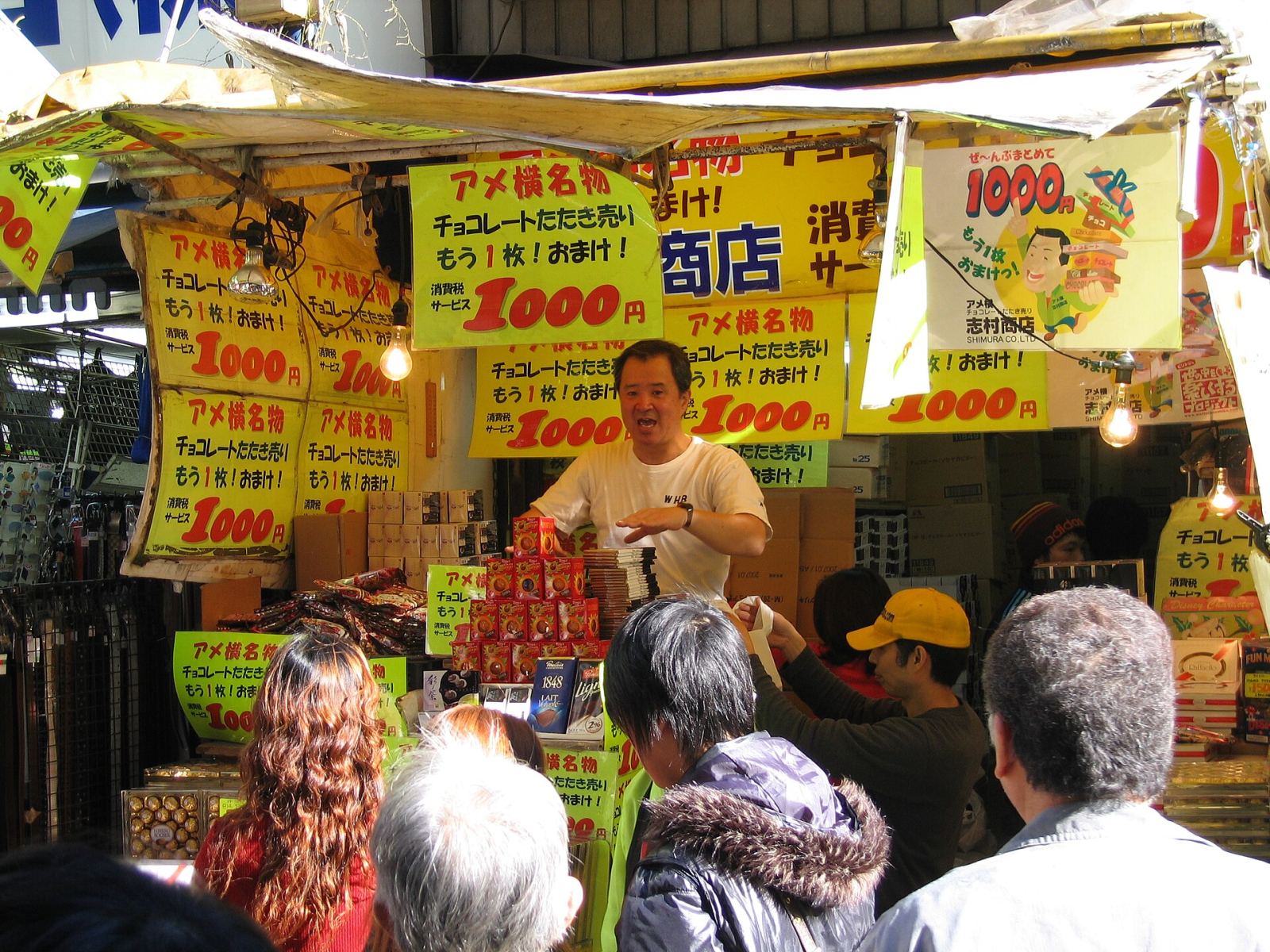
Bring cash — many of the smaller stalls at Ameyoko don't accept cards, and having small bills makes haggling (where it's welcomed) much smoother. Prices are often already discounted from department store rates, so don't expect the aggressive bargaining common in markets elsewhere in Asia, but a friendly ask for a better price on multiple items is usually fine.
What's Nearby: Ueno Park and Museums
Ameyoko sits directly beside Ueno Station, which makes it one of the easiest markets in Tokyo to pair with other plans rather than visit as a standalone trip. Ueno Park, a short walk away, holds the Tokyo National Museum, the Ueno Zoo, and one of the city's most popular cherry blossom viewing spots each spring. It's a genuinely useful combination: culture and greenery in the park, then a completely different, market-driven energy a few minutes away at Ameyoko.
This pairing is part of why Ueno as a whole works well as a half-day or full-day base rather than a single-attraction stop. Visitors often spend a morning in Ueno Park's museums, break for lunch at one of Ameyoko's food stalls, then spend the afternoon shopping the market before heading back into central Tokyo. Few other neighborhoods in the city let you move this easily between quiet cultural sightseeing and loud, hands-on shopping within the same few blocks.
Still mapping out the rest of your Tokyo trip? Our guide on how many days you need in Tokyo is a good place to start, and if you're comparing Tokyo's other famous streets, see our guides to Takeshita Street and Omotesando.
Getting There
Ameyoko runs along the JR Yamanote and Keihin-Tohoku Line tracks directly between Ueno Station and Okachimachi Station, so either stop puts you right at one end of the market. It's also a short walk from Ueno-Okachimachi Station on the Toei Oedo subway line if you're coming from elsewhere on the metro network rather than the JR loop.