Baixa and Chiado: Lisbon's Grand Squares, Cafes and Bookshops
Explore Baixa's elegant grid and riverfront square and Chiado's historic cafes, bookshops and theatres, in the heart of central Lisbon.
Baixa and Chiado form the elegant heart of Lisbon. Baixa, the flat lower town, is a grid of straight streets, grand squares and arcaded shops laid out in the 18th century after the great earthquake, while Chiado, on the hill above, is the city's literary, theatrical and fashionable quarter, with historic cafes and some of its best shops. They are the best-connected areas for a first visit, with the Metro, trams and funiculars at your doorstep, and they sit between the river, the castle and Bairro Alto. Most visitors pass through at some point, and it is worth lingering.
The history is dramatic. On the morning of November 1, 1755, an earthquake, followed by a tsunami and fires, destroyed much of Lisbon, killing tens of thousands of people. The Marquis of Pombal, the chief minister, oversaw the rebuilding of Baixa in a rational grid, with wide streets, uniform buildings and earthquake-resistant timber frames. It was one of the first modern urban plans in Europe, and the result, with its cream-colored facades and mosaic pavements, is what visitors see today. The Chiado district, which burned in 1988, was restored and reopened as a stylish shopping area.
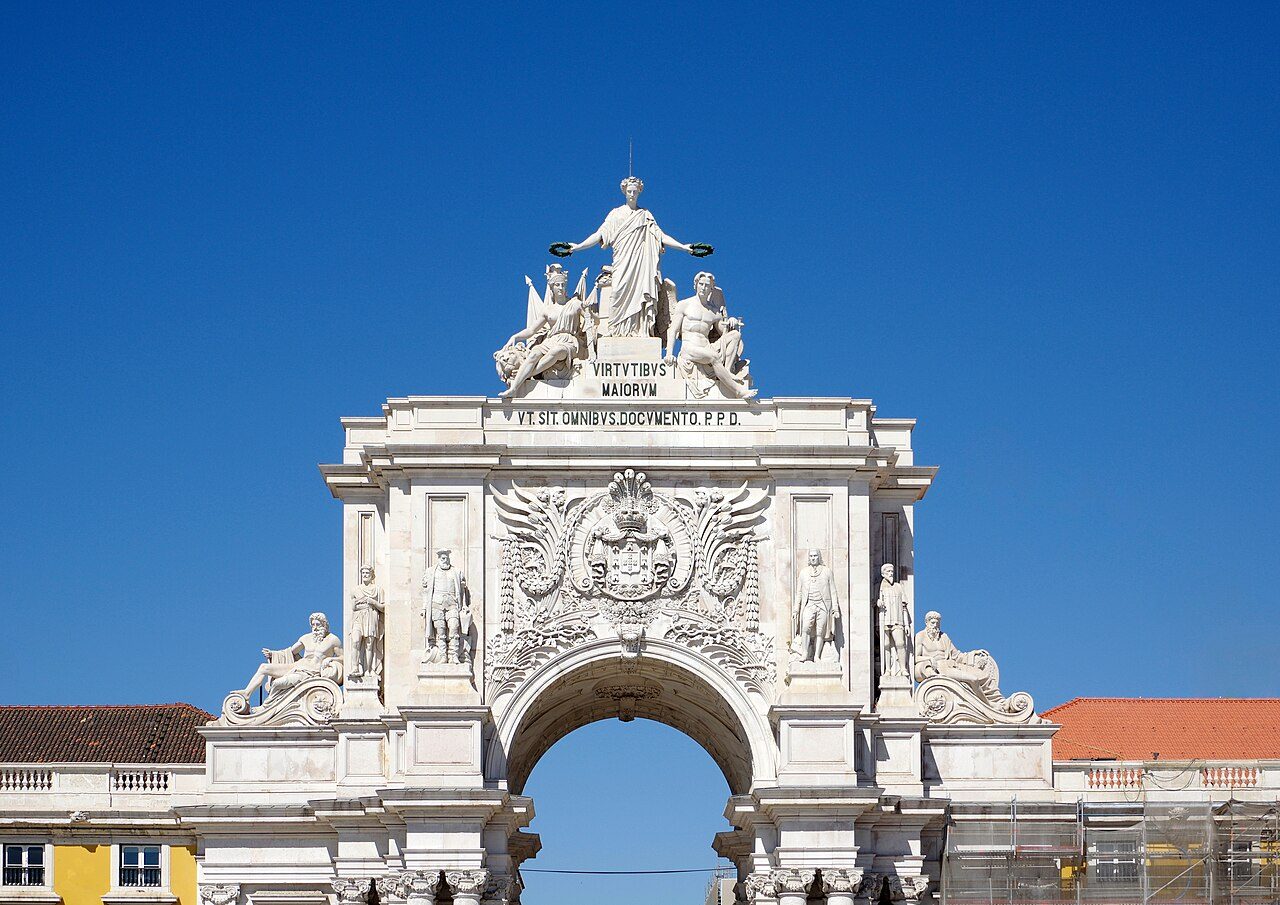
The Praça do Comércio is the grandest square in Lisbon, a huge, riverside plaza surrounded by yellow arcaded buildings and anchored by an equestrian statue of King José I. Through the Rua Augusta Arch at its northern end, you can walk up the pedestrianized Rua Augusta, the main shopping street, to Rossio Square, the city's traditional meeting place, with its wavy mosaic pavement and National Theatre. The arch has a viewing platform on top, reached by a lift, which offers a good view over Baixa and the river for a small fee.
The Santa Justa Lift is a Baixa landmark, a neo-Gothic iron elevator built in 1902 to link the lower town with Carmo Square above. Designed by an apprentice of Gustave Eiffel, it is one of Lisbon's most photographed sights, although the queue to ride it can be long, and you can reach the same viewpoint by walking up from Largo do Carmo for free. Next to it, the roofless ruins of the Carmo Convent, which was destroyed in the earthquake and left as a memorial, form a poignant, beautiful open-air space and a small archaeological museum.
| Place | What to Expect |
|---|---|
| Praça do Comércio | A monumental waterfront square with arcades, cafes and the Rua Augusta Arch |
| Rua Augusta | A pedestrian shopping street leading to Rossio Square |
| Santa Justa Lift | A neo-Gothic iron lift with a viewing platform over the city |
| Carmo Convent | Gothic ruins left open to the sky after the 1755 earthquake |
Take the Metro to Baixa-Chiado, Rossio or Terreiro do Paço, or arrive by tram or funicular. Tram 28 and the Elevador da Glória stop nearby, and trains from Cais do Sodré run to Belém and Cascais. Most of the sights are within a short walk.
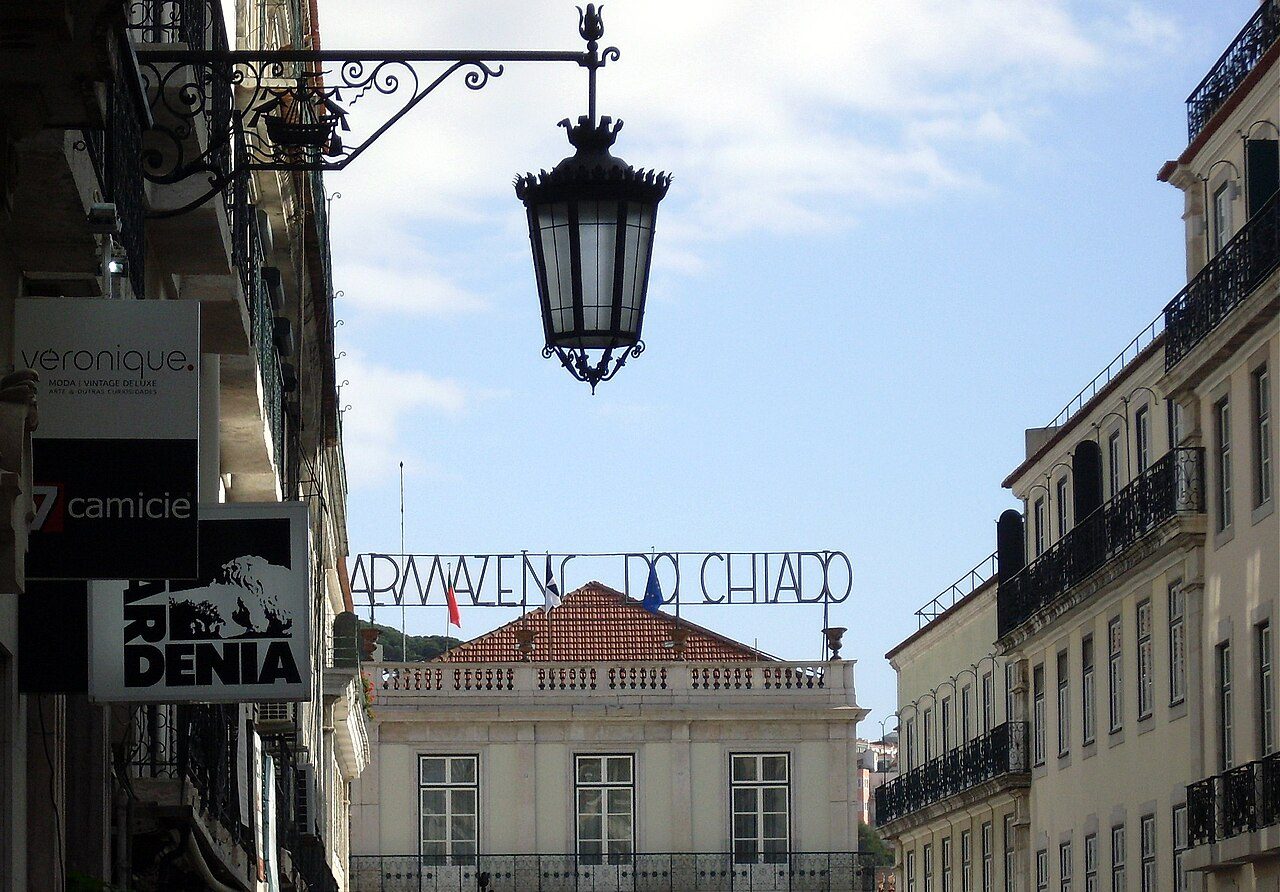
Chiado is the area's cultural heart. The Rua Garrett, its main street, is lined with historic shops, including Livraria Bertrand, which claims to be the oldest operating bookshop in the world, dating from 1732. A Brasileira, a famous 1905 cafe with a statue of the poet Fernando Pessoa on its terrace, has been the haunt of writers and artists for a century, and it remains a good place for a coffee, although prices are higher than elsewhere. The São Carlos Theatre, Lisbon's opera house, and the Chiado Museum, with modern Portuguese art, are also nearby.
Eating and drinking is easy here. The old tascas and bakeries of Baixa serve traditional food at low prices, and the Rua das Portas de Santo Antão is lined with restaurants, though many are tourist traps with touts outside. Look instead for the small places on the side streets, and try a ginjinha, a sour cherry liqueur, at one of the tiny bars on Largo de São Domingos, where it is sold by the shot. For something sweet, Confeitaria Nacional, in Praça da Figueira, has been baking pastries since 1829. Our guide to <a href="/guide/pasteis-de-nata-lisbon-guide/">pastéis de nata</a> explains where to find the best.
A few practical tips help. Baixa is flat and easy to walk, while Chiado is steep, so use the Metro or elevators when needed. Pickpockets operate in the busy squares and on Tram 28, so keep valuables secure, and be wary of street sellers offering tours or drugs on Rua Augusta. Restaurants on the main streets often have high prices, so check menus carefully. The area is quiet at night compared with Bairro Alto, but it is safe and well lit, and the squares are pleasant for an evening stroll.
Baixa and Chiado suit first-time visitors, shoppers, history lovers and anyone who wants a central base with excellent transport. They are less suited to travelers seeking quiet or an authentic local feel, since the area is busy with tourists, and to those on a very tight budget. A good plan is to spend a morning exploring the squares and shops, have lunch in a tasca, and finish with a coffee at A Brasileira. For where to stay, see our <a href="/guide/top-10-hotels-in-lisbon/">top 10 hotels in Lisbon</a>.
For more of the city, see our guides to Belém, São Jorge Castle and a Sintra day trip, and our food guides to pastéis de nata, bacalhau and the bifana. For budgeting, see Lisbon on $75 a day, and for lodging, see our top 10 hotels in Lisbon and budget hotels in Lisbon.