Bibimbap: Understanding Korea's Mixed Rice Bowl
What goes into a bowl of bibimbap, the difference between regular and dolsot versions, and how to eat it the right way.
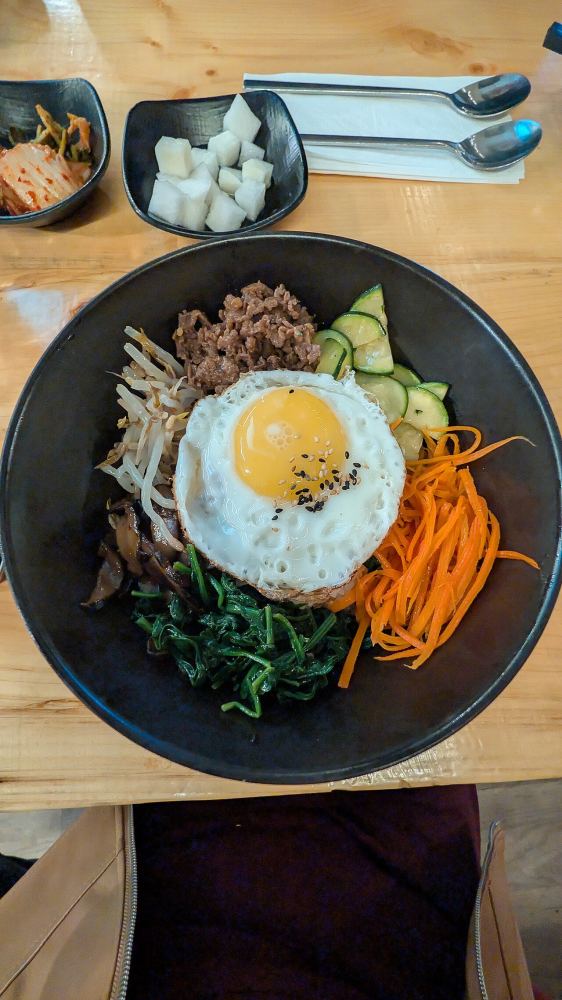
Bibimbap: Rice, Vegetables, and a Fried Egg, Mixed Together
Bibimbap — literally "mixed rice" — is a bowl of warm rice topped with an assortment of seasoned vegetables (namul), a portion of meat, a fried or raw egg, and a spoonful of gochujang (fermented chili paste), all mixed together at the table just before eating. It's one of the most accessible Korean dishes for first-timers, since it's naturally balanced, customizable, and doesn't require any special technique to eat.
What's in the Bowl
| Component | Typical Items |
|---|---|
| Rice | Steamed white rice as the base |
| Namul (seasoned vegetables) | Spinach, bean sprouts, carrots, zucchini, mushrooms — usually 4–6 varieties |
| Protein | Thin slices of seasoned beef (bulgogi-style) most commonly, though tofu versions exist |
| Egg | Fried sunny-side-up, or raw in the traditional dolsot (hot stone bowl) version |
| Gochujang | Fermented red chili paste, added to taste |
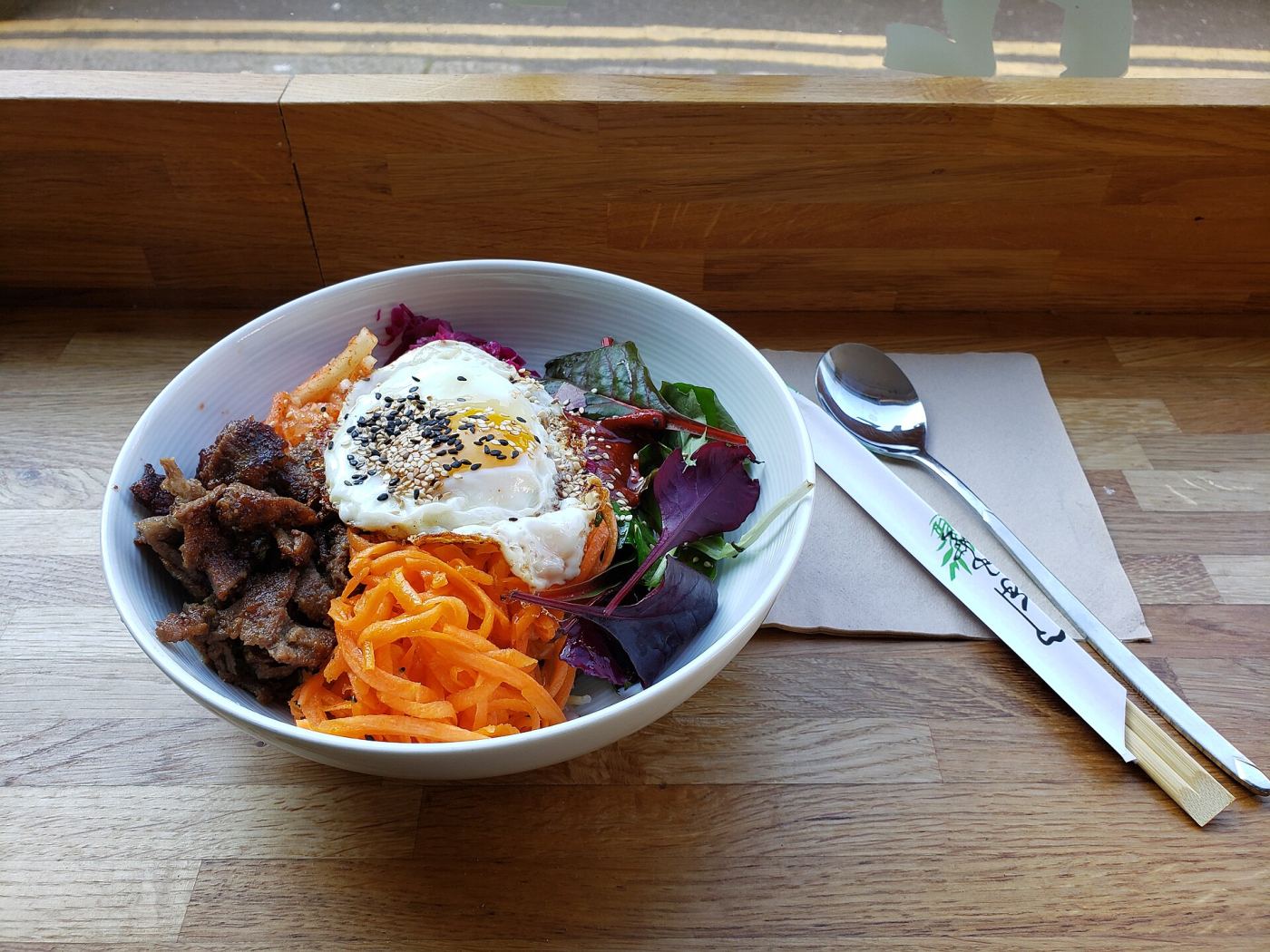
Dolsot Bibimbap: The Hot Stone Bowl Version
Dolsot bibimbap is served in a very hot stone bowl that keeps cooking the rice against the sides even after it reaches your table, creating a layer of crispy, slightly burnt rice (nurungji) at the bottom — considered a highlight by many regulars rather than a mistake. If you're offered a choice between a regular bowl and a dolsot version, the dolsot gives a more textured, warmer result, though it also stays extremely hot for several minutes after arriving.
Mix everything together thoroughly with your spoon before eating — resist the urge to eat around the bowl in sections, since the point of bibimbap is the combined flavor and texture of everything together.