Hongdae: Seoul's Indie Music and Nightlife Capital
Buskers, art students, and clubs that stay open until sunrise — the university district that shaped Seoul's youth culture.

Hongdae, named for the Hongik University campus at its center, is Seoul's youth, music, and nightlife capital — a neighborhood where indie bands busk on street corners, art students sell their own work on the sidewalk, and clubs stay packed until sunrise on weekends. Where Myeongdong caters heavily to shopping tourists and Gangnam trades on polish and expense, Hongdae has built its identity around creative energy and youth culture, drawing a mix of university students, young professionals, and international visitors specifically looking for Seoul's most alive nightlife scene.
The neighborhood's bohemian character took shape gradually from the 1980s onward, as Hongik University, one of Korea's leading arts and design institutions, began directly shaping the visual culture of the surrounding streets through its students and graduates. The scene accelerated through the 1990s, when tightening regulations on entertainment venues near other university districts pushed rock clubs and live music bars specifically toward Hongdae, and cheap rents through the following decade drew in a genuine concentration of working artists and musicians who gave the area its lasting reputation as Seoul's do-it-yourself creative quarter.
By day, Hongdae reveals a genuinely different side of itself — quirky independent cafés, vintage clothing shops, and small design boutiques fill the same streets that transform into packed nightlife venues after dark, giving the neighborhood a legitimate double identity depending on when you visit. Street performers and buskers remain a defining daytime and early-evening feature, particularly around Hongik University's main gate, where impromptu concerts and dance performances draw genuine crowds most weekend afternoons.
| Time | Atmosphere | Best For |
|---|---|---|
| Afternoon | Cafés and vintage shops busy, buskers performing | Café hopping and people-watching near the university gate |
| Early evening | Restaurants filling up, energy building | Dinner before the nightlife properly starts |
| Late evening | Clubs and bars in full swing | Nightlife, dancing, and live indie music |
| Weekend nights (until 3am) | Peak crowds, loudest and busiest | The full Hongdae party experience |
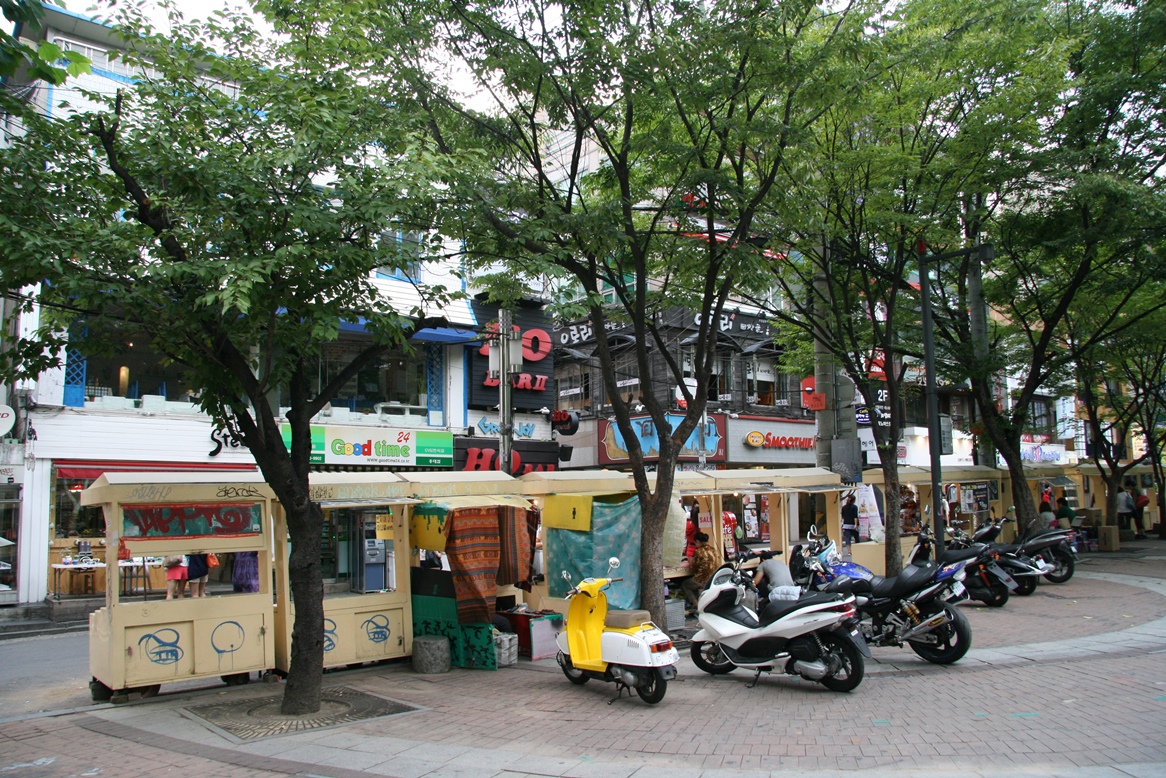
Rising rents through the 2010s pushed many of Hongdae's original artists and musicians further south to the neighboring, cheaper district of Mullae-dong, a pattern of gentrification that has genuinely reshaped who can afford to live and work in the area even as its reputation as Seoul's creative capital persists. Larger companies and chain businesses have moved in alongside the surviving independent venues, and the neighborhood today represents a genuine mix of its original bohemian character and newer commercial development, a tension visible in the contrast between long-running dive bars and glossier recent openings on the same blocks.
Hongdae's nightlife runs genuinely late, with many clubs staying open until 3am or later on weekends, and public transit in Seoul stops running around midnight. Plan for a taxi or rideshare home if you're staying out past the last subway, and pace your drinking across a long night rather than the first few hours.
The Gyeongui Line Forest Trail Park, a converted railway corridor running near Hongdae, offers a genuinely pleasant green space threading through the neighborhood, popular with both locals and visitors for a calmer walk away from the busier commercial streets, and it connects Hongdae to the neighboring Yeonnam-dong district, itself increasingly known for its own café culture as an overflow from Hongdae's rising rents.
Live music remains genuinely central to Hongdae's identity despite the broader commercial pressures reshaping the neighborhood, with a real cluster of small indie venues still hosting regular shows across genres from Korean rock to electronic music, and checking a venue's schedule ahead of time is worth doing for anyone specifically hoping to catch live original music during their time in Seoul.
Hongdae is easily reached via Hongik University Station, served by both Line 2 and the Airport Railroad, making it genuinely convenient from Incheon International Airport as well as central Seoul. The neighborhood itself is compact and entirely walkable, with most of its bars, clubs, and cafés within a comfortable ten-minute radius of the university's main gate.
Themed cafés, ranging from cat and dog cafés to more elaborate concept spaces built around specific aesthetics, have become a genuine Hongdae specialty over the past decade, offering a lighter, more daytime-friendly complement to the neighborhood's heavier nighttime reputation and drawing a steady stream of visitors purely for the café culture rather than for the clubs and bars.
Street fashion in Hongdae tends to run noticeably more experimental than in more mainstream Seoul shopping districts, with vintage shops and independent designers stocking pieces that reflect the neighborhood's art-school roots, and people-watching along the main strip is, for many visitors, as much a part of the overall experience as any specific individual shop or venue.
Karaoke rooms, known locally as noraebang, are woven throughout Hongdae in genuinely dense concentration, offering private rooms rather than the public stage format more common in Western karaoke bars, and a late-night noraebang session has become something of a standard capstone to a Hongdae evening for both locals and visitors alike. Prices are generally charged per room and per hour, making them a genuinely affordable group activity.
Board game cafés and escape rooms have also multiplied throughout Hongdae in recent years, catering to a slightly calmer, more daytime-oriented crowd than the club scene the neighborhood is best known for, and offering visitors a genuinely different, quieter way to spend an afternoon here without needing to engage with the nightlife at all.
University-adjacent bookshops and record stores, some independently run for decades, remain scattered through Hongdae's quieter side streets, a genuine holdover from the neighborhood's earlier, less commercially developed identity that rewards visitors willing to wander beyond the busiest central strip and away from the main nightlife corridor entirely.