Bukchon Hanok Village: 600 Years of Seoul Between Two Palaces
Nearly 900 traditional houses saved from demolition by local protest, still lived in today between the city's grandest royal palaces.

Bukchon Hanok Village sits on a hillside between Gyeongbokgung and Changdeokgung, two of Seoul's grandest royal palaces, and it preserves one of the largest surviving clusters of traditional Korean hanok houses anywhere in the city — roughly 900 of them, their curved tile roofs stepping down the hillside in a genuinely striking, photogenic pattern that has made the neighborhood one of the most visited residential areas in Seoul. Unlike some other hanok villages built specifically for tourism, Bukchon remains a genuine, lived-in residential neighborhood, which adds both authenticity and a real responsibility on visitors to tread carefully.
The neighborhood's name, Bukchon, means 'northern village,' a reference to its location north of the Cheonggyecheon Stream and the historic Jongno district, and its origins trace directly back to the Joseon Dynasty, which ruled Korea from 1392 to 1897. During that period, Bukchon served as a residential enclave for high-ranking government officials and yangban nobility, its proximity to both major palaces making it a convenient and prestigious address for those serving the royal court, and much of the neighborhood's layout and architectural character still reflects that centuries-old social function.
Bukchon's survival as an intact hanok district was genuinely not guaranteed — in the 1960s, city redevelopment plans threatened to demolish or relocate large portions of the neighborhood in favor of more modern housing, and it was only sustained local protest and advocacy from residents who valued the area's historic character that ultimately spared it from that fate. That preservation effort has continued in various forms ever since, with many of the surviving hanok restored using traditional materials and construction techniques rather than modern substitutes, keeping the neighborhood's architectural authenticity genuinely intact rather than merely decorative.
| Time | Atmosphere | Best For |
|---|---|---|
| Early morning | Very quiet, residents just starting their day | Photography without crowds, respecting residents' privacy |
| Midday | Busiest with tour groups and photographers | Visiting galleries and traditional craft workshops |
| Late afternoon | Golden light on the tiled roofs | The best photo conditions of the day |
| Evening | Quiet again, some rooftop viewpoints open | A peaceful walk and skyline views over the hanok roofs |
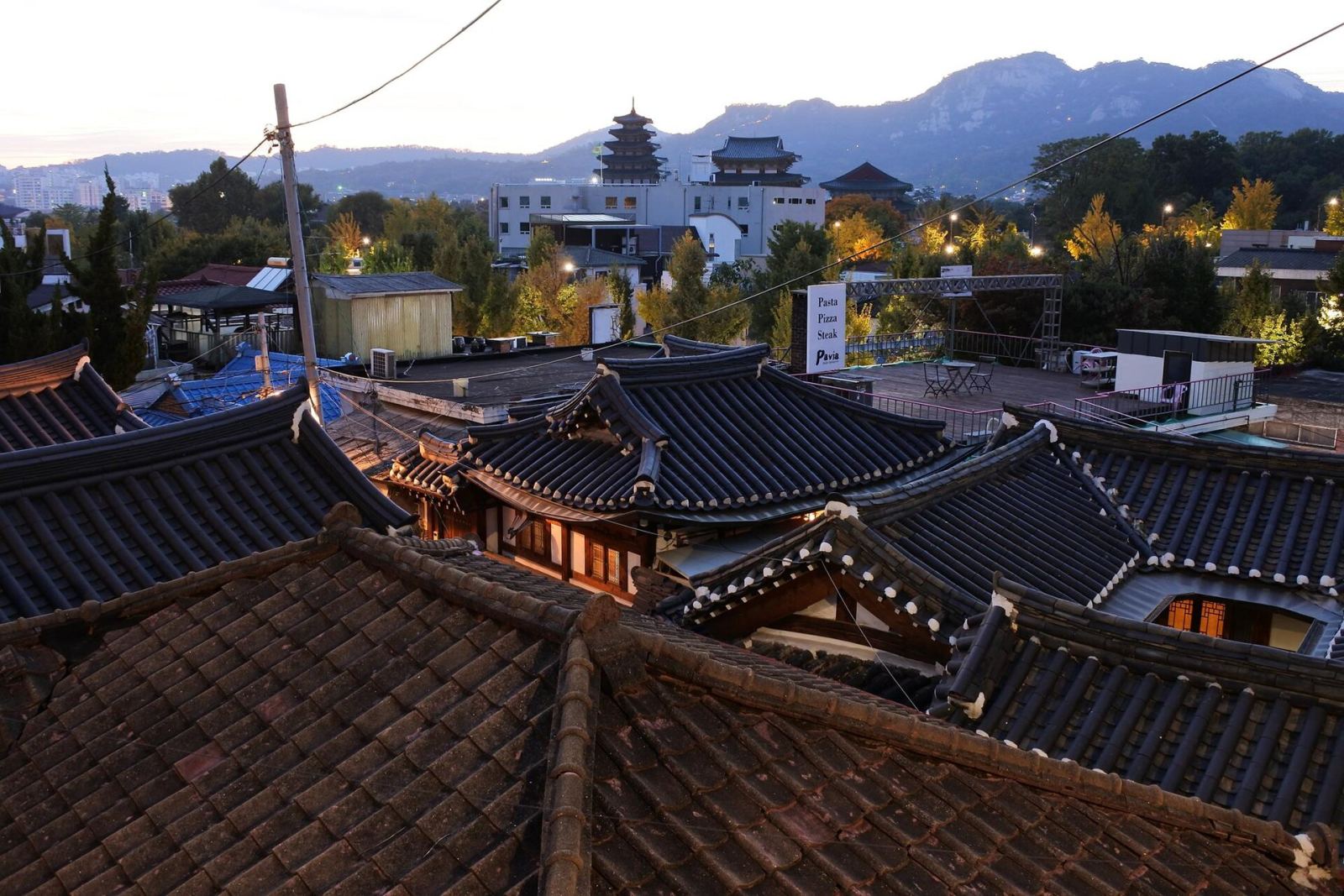
Several of Bukchon's hanok have been converted into galleries, traditional craft workshops, guesthouses, and small museums, giving visitors genuine reasons to step inside a hanok building rather than just photographing the exteriors from the street, and a handful specifically offer traditional craft experiences like hanbok rental, tea ceremonies, or calligraphy lessons for visitors wanting a more hands-on introduction to Korean cultural heritage. Bukchon Hanok Village also serves as a working reminder of Seoul's pre-modern urban fabric, a genuinely rare survival in a city that has otherwise redeveloped so much of its historic housing stock over the past several decades.
Bukchon is home to actual residents living in these historic houses, and noise complaints from oversized tour groups and loud visitors have become a genuine, ongoing issue for the neighborhood. Keep voices down, especially on the narrower residential lanes, avoid photographing directly into private windows or doorways, and stick to public streets rather than private courtyards.
Bukchon-ro 11-gil, one of the village's steepest and most photographed streets, has become something close to an unofficial symbol of the neighborhood, its narrow lane framed tightly by hanok walls on both sides climbing toward a view back over the surrounding rooftops. The street's popularity means it's rarely empty during daylight hours, and visitors hoping for a quieter, more contemplative experience of the same architecture often find more luck exploring the village's quieter side lanes rather than concentrating entirely on this single famous view.
The neighboring district of Samcheong-dong, sharing much of the same traditional architectural character as Bukchon, has developed a somewhat calmer, more café-focused identity of its own in recent years, and combining a walk through both areas offers a genuinely fuller sense of Seoul's surviving traditional urban fabric than either neighborhood provides entirely on its own.
Bukchon Hanok Village is best reached on foot from either Anguk Station on Line 3 or Gyeongbokgung Station on Line 3, both within easy walking distance of the village's main entrance points. The neighborhood's steep, hilly streets reward comfortable walking shoes, and most visitors spend one to two hours wandering the main lanes, longer if stopping for a traditional craft experience or a café along the way.
Seasonal foliage adds another dimension to a Bukchon visit, with cherry blossoms in spring and colorful autumn leaves both framing the traditional rooflines in genuinely different, equally photogenic ways depending on when a visit happens to fall during the year.
Guided walking tours of Bukchon, often led by local historians or long-term residents, offer considerably more context than a self-guided walk alone, explaining specific architectural details and neighborhood history that are easy to miss without that background, and several operators run small-group tours departing regularly from nearby subway stations.
Hanbok rental shops near the village's entrances let visitors dress in traditional Korean clothing for their walk through Bukchon, a popular activity that adds a further layer of cultural immersion to photographs taken against the historic hanok backdrop, and several shops offer same-day return rentals covering just a few hours of wear, with wearers of hanbok often receiving free or discounted entry to nearby palace sites as an added incentive.
Small independent cafés tucked inside converted hanok buildings offer a genuinely pleasant place to rest partway through a Bukchon walk, several with courtyard seating that lets visitors sit directly within a traditional structure rather than simply photographing one from the street outside, a small but meaningful difference in experience.