The Kasbah: Marrakech's Royal Quarter of Tombs, Mosques and Quiet Riads
Explore the Kasbah district of Marrakech, with the Saadian Tombs, the Kasbah Mosque, the El Badi Palace, quiet riads and local restaurants south of Jemaa el-Fnaa.

The Kasbah is the royal quarter of Marrakech, a walled district at the southern end of the medina that has been the seat of power in the city since the 12th century. It holds some of the finest historic monuments in Marrakech, including the Saadian Tombs, the Kasbah Mosque and the ruins of the El Badi Palace, as well as the Royal Palace, which is closed to visitors. The streets are quieter than in the northern medina, with local shops, small restaurants and boutique riads, and the area feels more residential, with children playing in the alleys and neighbors chatting in doorways.
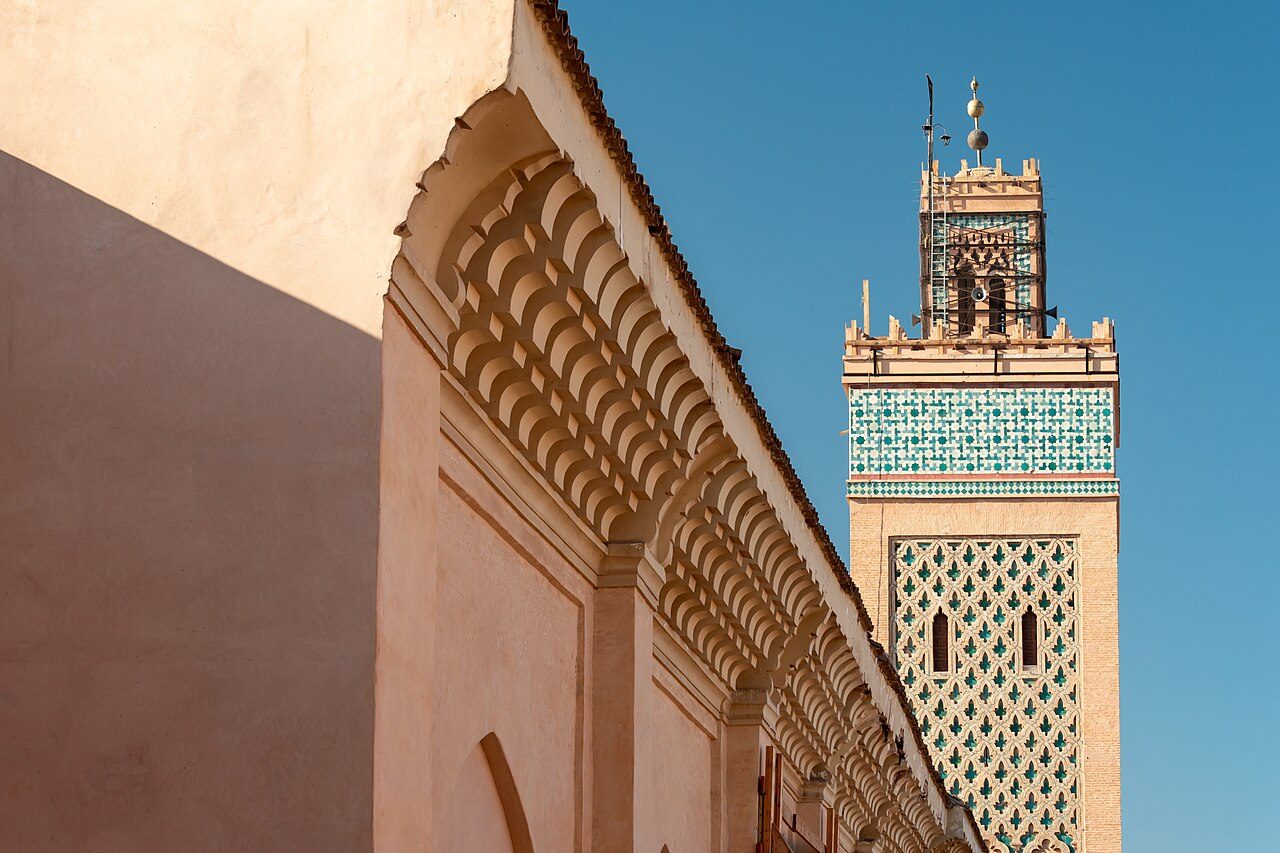
The district was founded by the Almohad caliph Yaqub al-Mansur in the late 12th century, who built a fortified citadel, a mosque and a palace complex to the south of the medina. The Saadian dynasty, which ruled in the 16th and 17th centuries, added to it with grand palaces and tombs, and later the Alaouite dynasty, which still rules Morocco, kept it as a royal residence. The Kasbah Mosque, built in 1190, is still one of the city's main mosques, with a beautiful minaret decorated with geometric patterns, though non-Muslims cannot enter. The walls that enclose the district date from the same period.
The Saadian Tombs are the main reason to visit. They were built in the 16th century by the sultan Ahmad al-Mansur as a royal burial place and then walled up after his death in 1603, and they were forgotten until 1917, when an aerial survey revealed them. Today, visitors can see the Hall of Twelve Columns, a chamber with white Italian Carrara marble columns, a carved cedar ceiling and tombs of sultans and their families, and a garden with the graves of soldiers and servants. The decoration, with gilded stucco, zellige tiles and Arabic calligraphy, is among the most beautiful in Morocco.
The nearby El Badi Palace was once the greatest palace in Morocco. Ahmad al-Mansur built it in the late 16th century, financing it with the ransom paid by the Portuguese after the Battle of the Three Kings, and it was said to have had 360 rooms, decorated with gold, onyx and marble from Italy. After the sultan's death, it was stripped and left to ruin, and today, the vast open courtyards with sunken orange gardens, high red walls and nesting storks create a dramatic, atmospheric ruin. A museum houses the carved cedar minbar from the Koutoubia Mosque, a masterpiece of Almoravid craft.
| Place | What to Expect |
|---|---|
| Saadian Tombs | A 16th-century royal burial place with marble columns, carved cedar and gilded stucco |
| El Badi Palace | A vast ruined palace with sunken gardens, storks and a museum with the Koutoubia minbar |
| Kasbah Mosque | A 12th-century mosque with a patterned minaret, visible from outside |
| Place des Ferblantiers | The tinsmiths' square, on the border with the Mellah |
| Boutique riads | Quiet guesthouses with courtyards and rooftop terraces |
The Kasbah is about a 15 to 20-minute walk south of Jemaa el-Fnaa along Rue Bab Agnaou, or a short taxi ride. Bab Agnaou, a 12th-century gate with carved stonework, marks the entrance. Visit the Saadian Tombs early, as there are often long queues by late morning.
The best way to enjoy the Kasbah is slowly. The tombs are small, and queues can build up fast, so arrive when they open or in the last hour. Combine the tombs with the El Badi Palace, the Bahia Palace and the Mellah in a half-day or full-day walk through the southern medina, and stop for lunch or a mint tea along the way. The rooftop terraces of the cafes on Rue Bab Agnaou, near Bab Agnaou, offer good views of the Kasbah Mosque and the city walls, and are quieter than those on Jemaa el-Fnaa.
Staying in the Kasbah is a good way to avoid the crowds and noise of the northern medina. Many riads have been restored as guesthouses, with courtyards, plunge pools, rooftop terraces and breakfasts of fresh bread, jam and eggs, and prices are generally lower than around Jemaa el-Fnaa. The area is close to the main sights, though a little further from the souks, and it is easy to walk to Jemaa el-Fnaa in the evening. Taxis can drop you at the main gates, and your riad will arrange a porter to carry your bags through the narrow lanes.
Eating in the Kasbah is cheap and local. Small restaurants serve <a href="/guide/tagine-marrakech-guide/">tagine</a>, <a href="/guide/couscous-marrakech-guide/">couscous</a> and grilled meat, and the lane near the Saadian Tombs has a number of cafes with fixed-price menus. For a lighter option, local bakeries sell msemen, a layered flatbread, and harcha, a semolina pancake, and the juice stalls sell fresh orange juice for a few dirhams. In the evening, the area is quiet, and many visitors return to Jemaa el-Fnaa for dinner and entertainment, though several riads offer home-cooked meals.
The Kasbah suits history lovers, couples, photographers and travelers who prefer a calmer base. It is less suited to those who want nightlife or shopping on the doorstep. A good plan is to visit the Saadian Tombs and El Badi Palace in the morning, have lunch on a terrace and walk to the Mellah and the Bahia Palace in the afternoon. For lodging, see our <a href="/guide/budget-hotels-in-marrakech/">budget hotels in Marrakech</a>.
For more of the city, see our guides to Jemaa el-Fnaa, Majorelle Garden and the Bahia Palace, and our food guides to tagine, couscous and pastilla. For budgeting, see Marrakech on $40 a day, and for lodging, see our top 10 hotels in Marrakech and budget hotels in Marrakech.