The Mellah: Marrakech's Old Jewish Quarter of Spices, Palaces and Tinsmiths
Explore the Mellah, the historic Jewish quarter of Marrakech, with its spice market, cemetery, synagogue, Place des Ferblantiers and the nearby Bahia and El Badi palaces.
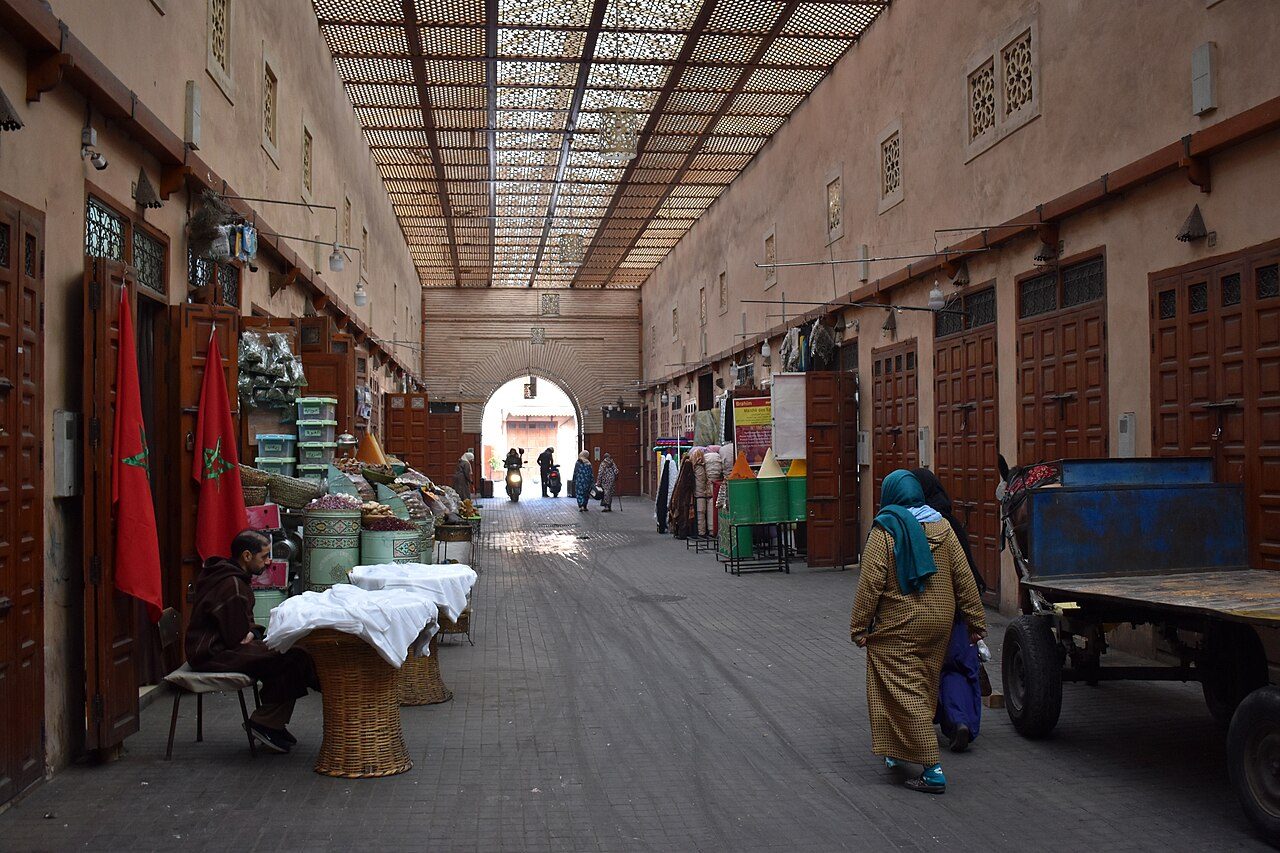
The Mellah is the old Jewish quarter of Marrakech, a district of narrow streets, tall houses with wooden balconies and busy markets in the southern part of the medina, beside the Royal Palace. It is quieter and less touristy than the souks to the north, and it offers a view of everyday Marrakech life, with local shops, spice sellers, metalworkers and tiny restaurants. The Mellah is also the setting for some of the city's most interesting sights, including a synagogue, an old cemetery, the Place des Ferblantiers and the grand Bahia Palace, which stands on its edge.
The word mellah comes from the Arabic for salt, and the quarter was established in 1558 by the Saadian sultan Abdallah al-Ghalib, who moved the city's Jewish community to this area close to the royal palace. At its peak, the Mellah was home to thousands of people and was a center of trade, especially in sugar, jewelry, spices and gold. Many Jews emigrated after the 1940s, and today only a small community remains, but the quarter still shows its heritage in the architecture, with balconies that open onto the street, unlike the inward-facing houses of the Muslim neighborhoods.
The best-known site in the Mellah is the Lazama Synagogue, a small, restored 19th-century synagogue built around a courtyard, which shows the history of the Jewish community through its blue-and-white tiled walls and the Torah ark. A short walk away, the Miara Jewish Cemetery is one of the largest in Morocco, with thousands of whitewashed tombs spread across a hillside. Visits to the synagogue and cemetery are possible with a small donation, and they are respectful, quiet places. They are an important part of Marrakech's multicultural history.
The Place des Ferblantiers, or Tinsmiths' Square, is a lively square lined with workshops where craftsmen make lanterns, mirrors and metal items from tin and brass. It is a calmer shopping experience than the northern souks, and the prices tend to be a little lower. Cafes around the square provide a place for a break, and there is an evening atmosphere with locals sitting outside. Nearby, the spice market, the Place des Épices, and the streets of the Mellah sell dried fruit, olives, preserved lemons and herbs, and it is a good place to buy cooking ingredients.
| Place | What to Expect |
|---|---|
| Place des Ferblantiers | A square of tinsmiths making lanterns, mirrors and metalwork |
| Lazama Synagogue | A restored synagogue with a courtyard and exhibits on the history of the quarter |
| Miara Jewish Cemetery | One of the largest Jewish cemeteries in Morocco, with thousands of whitewashed tombs |
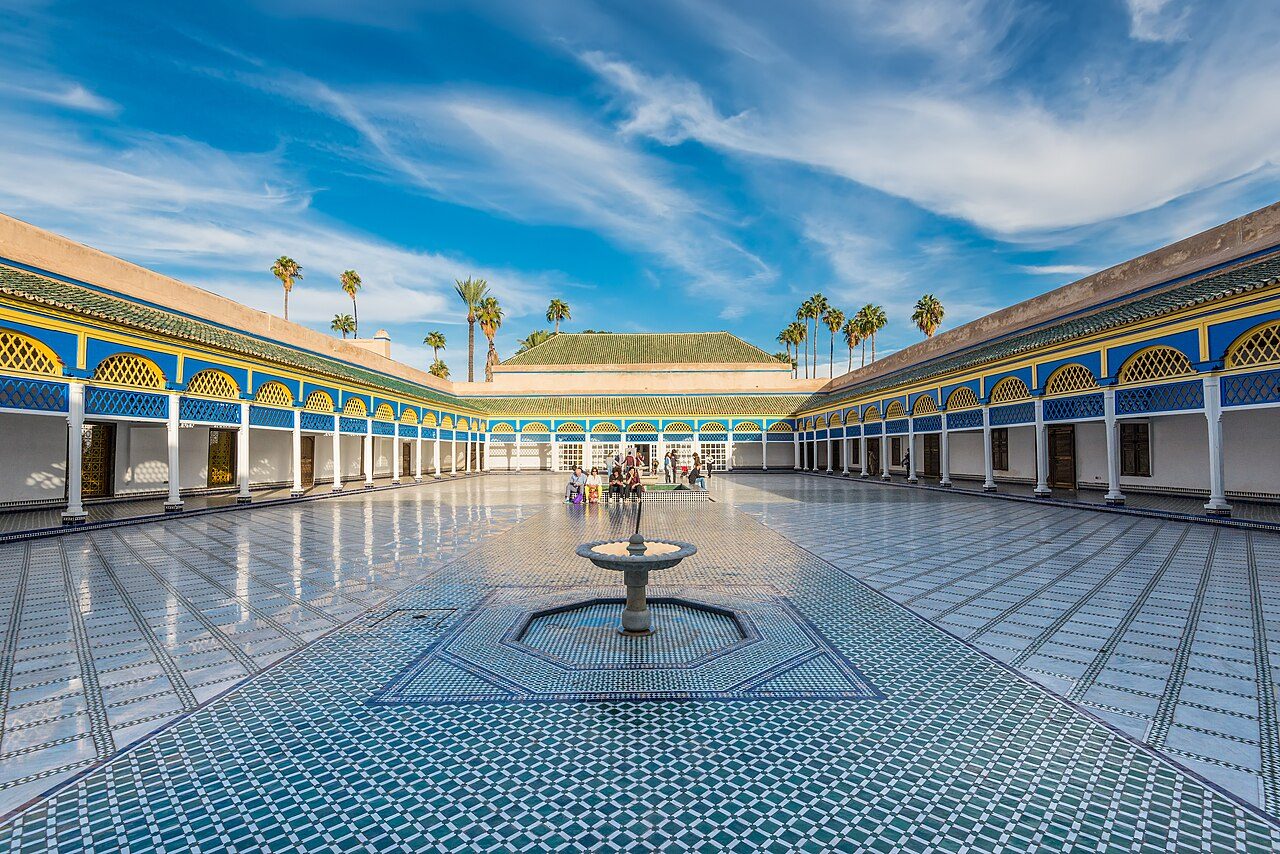
| Bahia Palace | A grand 19th-century palace of painted ceilings and zellige tilework on the edge of the Mellah |
| Mellah market | Spices, dried fruit, olives and everyday goods sold in narrow streets |
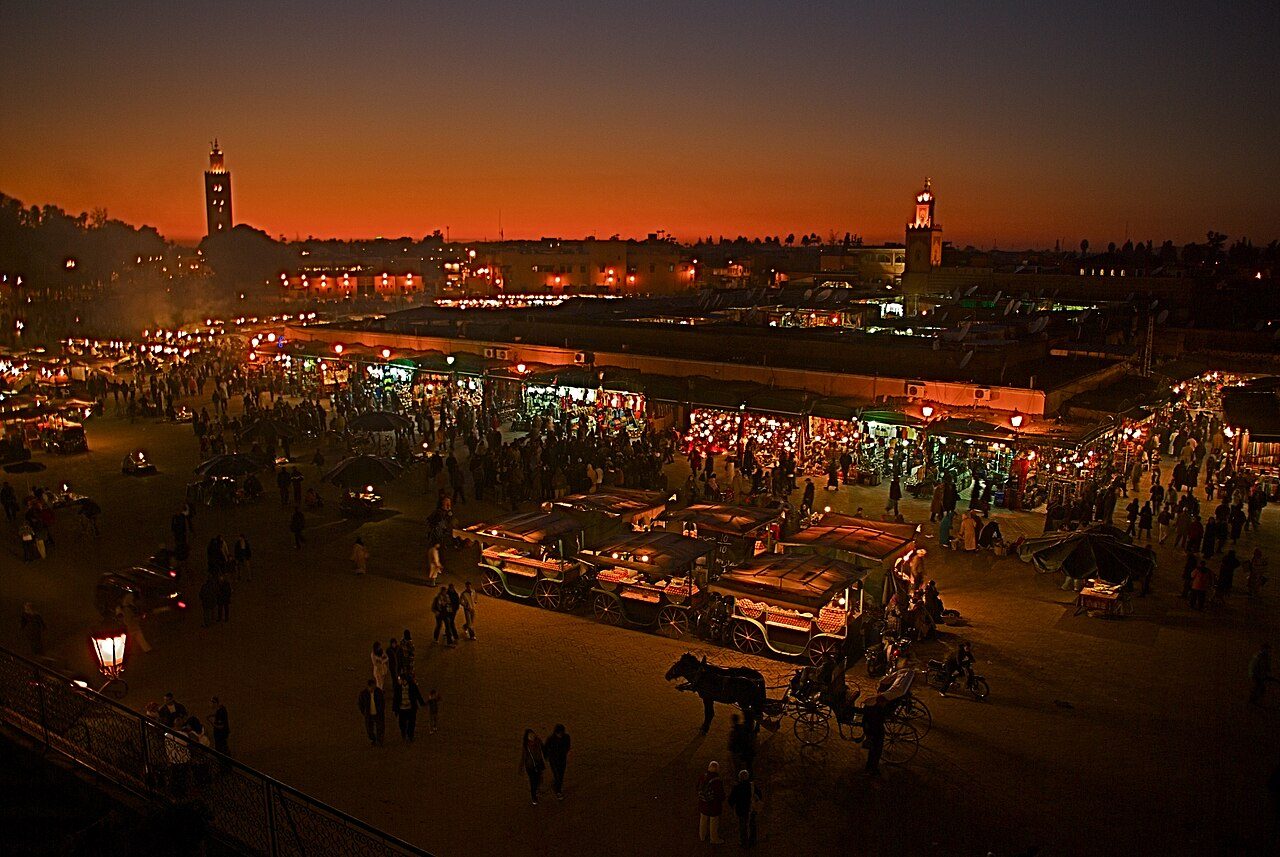
The Mellah is about a 15-minute walk south of Jemaa el-Fnaa, along Rue Riad Zitoun el Jdid or through the Kasbah area. Taxis can drop you at the Place des Ferblantiers. The lanes are narrow and busy, so watch for motorbikes.
The Bahia Palace is the Mellah's grandest attraction, a 19th-century palace of cedar ceilings, tiled courtyards and gardens that is a highlight of any visit; our <a href="/guide/bahia-palace-marrakech-guide/">guide to the Bahia Palace</a> has all the details. Close by, the ruins of the El Badi Palace, a 16th-century palace built by the Saadian sultan Ahmad al-Mansur, are a fascinating contrast: a huge roofless complex with sunken gardens, orange trees and storks nesting on the walls. The Saadian Tombs, the royal burial place, are only a short walk to the south, in the Kasbah.

Eating in the Mellah is good value and more local than in the northern medina. Small restaurants serve <a href="/guide/tagine-marrakech-guide/">tagines</a>, grilled meats, soups and salads at low prices, and street stalls sell pastries, sandwiches and fresh juices. Cafes on the Place des Ferblantiers and the rooftop terraces overlooking the palace walls make good spots for lunch, and the Mellah has a number of traditional bakeries. Prices are lower than around Jemaa el-Fnaa, and meals here are usually cheaper by a third.
A few practical tips help. Dress modestly and be respectful when visiting the synagogue and the cemetery, where photography may be restricted, and leave a donation. The Mellah is generally safe, but touts and unofficial guides are common near the palaces and will approach visitors, so a polite refusal is best. Bargaining is expected in the shops of the Place des Ferblantiers. Many of the sights close at lunchtime or on certain days, so check opening hours in advance, and go early to avoid the groups that arrive at the palace in the late morning.
The Mellah suits history lovers, photographers, craft shoppers and travelers who want a less touristy part of the medina. It is less suited to travelers who want nightlife or modern comforts nearby. A good plan is to start at the Bahia Palace in the morning, walk to the Place des Ferblantiers for a coffee and shopping, visit the synagogue and cemetery and finish at the El Badi Palace in the late afternoon. For lodging, see our guide to the <a href="/guide/top-10-hotels-in-marrakech/">top 10 hotels in Marrakech</a>.
For more of the city, see our guides to Jemaa el-Fnaa, Majorelle Garden and the Bahia Palace, and our food guides to tagine, couscous and pastilla. For budgeting, see Marrakech on $40 a day, and for lodging, see our top 10 hotels in Marrakech and budget hotels in Marrakech.