Nasi Campur: Understanding Bali's Everyday Mixed Rice Plate
What goes into a plate of nasi campur, why no two warungs serve it the same way, and where to find a good one.
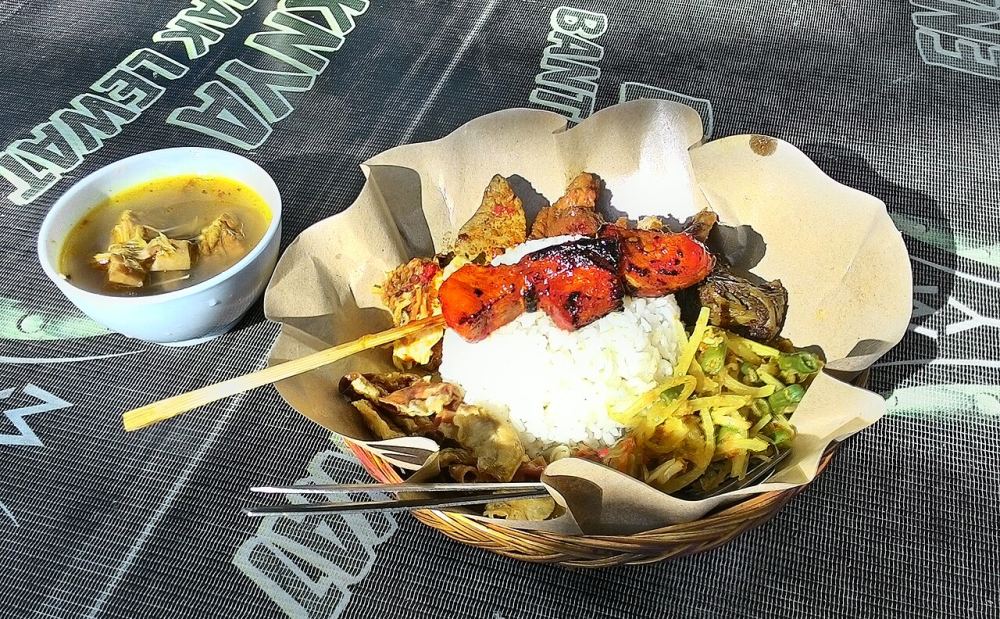
Nasi Campur: Bali's Everyday Plate
Nasi campur — literally "mixed rice" — is less a single dish than a format: a scoop of steamed rice surrounded by a rotating small selection of vegetables, meat, egg, tofu or tempeh, and a spoonful of sambal (chili paste). It's the closest thing Bali has to an everyday lunch staple, sold everywhere from simple warungs (family-run food stalls) to hotel breakfast buffets, and no two plates are quite the same.
What's Typically Included
| Component | What It Usually Is |
|---|---|
| Base | Steamed white rice |
| Protein | Shredded chicken, sate lilit (minced meat satay), or fried tempeh/tofu |
| Vegetables | Stir-fried greens, bean sprouts, or urap (spiced grated coconut salad) |
| Sambal | A spoonful of chili paste, varying in heat by warung |
| Extras | A hard-boiled or fried egg, krupuk (crackers) on the side |
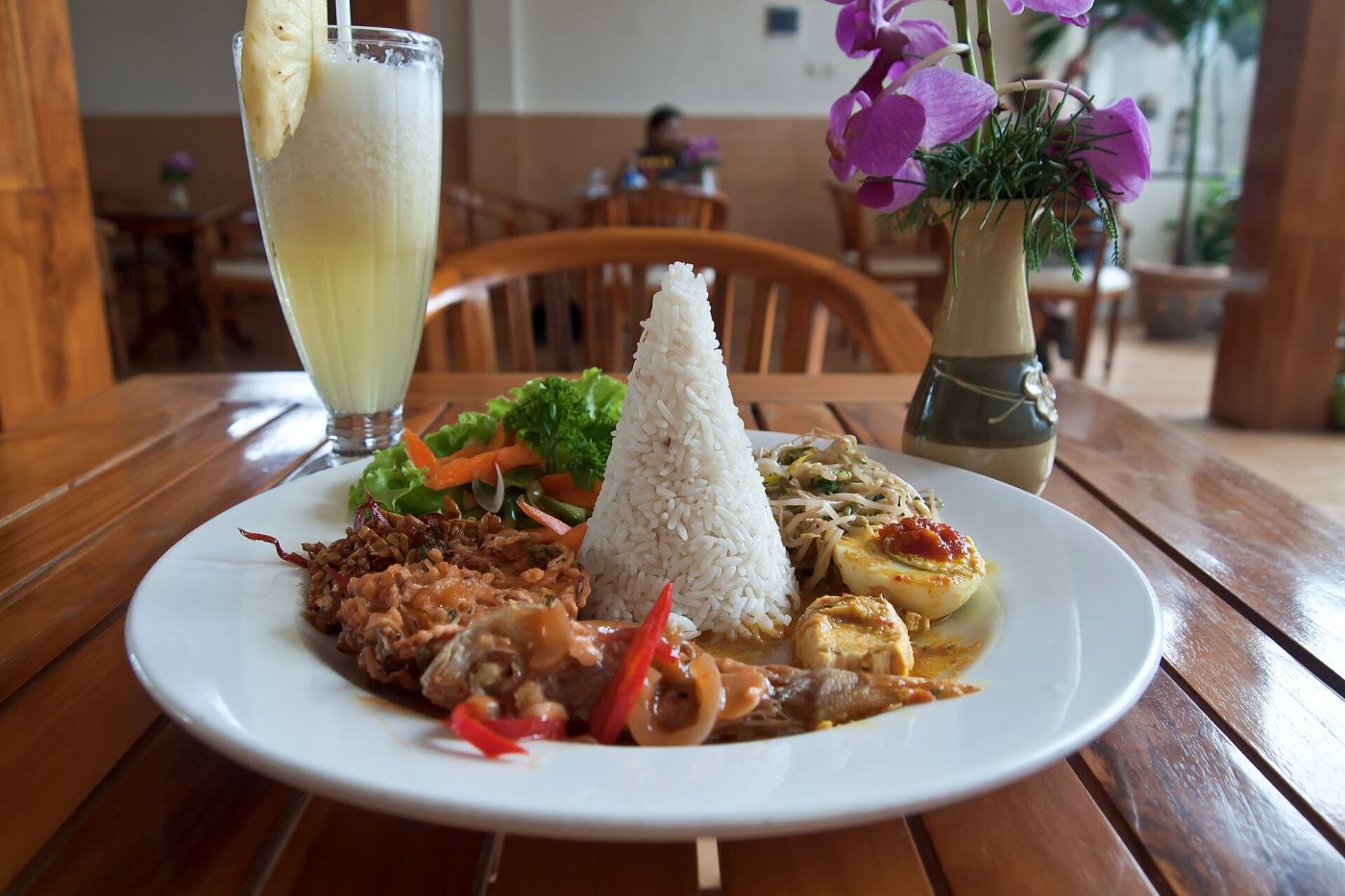
Where to Try It
Local warungs, rather than tourist-oriented restaurants, tend to offer the most authentic and best-value nasi campur — a full plate typically costs just $2–$5. Since the dish is assembled fresh throughout the day from whatever's been cooked that morning, warungs with high turnover and a steady stream of local customers are usually the safest and freshest bet.
Ask for sambal on the side if you're unsure about spice level — some warungs' sambal is significantly hotter than others, and it's easy to add more but hard to remove once it's mixed in.