Ubud Centre: Palace, Market and Monkey Forest Road
Walk Ubud's cultural heart, from the royal palace and the art market to Monkey Forest Road, with dance performances, museums, cafes and quiet lanes.
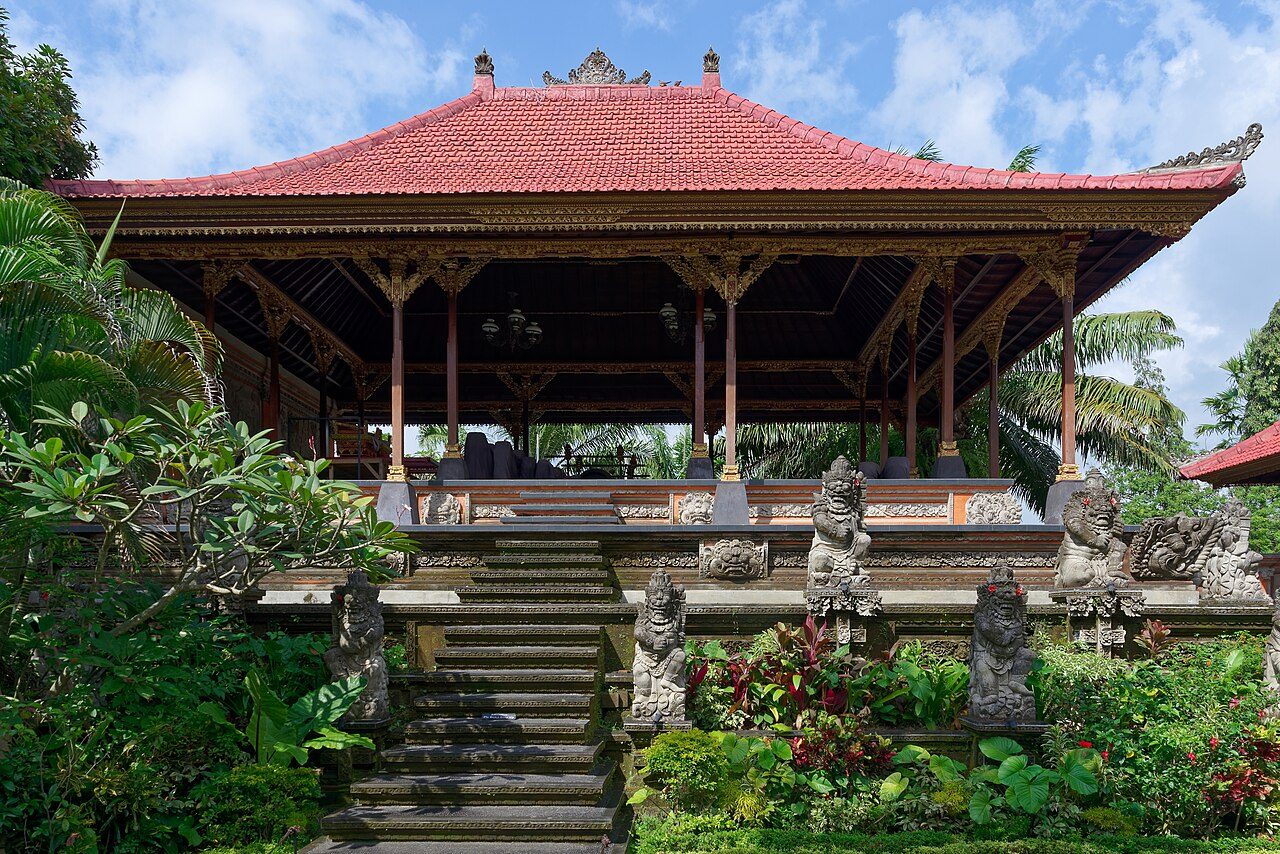
Ubud is the cultural heart of Bali, and its centre is a compact grid of streets around a royal palace, a market and a main road that has been drawing artists, dancers and travelers for nearly a century. It sits in the island's central hills, about an hour north of the airport, among rice fields, rivers and gardens, and it has a calmer, more spiritual atmosphere than the beach towns. The town centre is where you will find most of the museums, galleries, restaurants and performances, and a day spent walking it is the best introduction to Balinese arts and daily life.
The centre is organized around a crossroads. The Ubud Palace, also known as Puri Saren Agung, sits at the corner of Jalan Raya Ubud and Monkey Forest Road, with the Ubud Art Market, Pasar Seni, opposite it across the road. Jalan Raya Ubud runs east and west, lined with shops, cafes and galleries, while Monkey Forest Road runs south toward the Sacred Monkey Forest Sanctuary, lined with guesthouses, restaurants and stalls. Smaller lanes such as Jalan Hanoman and Jalan Dewi Sita branch off with quieter cafes, yoga studios and homestays.
The palace is the best place to start. It was the seat of the royal family of Ubud, and parts of the compound are open to visitors, with carved gateways, courtyards and pavilions that show traditional Balinese architecture. In the evening, the palace courtyard becomes a stage for dance performances, including the graceful legong, with live gamelan accompaniment, and tickets are sold at the entrance. The performances are among the most accessible ways to see Balinese dance, and the setting makes them better than most hotel shows.
Across the road, the Ubud Art Market sells textiles, sarongs, baskets, wood carvings, paintings and souvenirs, with a mix of stalls and small shops. Bargaining is expected, so start low, stay friendly and walk away if the price does not suit you. The morning is the best time to visit, when the stalls are fresh and the traditional food market operates alongside it, and it is quieter and cooler than the afternoon. For higher-quality art, the galleries and museums nearby are better places to look.
| Place | What to Expect |
|---|---|
| Ubud Palace | Carved architecture by day, legong and other dance performances in the evening |
| Ubud Art Market | Textiles, carvings and souvenirs, best in the morning and worth bargaining |
| Monkey Forest Road | Guesthouses, restaurants and shops running south to the Monkey Forest |
| Museums and galleries | Painting and sculpture in the town centre and the surrounding villages |
Ubud is about 60 to 90 minutes from Ngurah Rai airport by car. There is no public transit; most visitors use a hired driver, Grab or Gojek (though some areas restrict pickups), or walk, since the town centre is small. The streets can be narrow and congested at midday.
Ubud is known for art, and the town has several good museums within a short walk or ride. They show the development of Balinese painting from traditional temple art to the modern work that grew after Western artists settled here in the 1930s. The museums are small and calm, and a visit takes an hour or two. In the afternoon, the heat is a good excuse to step into one of them. Our guide to <a href="/guide/bali-temples-etiquette-guide/">temple etiquette</a> is useful here, since many of the smaller temples and shrines you will pass expect modest dress.
Food in Ubud is a pleasure. The restaurants range from simple warung serving local dishes to plant-based cafes and refined Indonesian kitchens, and the standard is high. For something distinctly local, try <a href="/guide/babi-guling-bali-guide/">babi guling</a>, the Balinese roast suckling pig that Ubud is famous for, which is served at a handful of well-known warung in the area. Coffee, smoothies and yoga are everywhere, and a slow breakfast in a garden cafe is part of the Ubud routine.

Practical advice helps. The town centre is walkable, but pavements are narrow and uneven, and scooters use every gap, so watch your step. The heat and humidity build through the day, so do the walking in the morning and the museums in the afternoon. Monkeys in the Sacred Monkey Forest are used to people, but they will steal food and glasses, so keep bags closed and do not carry bananas openly. Dress modestly for temples and palaces, with shoulders and knees covered.
Ubud suits couples, art lovers, yoga and wellness travelers and anyone who wants a quieter, more cultural stay. It suits beach lovers less well, since the nearest sand is about an hour away, and nightlife is calm. Our guide to the <a href="/guide/ubud-monkey-forest-guide/">Ubud Monkey Forest</a> covers the sanctuary at the end of Monkey Forest Road, and our guide to the <a href="/guide/tegallalang-rice-terraces-guide/">Tegallalang rice terraces</a> covers the most popular day trip from town.
Two walks near the centre are worth fitting in. The Saraswati Temple, Pura Taman Saraswati, is a short walk from the palace, a calm temple garden with a lotus pond and carved stone gateways that is especially photogenic in the late afternoon, and it also hosts dance performances in the evening. On the western edge of town, the Campuhan Ridge Walk is a gentle paved path along a green ridge between two rivers, with views over grassy slopes and palms. It is best at sunrise or late afternoon when the light is soft and the heat is lower, and it takes an hour or so at an easy pace. Both are free or very cheap, and they give a sense of Ubud's setting beyond the shops.
For where to stay, compare Ubud with the beach towns in our guide to Ubud, Canggu and Seminyak, and see our top 10 hotels in Bali and budget hotels in Bali.


