Beyond the Beach: Wandering Phuket Town's Sino-Portuguese Old Quarter
Most visitors never leave the west-coast beaches, which means Phuket Town's pastel-colored colonial streets stay relatively quiet. A slow walk here shows an entirely different side of the island.

Phuket is so strongly associated with its beaches that many visitors never make it to Phuket Town, the island's administrative and historical center, roughly 20–30 minutes inland from the west-coast beach areas. That is a missed opportunity: the town's old quarter, built up during the island's 19th and early 20th century tin-mining boom, holds one of Thailand's best-preserved collections of Sino-Portuguese architecture — a distinctive style blending Chinese shophouse layouts with European colonial facades, a legacy of the Portuguese, Dutch, and other traders who settled here alongside Hokkien Chinese immigrants.
What the architecture actually is
The buildings along Thalang Road, Dibuk Road, and Krabi Road are typically narrow, deep shophouses — a commercial front room opening to a residential space behind, often built around a central airwell for light and ventilation — finished with ornate European-style facades: shuttered windows, decorative columns, and pastel paint in yellows, blues, and mint greens. Many are still lived in or operated as small businesses, not preserved as museum pieces, which gives the quarter a lived-in feel rather than a staged one.
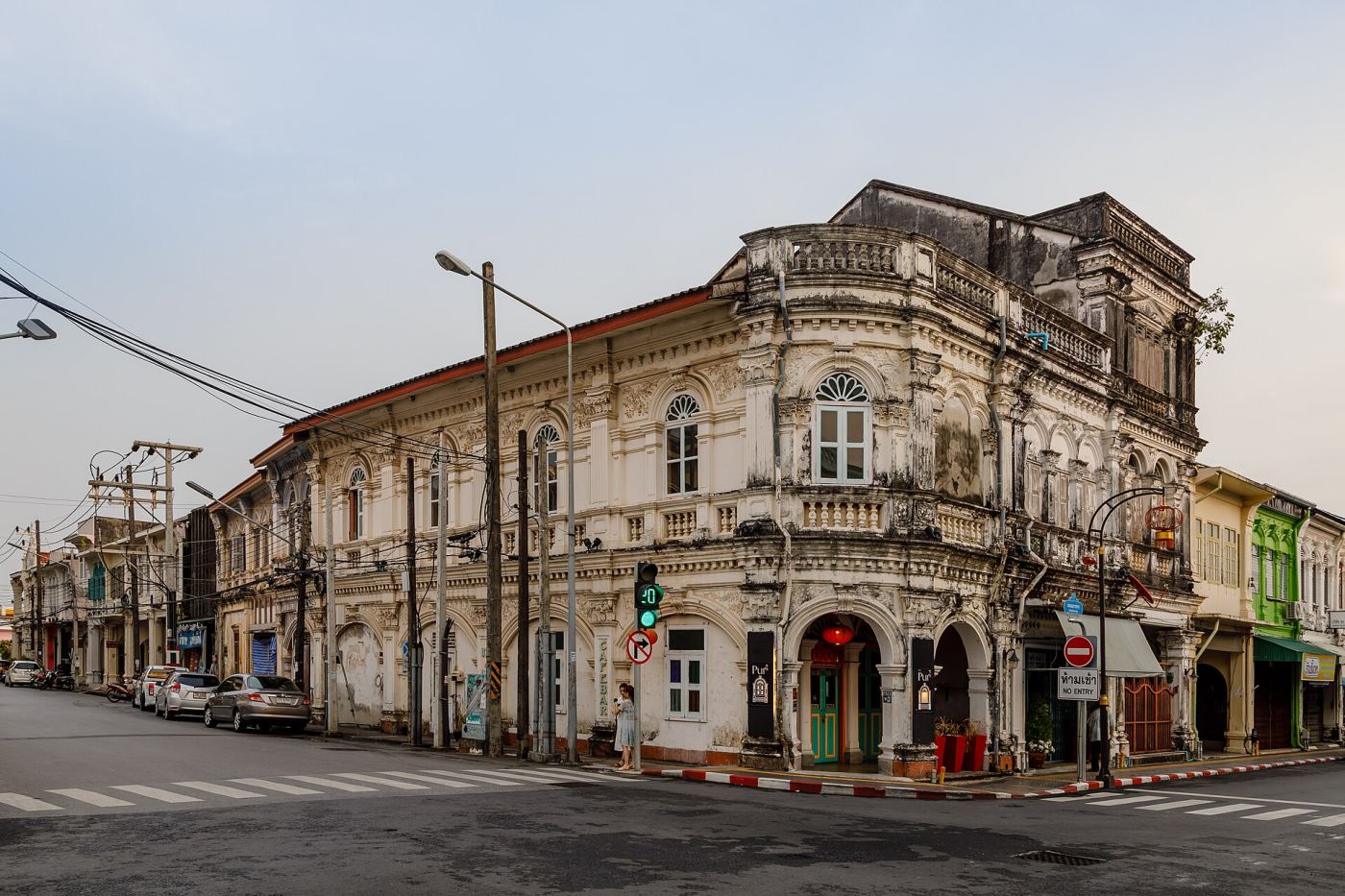
A number of the grander mansions, built by wealthy tin-mining families, have been restored and opened as small museums, cafés, or boutique hotels — the Thai Hua Museum, itself a former Sino-Portuguese mansion, is one of the more informative stops for understanding the history behind the architecture rather than just photographing it.
When to go: the Sunday walking street
While the old quarter is worth a daytime wander any day of the week, Phuket Town comes properly alive on Sunday evenings, when Thalang Road closes to traffic for the Lard Yai walking street market — stalls selling street food, crafts, and local snacks fill the road beneath the lit-up building facades, and it is genuinely one of the better evening markets in southern Thailand, with a distinctly local rather than tourist-driven feel.
Planning your visit
Phuket Town rewards a slow half-day visit more than a rushed full day — most visitors combine a morning or afternoon walk through the old quarter with a Sunday evening return for the walking street, rather than trying to do everything in one visit.
If you would rather not navigate on your own, guided walking tours that include the market history and architecture context are available through GetYourGuide's Phuket page. For visitors basing themselves beach-side, comparing hotel options that include easy transport into town is straightforward on Expedia's Phuket destination page, which lists both beach and town-adjacent properties side by side.


