Bangla Road: Phuket's Legendary Nightlife Strip, Explained
Three decades of neon, bars, and clubs packed into 400 meters — Patong's most famous (and most polarizing) street after dark.

Bangla Road is, without much competition, the beating heart of Phuket's nightlife, a roughly 400-meter pedestrian strip in Patong that has spent over three decades earning its reputation as the island's undisputed party center. By day, it looks like any other tourist street — souvenir shops, motorbikes weaving through traffic, a scattering of daytime diners. From 6pm onward, that ordinary street disappears entirely: the road closes to traffic, neon signs flick on by the hundred, and Bangla transforms into a dense, loud, unmistakably adult playground that draws visitors from every corner of the world.
The street's rise as Phuket's nightlife epicenter reflects the island's broader history as a port town that opened early to international travel and trade. As Patong developed through the late 20th century into Phuket's most tourist-heavy beach town, Bangla Road became the natural gathering point for that growth — a concentrated expression of decades of Phuket meeting an increasingly international travel culture head-on, night after night, rather than a single planned development.
The street's mix has expanded considerably beyond its original beer-bar core. Alongside the long-running go-go bars and beer bars that built Bangla's reputation, the strip now includes rooftop bars, international nightclubs, live music venues, tattoo studios, and — more recently — cannabis dispensaries, following changes to Thai law. Clubs like Illuzion, Sugar Club, and Tiger Nightclub anchor the scene with international DJs and large dance floors, while smaller side alleys branching off the main strip offer quieter, less overwhelming alternatives for anyone wanting a drink without the full sensory assault of the main road.
| Time | Atmosphere | Best For |
|---|---|---|
| Daytime | Ordinary tourist street, shops open, vehicle traffic | Errands and shopping, not nightlife |
| Early evening (6-9pm) | Street closes to traffic, bars opening, moderate crowds | A calmer first look before the peak crowd arrives |
| Peak hours (10pm-1am) | Street performers, full club energy, densest crowds | The classic Bangla Road experience |
| Late night (after 1am) | Clubs still running, crowd thinning on the main strip | Committed night owls |
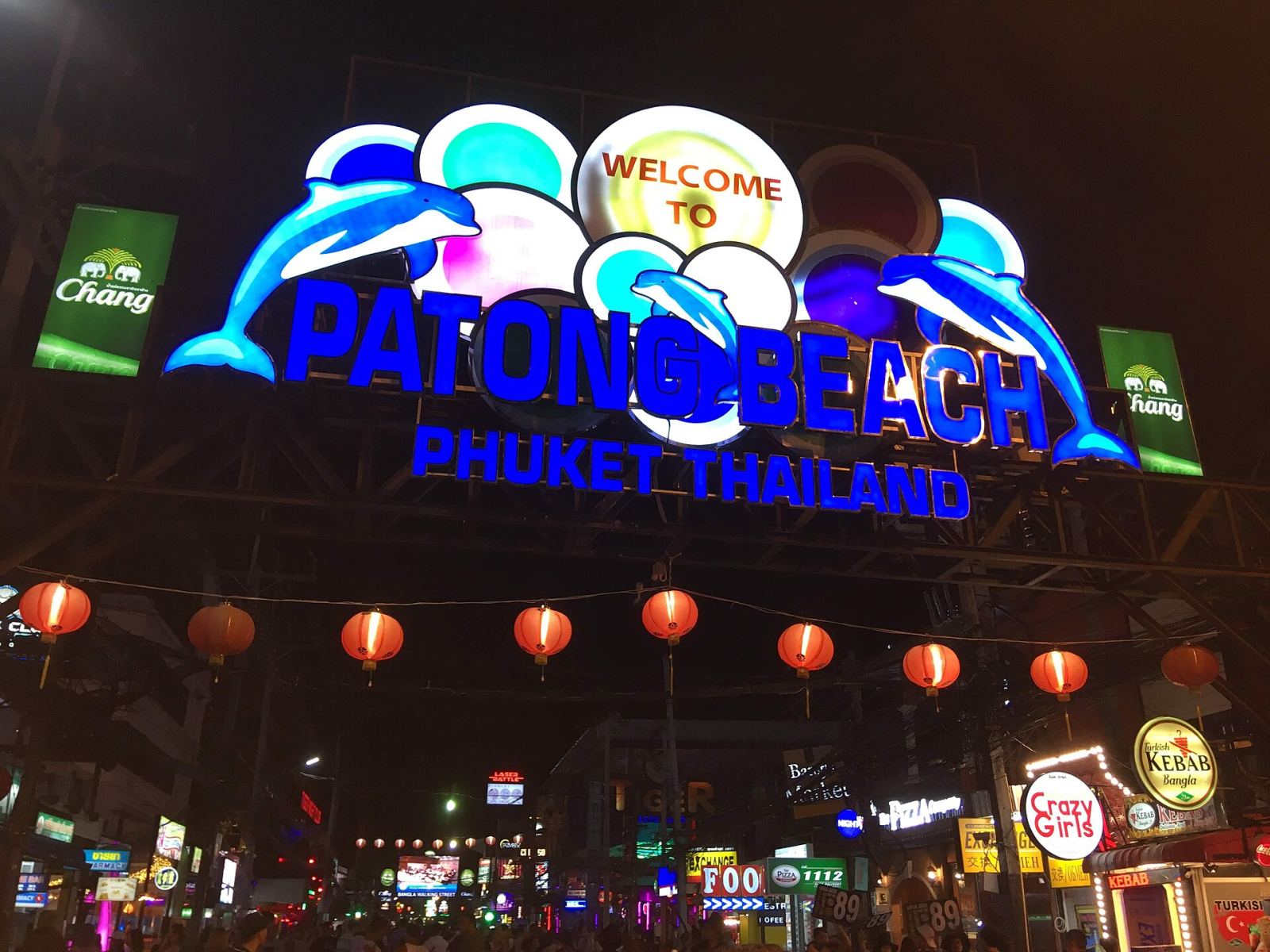
The street's soundscape alone is worth describing for anyone who hasn't experienced it — competing sound systems from adjacent bars blend into a continuous wall of bass, punctuated by street vendors calling out, motorbike taxis threading through the crowd before the pedestrian closure, and the occasional burst of live music from a rooftop venue overhead. It's genuinely disorienting on a first visit, and part of why some travelers love Bangla Road instantly while others find fifteen minutes plenty.
Bangla Road's dense crowds, alcohol, and late hours make it a spot where overcharging, pickpocketing, and occasional scams (rigged games, inflated bar tabs) do happen. Agree on drink prices before ordering, keep valuables secure, and use licensed taxis or ride-hailing apps to get back to your hotel rather than unmarked vehicles.
Prices along Bangla Road vary enormously depending on the venue — a beer at a plastic-stool street bar costs a fraction of what a table at a rooftop lounge or nightclub with a cover charge will run, and it's genuinely possible to spend an entire evening here on a modest budget or a considerably larger one, depending entirely on which doors you choose to walk through. That range is part of the street's appeal: backpackers and high-spending tourists end up on the same 400 meters of pavement, just gravitating toward different corners of it.
Bangla Road isn't purely adult entertainment, despite its reputation — street food vendors, souvenir stalls, and family-friendlier bars operate on the fringes and side streets, and plenty of visitors walk the strip simply to take in the spectacle of lights, music, and crowds without necessarily drinking at any of the venues. It's genuinely one of the more polarizing attractions in Thailand: some travelers build an entire Phuket trip around it, others avoid Patong specifically to steer clear of it, and both reactions are reasonable given how intense the experience can be.
Bangla Road sits in the heart of Patong, covered more broadly in our guide to Patong, Karon, and Kata Beaches. If you'd rather explore Phuket's calmer old town instead, see Phuket Town Old Quarter, and for budgeting a trip that includes a night out here, Phuket on $35 a Day can help.
Bangla Road sits directly in central Patong, within easy walking distance of most Patong Beach hotels and guesthouses. Songthaews (shared shuttle trucks) and tuk-tuks run regularly between Patong and other parts of the island, and taxis or ride-hailing apps are the simplest option for getting back late at night. Once the street closes to traffic in the evening, everything is on foot.
Weekday visits to Bangla Road tend to feel noticeably more manageable than weekends, when both domestic and international tourist numbers peak simultaneously — a useful thing to know if the goal is experiencing the atmosphere without quite the maximum crowd density the street is capable of producing on a Saturday night in high season.
Frequently Asked Questions
Patong authorities have periodically tightened regulations around Bangla Road over the years — noise ordinances, licensing crackdowns on unregistered venues, and occasional closures tied to public order concerns have all featured at different points. None of it has meaningfully dented the street's core identity or its popularity, though it's a reminder that Bangla Road, for all its apparent chaos, operates within a regulatory framework that does shift from year to year.
First-time visitors sometimes underestimate how physically dense the crowd gets at peak hours — moving from one end of the street to the other during the 10pm-1am window can genuinely take twenty minutes given the volume of people, so building slack into any plans that depend on meeting someone at a specific spot or specific time is worth doing rather than assuming quick movement through the crowd. Choosing a fixed, easily describable meeting point in advance, rather than relying on phone signal in a crowd this dense, tends to work better in practice than it sounds.


