Wat Chalong: Phuket's Most Important Temple, Explained
A 60-meter golden chedi and a 19th-century monk's act of compassion during a rebellion — the story behind Phuket's holiest site.

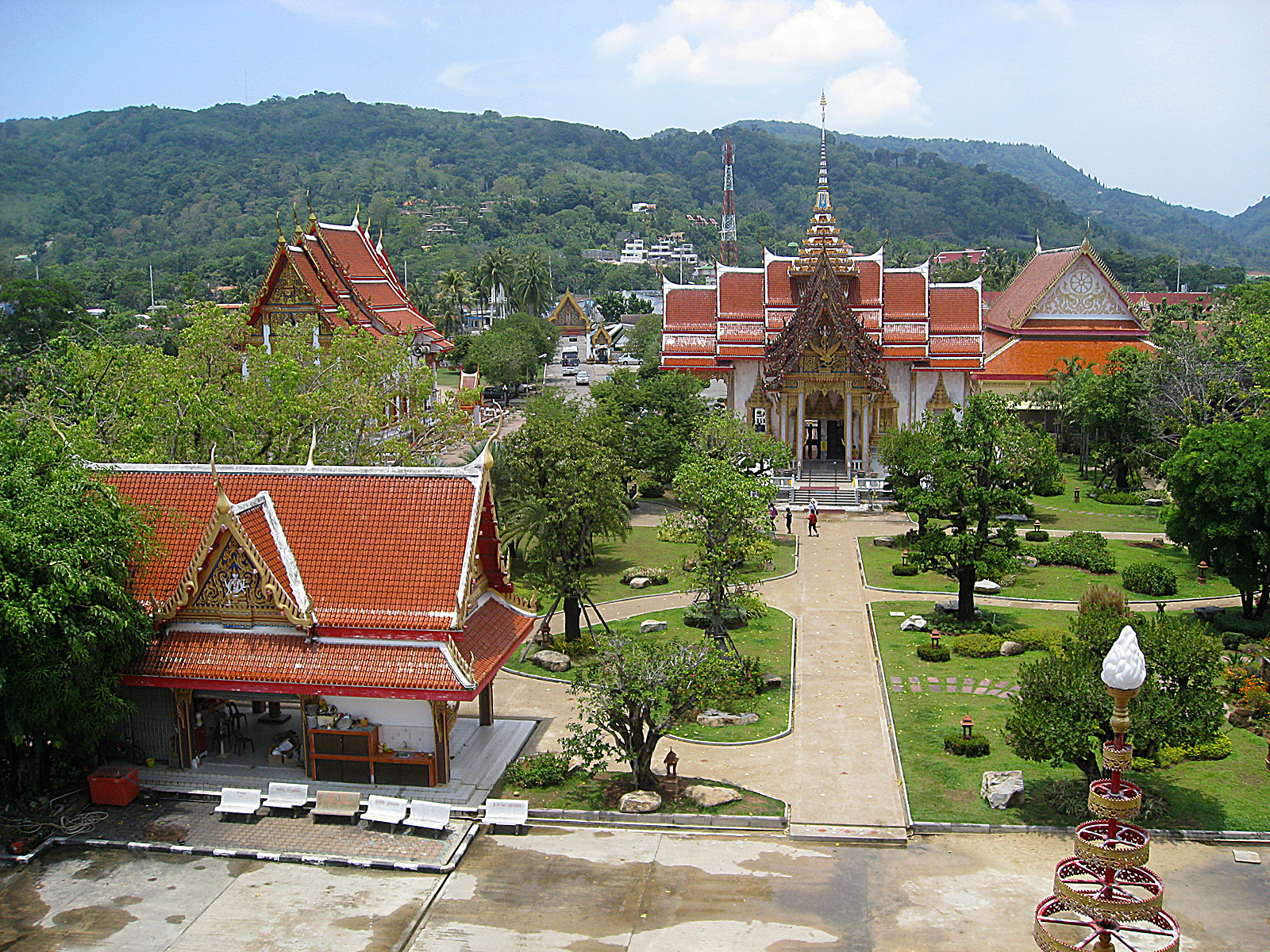
Wat Chalong is Phuket's most important Buddhist temple and one of the largest, a sprawling complex in the south of the island centered on a towering, ornately decorated chedi that's visible from a considerable distance. Where much of Phuket's tourism infrastructure was built specifically for visitors, Wat Chalong predates that entirely — it's a genuinely significant pilgrimage site for Thai Buddhists, and locals come to pray here nearly every day, a living religious practice that happens to also welcome curious travelers rather than a temple built around tourism.
The temple was founded around 1837 as a modest village monastery in what was then the small farming community of Chalong, built by two monks, Luang Pho Chaem and Luang Pho Chuang. Its lasting fame, though, dates to 1876 and the Angyee Rebellion, a Chinese tin-miner uprising that swept across Phuket. Luang Pho Chaem became a local hero during the unrest by treating and curing wounded rebels regardless of which side they'd fought on, and stories of his compassion spread across the island, transforming Wat Chalong from a village temple into a genuine holy site that pilgrims have visited ever since.
The temple's most striking feature is its 60-meter-tall chedi, its multiple tiers and gilded spire visible from well outside the temple grounds. Inside, the chedi houses a relic believed to be a splinter of the Buddha's bone, adding genuine spiritual weight to what is already an architecturally significant structure. The wider complex includes several other ornately decorated buildings — statues, carved reliefs, and shrines spread across manicured grounds — giving visitors considerably more to see than the chedi alone, and making Wat Chalong one of the more thorough temple visits available on the island.
| Time | Atmosphere | Best For |
|---|---|---|
| Early morning | Quiet, monks and locals praying, cooler temperatures | A more contemplative, less crowded visit |
| Midday | Busiest with tour groups, hot given limited shade | Not ideal — visit earlier or later if possible |
| Late afternoon | Good light for photographing the chedi, moderate crowds | Photography and a relaxed walk through the grounds |
| Thai Buddhist holidays | Significantly busier with local pilgrims and ceremonies | Experiencing the temple's genuine religious function firsthand |
Local devotees frequently bring specific offerings tied to Wat Chalong's particular traditions — firecrackers set off as a blessing ritual, gold leaf applied to statues, or small votive items purchased from vendors near the entrance. Watching these practices unfold, even without participating directly, gives visitors a far more textured sense of how the temple actually functions in Thai religious life than the architecture alone could convey.
As an active place of worship, Wat Chalong expects modest dress from all visitors — shoulders and knees covered, no swimwear. Sarongs are typically available to borrow or rent at the entrance for anyone arriving underdressed, but it's simpler to plan ahead.
The two founding monks, Luang Pho Chaem and Luang Pho Chuang, are both commemorated with statues within the temple grounds, and their images remain objects of genuine devotion for Thai visitors — locals often stop specifically to pay respects at these statues before continuing on to the main chedi, a practice that underscores how much of Wat Chalong's significance rests on the historical figures who built its reputation rather than the architecture alone.
Wat Chalong's role as a working temple means visitors are likely to see genuine religious activity during a visit — monks conducting ceremonies, locals making offerings, firecrackers set off as part of traditional blessing rituals (a Chinese-influenced custom common at Thai temples with historical ties to the local Chinese-Thai community). It's worth treating a visit here with the same quiet respect you'd extend to any active religious site, even amid the steady stream of other visitors.
Wat Chalong sits centrally in southern Phuket, a reasonable stop between the beach towns and the Big Buddha, both of which pair naturally with a temple visit on the same day. For planning your Phuket time more broadly, see Phuket's Best Ticketed Attractions.
Wat Chalong is located on Chao Fa West Road, roughly a 30-minute drive from Patong and about 20 minutes from Phuket Town. There's no direct public transit route, so a taxi, Grab ride, rental car, or organized tour are the standard ways to reach it — most visitors combine the temple with other southern Phuket stops like Rawai or the Big Buddha in a single day's itinerary given its central location relative to both.
A visit here pairs naturally with a broader loop through southern Phuket in a single day, since the temple's central location makes it easy to combine with stops at the coast without excessive backtracking — a pattern most organized tours and independent travelers alike tend to follow given how the geography lines up.
Frequently Asked Questions
Wat Chalong's scale and significance have made it a regular stop on organized Phuket day tours, which means the temple can feel considerably busier at midday than its quiet, contemplative reputation might suggest — a genuine tension between its role as a working place of worship and its status as one of the island's most-visited attractions. Visitors who time their trip around the quieter early-morning or late-afternoon windows tend to come away with a noticeably different impression than those who arrive in the middle of a packed tour-bus schedule.
Photography is generally permitted throughout most of the temple grounds, though some inner sanctums and specific ceremonial areas may restrict cameras, particularly during active religious services — a sign or a polite word from temple staff usually makes the boundary clear, and it's worth respecting without argument given the site's ongoing religious function. Drones are typically not permitted anywhere on the grounds, a restriction worth knowing in advance if aerial photography was part of the plan.


