Campo de' Fiori: Rome's Market Square by Day, Nightlife Hub by Night
A 15th-century square with a dark history, a working daily market since 1869, and one of the liveliest evening scenes in central Rome.

Unlike many of Rome's grander piazzas, Campo de' Fiori was never given a church of its own facing directly onto it — a deliberate absence, since the square was conceived from the start as secular civic space rather than religious ground, which is part of why it was considered an acceptable site for markets, executions, and later nightlife in a city otherwise dense with churches occupying its most prominent squares. That secular character has arguably shaped its identity more than any single building: it remains, across five centuries, a place built for commerce and public life rather than worship.
Campo de' Fiori lives two completely different lives depending on when you show up. By morning, it's one of Rome's most vivid open-air food markets, stalls piled with produce, flowers, and spices under a chorus of vendors calling out prices. By night, the same square transforms into one of the liveliest nightlife spots in the historic center, its surrounding bars and restaurants filling with a mostly young, mostly local crowd. The name itself, "Field of Flowers," is a callback to what genuinely occupied this spot before it was paved — an open meadow, right in the middle of what's now dense medieval Rome.
The square was paved in 1456 under Pope Callixtus III, and shops and artisan workshops quickly filled in around its edges. A horse market operated here twice a week for centuries, and — in a much darker chapter of the piazza's history — it also served as a site for public executions. The most significant of these took place on February 17, 1600, when the philosopher and astronomer Giordano Bruno was burned alive here by the Roman Inquisition for heresy, his ideas about an infinite universe containing countless worlds having been judged too radical for the Church of his era. The brooding, hooded statue standing at the center of the square today, erected in 1889, depicts Bruno and deliberately faces toward the Vatican — a lasting symbol of free thought installed squarely on the site of his execution.
The daily market has run continuously since 1869, making it one of the oldest and most established in Rome, selling fresh produce, flowers, dried spices, and local specialties from stalls that ring the square every morning except Sunday. It's a working market rather than a purely tourist-facing one, though its central location means prices at some stalls run a bit higher than at markets in less central neighborhoods. Come evening, the market stalls clear out entirely and the square's identity flips: the surrounding bars fill their outdoor seating, and Campo de' Fiori becomes one of the go-to gathering points for Rome's younger crowd, students especially, looking for an evening out.
| Time | Atmosphere | Best For |
|---|---|---|
| Mornings (7am-2pm), except Sunday | Full market in operation | Produce, flowers, and the classic market atmosphere |
| Sunday | Market closed, square quieter than usual | A calmer daytime visit, though you'll miss the market |
| Early evening | Transition period as market clears and bars set up | Watching the square change character |
| Late evening/night | Lively bar and nightlife scene, mostly young crowd | Drinks and people-watching, not a quiet dinner |
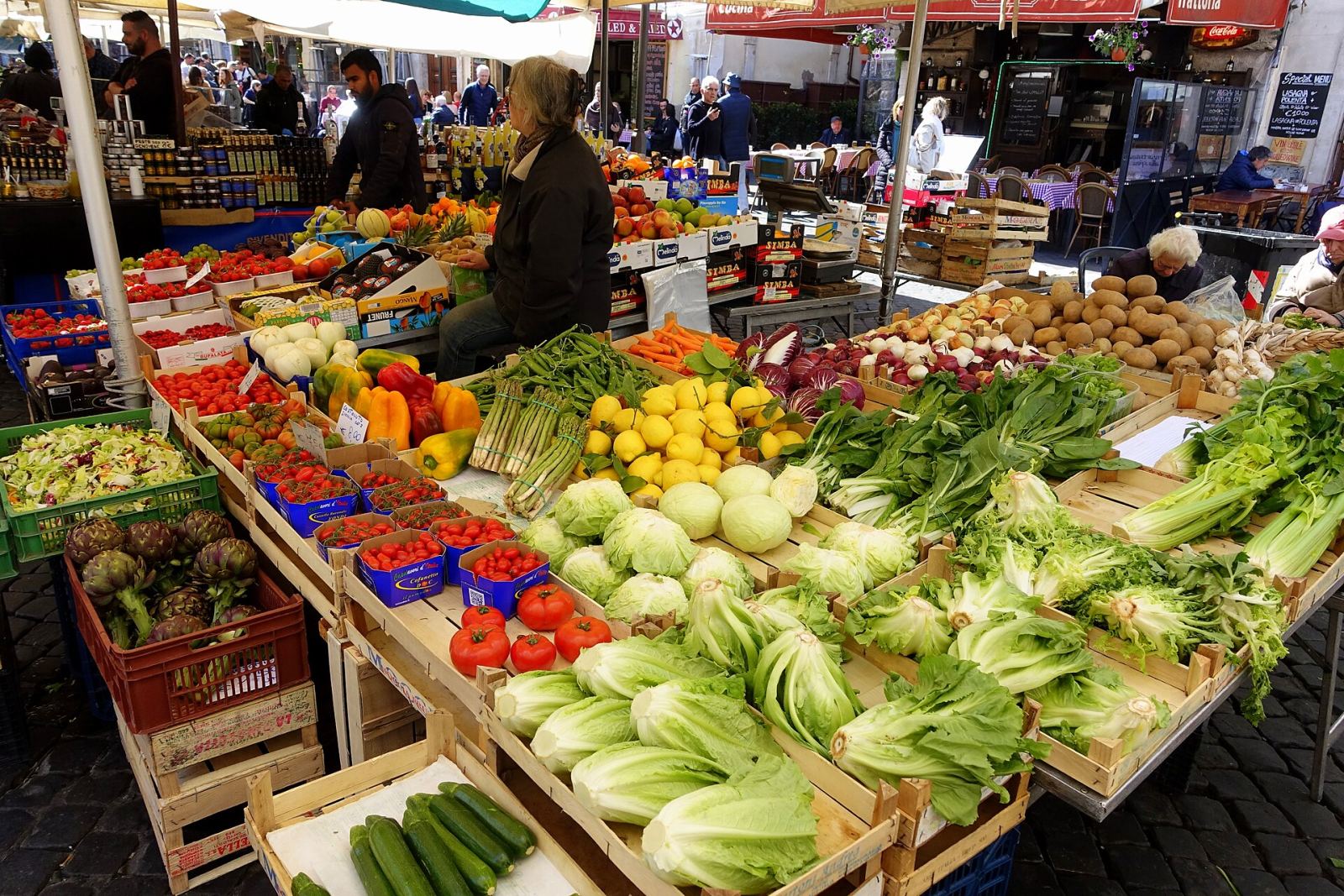
Some stalls facing the busiest tourist paths price noticeably higher than others just a few meters away. It's worth a quick lap of the square before buying anything, especially for souvenir-style items like dried spices or packaged sauces.
The public executions once held here were not limited to Bruno's case — Campo de' Fiori served as one of Rome's standard sites for capital punishment for much of its early history, a grim function that sits uneasily alongside its cheerful modern identity as a flower and produce market. That contrast is part of what makes the square worth understanding rather than just photographing: the same open space that hosts a cheerful morning market and boisterous evening bar crowd carries a genuinely dark civic history just beneath the surface, one the Bruno statue exists specifically to keep visible rather than let fade.
Beyond the market and nightlife, Campo de' Fiori is worth lingering in simply for the surrounding architecture — Renaissance-era buildings line the square on all sides, largely unbroken by modern construction, giving it a genuinely historic feel even amid the daily commercial bustle. Palazzo Farnese, one of Rome's grandest Renaissance palaces (now the French Embassy), sits just a short walk south, and the historic Jewish Ghetto is close enough for an easy combined visit on foot.
Campo de' Fiori is a short walk from Piazza Navona, and the two squares are easily combined into one walk through Rome's historic center. For the wider question of how to structure a Rome itinerary, see How Many Days Do You Need in Rome?, and if the market's produce has you thinking about food, our guide to Best Pasta and Trattorias in Rome covers several spots in the immediate area.
There's no metro station directly at Campo de' Fiori, consistent with much of Rome's dense historic center. It's a 10-15 minute walk from Largo di Torre Argentina, itself well served by numerous bus lines, or a similar walk from Piazza Navona. Most visitors reach it on foot as part of a broader walk through the historic center rather than via direct public transit.
Frequently Asked Questions
Locals sometimes describe Campo de' Fiori as the anti-Piazza Navona: rougher around the edges, less manicured, and considerably less expensive at street level, even though the two squares sit only a few minutes' walk apart. That contrast is worth experiencing directly rather than just reading about — visiting both on the same day makes the difference in character between Rome's grand Baroque set-piece squares and its working, everyday ones immediately obvious in a way no description quite captures.


