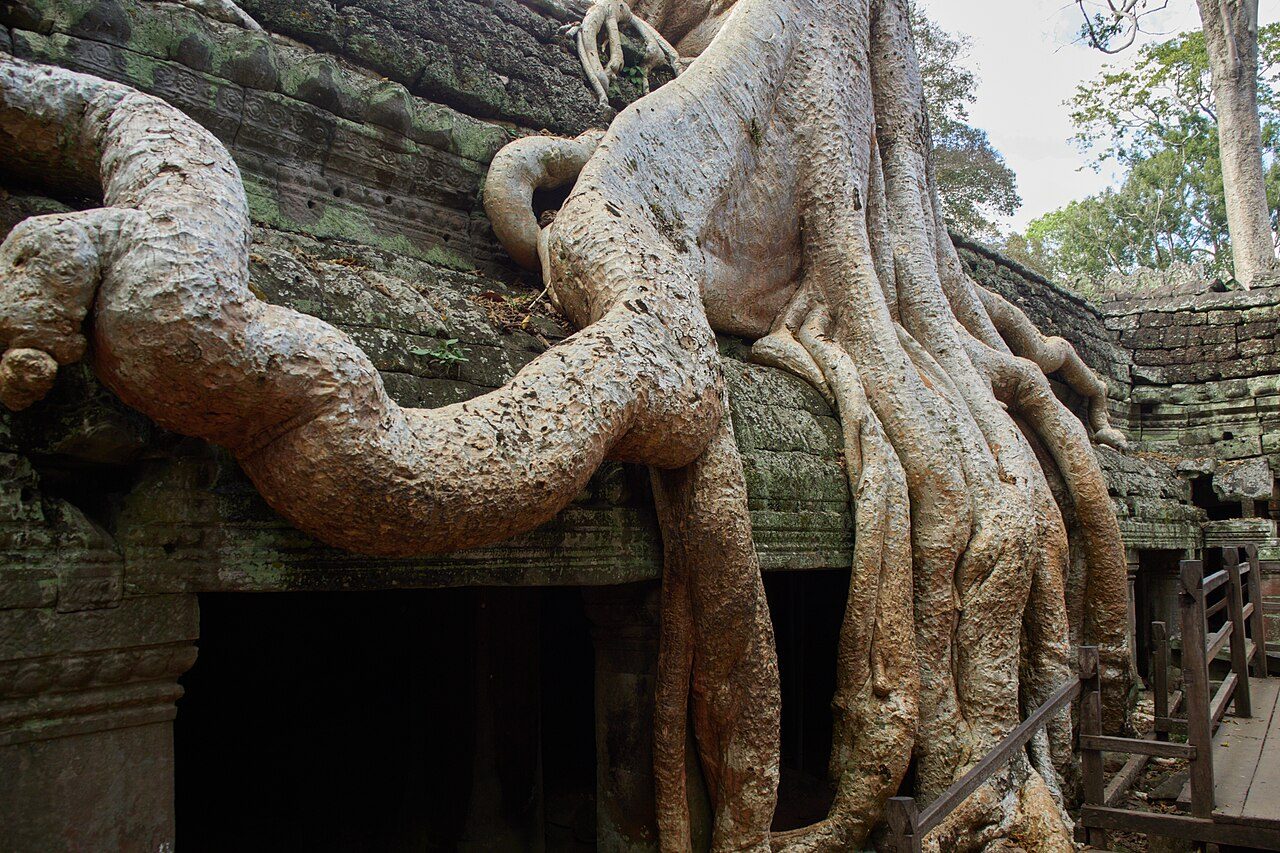
Old Market (Psar Chas): Siem Reap's Market of Silks, Spices and Street Food
Explore the Old Market, or Psar Chas, with its fresh produce, silk scarves, souvenirs, cafes and street food stalls, in the oldest and most atmospheric part of Siem Reap.

The Old Market, called Psar Chas in Khmer, is the beating heart of Siem Reap and the best place in town to see local life. Located in the old quarter beside the river, it is a covered market packed with stalls selling fresh vegetables, fish, meat, spices and flowers on one side, and silk scarves, carvings, lacquerware and souvenirs on the other. The surrounding streets are lined with French-colonial shophouses that have been converted into cafes, boutiques, galleries and small restaurants, which makes this the most charming and walkable part of the town.
The market has been the commercial center of the town for generations, long before tourism arrived. Locals still come here every morning to buy food, and the stalls in the front sell butchery, fruit and vegetables, rice, dried fish and household goods. As visitors began to arrive in the 1990s, souvenir stalls grew at the edges, and the area now serves both. Early in the morning, around 6 to 8 a.m., the market is at its most authentic, with locals eating breakfast noodles and haggling over vegetables, while by midday, the souvenir stalls are in full swing and the tourists have arrived.
The best time to see the real market is the morning, when the fresh-food section is busy. You will see women selling piles of herbs and tropical fruit, such as rambutan, mangosteen, dragon fruit and durian, while others chop fish and meat and sell it from tables. At the food stalls, you can try <a href="/guide/nom-banh-chok-siem-reap-guide/">nom banh chok</a> for breakfast, rice porridge, fried noodles, sugarcane juice and Khmer cakes. Prices are low, with most dishes costing $1 to $2, and eating here is a good way to try local food. Be adventurous but choose busy stalls.
The souvenir section offers a wide choice. Silk scarves, cotton krama scarves, handmade bags, silver jewelry, lacquer boxes, wood carvings, Buddha statues, paintings and spices such as Kampot pepper are among the best buys. Prices are negotiable, and a reasonable approach is to offer about half to two-thirds of the first price, smiling and staying polite. Quality varies, and many items are mass-produced, so for authentic crafts, look at shops that support local artisans. Nearby, the Made in Cambodia Market and Artisans Angkor offer fixed prices and verified craftsmanship.
| Place | What to Expect |
|---|---|
| Fresh food hall | Vegetables, fruit, fish, meat and spices, busiest early in the morning |
| Souvenir stalls | Scarves, carvings, jewelry, T-shirts and gifts, with bargaining expected |
| Food stalls | Noodles, porridge, sweets and juices at local prices |
| Old Market cafes | Colonial-style shophouses serving coffee, brunch and light meals |
| Siem Reap River | A shaded riverside promenade a minute away with bridges and trees |
The Old Market is in the center of the old town, a five-minute walk from Pub Street and the river. Tuk-tuks can drop you at the entrance, and most hotels in the center are within walking distance.
The streets around the market are among the nicest in Siem Reap. Old shophouses with arched windows and shutters hold boutiques selling modern Cambodian design, galleries showing local artists, and cafes with air conditioning, which are welcome on hot days. The area also has some of the best restaurants in town, from simple noodle shops to refined Khmer kitchens, and the lanes near the river have a lively evening scene. Spend time wandering, and look into the courtyards, which often hide a quiet garden or a rooftop terrace.
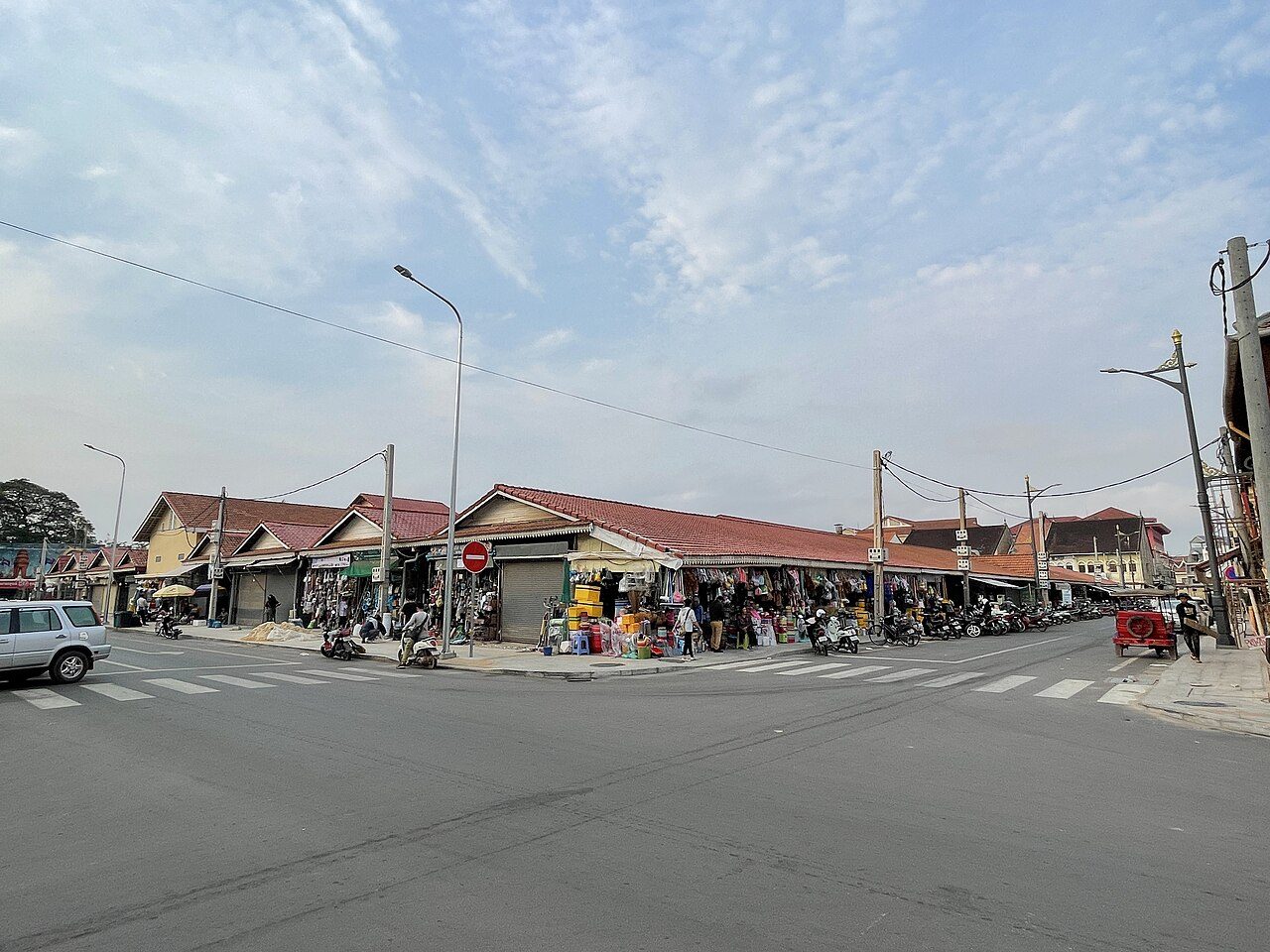
A few practical tips help. The market is crowded and hot, so bring water and wear light clothes, and carry small bills for stalls. Pickpockets operate in the busy sections, so keep your valuables secure and your bag zipped. Some stalls sell items made from endangered animals or antiques that cannot be exported, so avoid anything that looks like ivory or old Angkor-era pieces. The market closes in the early evening, around 6 or 7 p.m., though cafes and bars in the area stay open later, and the nearby night markets operate until midnight.
The Old Market suits food lovers, shoppers, photographers and anyone who wants to see daily life in Cambodia. It is less suited to those who dislike crowds, strong smells and haggling. A good plan is to visit at around 7 a.m. for breakfast and photographs, return in the afternoon for shopping, and end with a drink at a rooftop bar overlooking the area. For lodging, see our guide to the <a href="/guide/top-10-hotels-in-siem-reap/">top 10 hotels in Siem Reap</a>.
For more of the city, see our guides to Angkor Wat, Angkor Thom and the Bayon and Ta Prohm, and our food guides to fish amok, beef lok lak and nom banh chok. For budgeting, see Siem Reap on $35 a day, and for lodging, see our top 10 hotels in Siem Reap and budget hotels in Siem Reap.